

 Español
 Deutsch
 عربى
عربى
Soft Cloth Polishing Wheel Factory
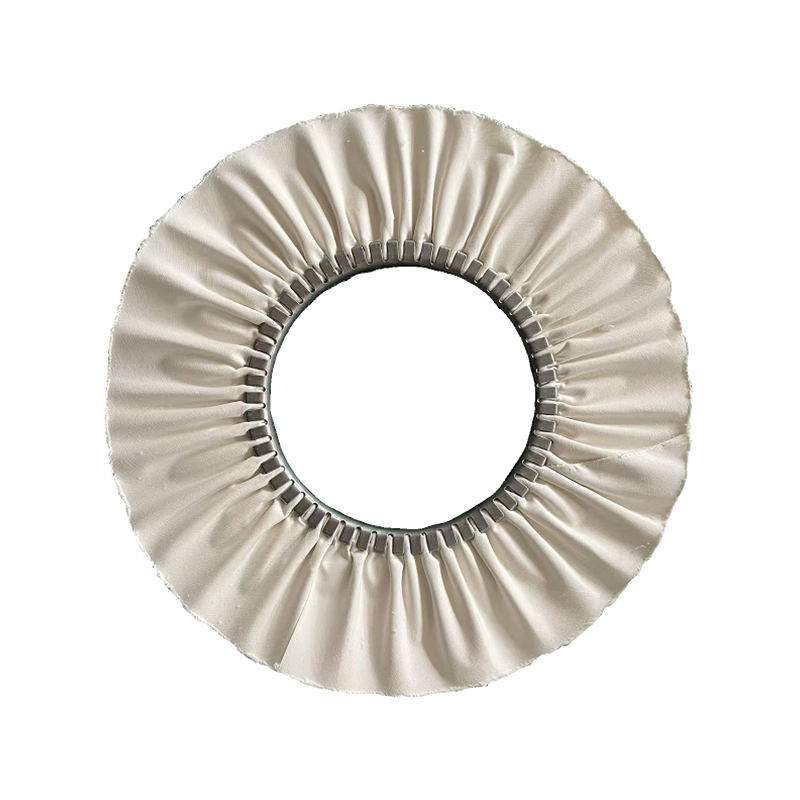
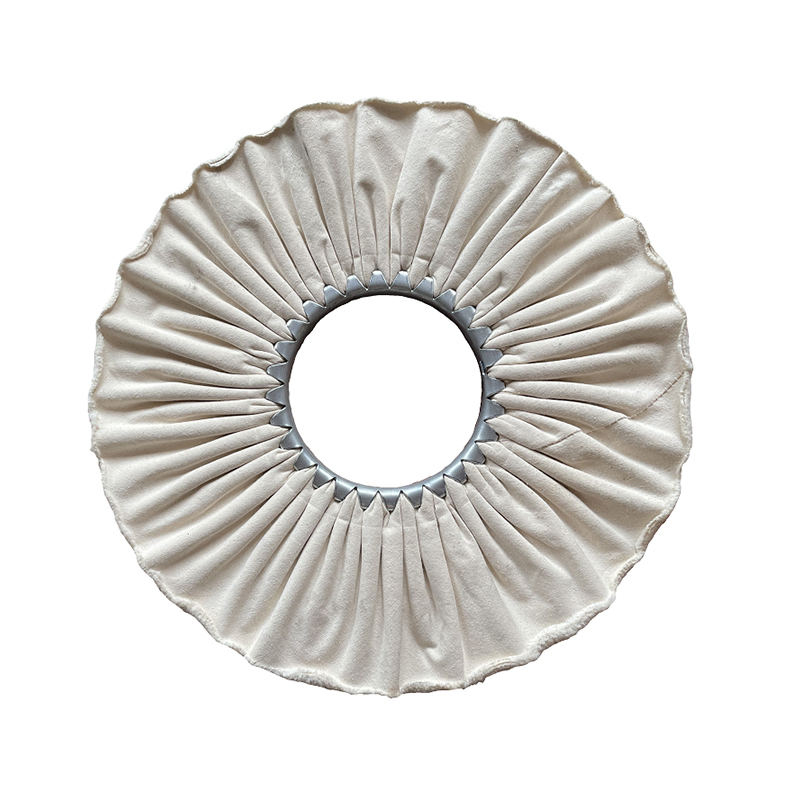
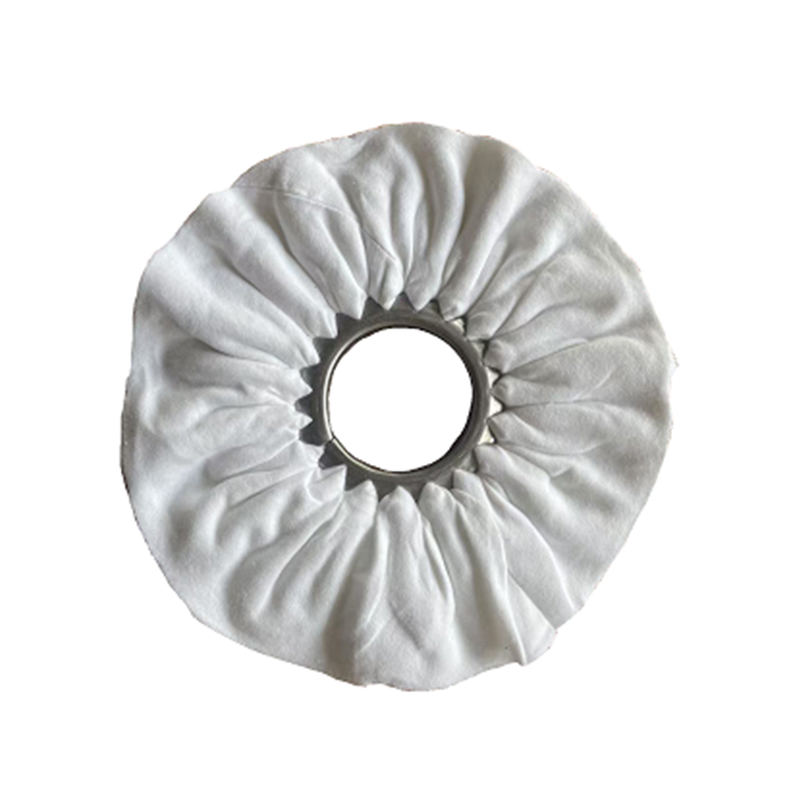
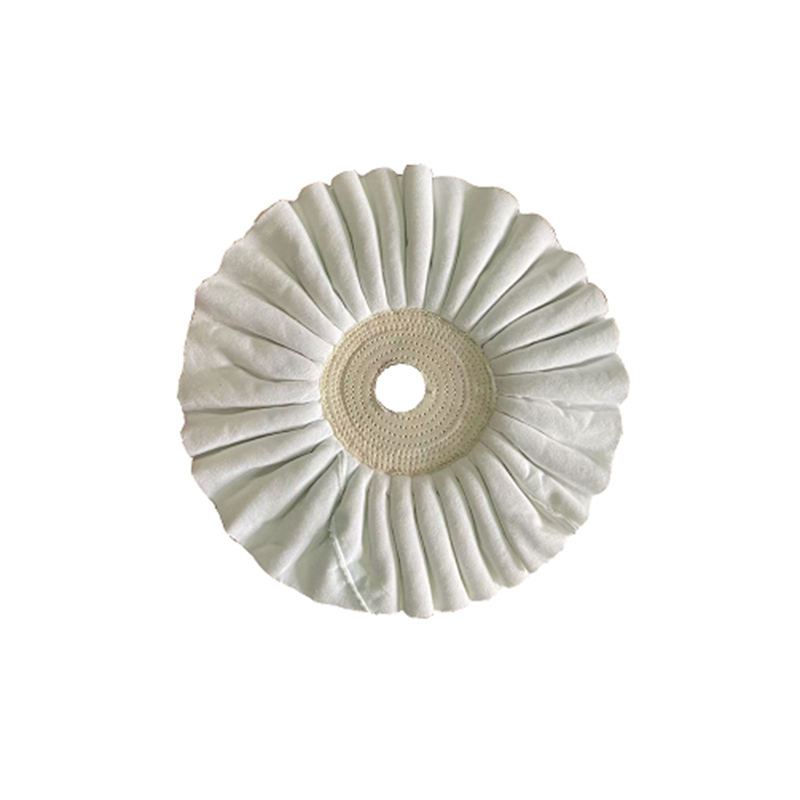
Our Soft Cloth Pneumatic Wind Wheel are high-precision, flexible polishing consumables crafted from unhardened, soft cloth. Achieve a flawless mirror finish with our premium soft cloth polishing wheels. The highly flexible, ventilated design is suitable for complex surfaces and fine metal polishing. It perfectly conforms to the workpiece, ensuring even pressure and zero surface deformation. Whether you're polishing luxury automotive trim, exquisite jewelry, or high-end stainless steel hardware, our soft cloth wheels deliver a flawless, mirror-like polish.
Why choose our ventilated soft cloth wheels?
We understand the challenges of polishing complex geometries. Our wheels are designed to balance performance, durability, and surface safety:
• Excellent flexibility: The unhardened, soft cloth maximizes conformability to complex curves, deep grooves, and irregular shapes—areas inaccessible to rigid wheels.
• Ventilated design: Our specially designed "ventilated" or "air-cooled" structure prevents heat buildup during high-speed polishing, protecting the wheel material and workpiece from heat damage.
• Mirror Polishing Dedicated: Designed for use with fine polishing agents (such as polishing paste or white polishing agent) to produce a streak-free, crystal-clear reflective surface.
• Minimizes Surface Damage: The soft, high-quality fabric eliminates the risk of swirl marks or micro-scratches, ensuring the highest level of aesthetic finish.
• Balanced Structure: Professionally balanced to reduce vibration, minimize operator fatigue, and improve the precision of manual or automatic polishing operations.
Main Industrial Applications: These polishing wheels are the preferred choice for the following applications:
Automotive & Aerospace: Polishing chrome trim, hoods, and interior metal components.
High-End Tableware & Kitchenware: Final polishing of stainless steel basins, faucets, and decorative handles.
Jewelry & Watchmaking: Fine polishing of precious metals, watch cases, and wearable jewelry.
Furniture Hardware: Finishing of brass, bronze, and stainless steel cabinet handles or high-end hardware.
General Metalworking: Mirror polishing of any complex metal parts requiring a high gloss finish.
Features:
Material: High-quality soft cotton cloth/fine cotton cloth (non-stiff type)
Wheel Type: Ventilated/air-cooled soft cloth polishing wheel
Performance: Final mirror finish and high-gloss polish
Custom Sizes: Available in various sizes (standard: 6 inches - 16 inches in diameter)
Compatibility: Manual polishing machines, benchtop grinders, automated production lines
About
Ningbo Henghua Metal Surface Treatment Technology Co., Ltd.
Ningbo Henghua Metal Surface Treatment Technology Co., Ltd. is located in Dongjiaqiao, Jishigang, Haishu District, Ningbo Bo City, Zhejiang Province, China. As a China cloth polishing wheel suppliers, Henghua Metal Surface Treatment Technology Co., Ltd. provides various customized polishing materials. The company was established in 2016, with a plant area of 3,500 square meters, more than 10 sets of advanced cloth wheel production equipment, 2 fully automatic canning lines, and can customize the production of wind cloth wheels of various types and sizes. Ma wheel, polishing wax, chiye wheel, metal polishing paste and other products, customers are all over South America, the United States, Europe, the Middle East, etc. In recent years, the company has continuously innovated to improve the work efficiency of polishing materials, and has won the recognition of customers. Welcome customers in need to call to negotiate cooperation!
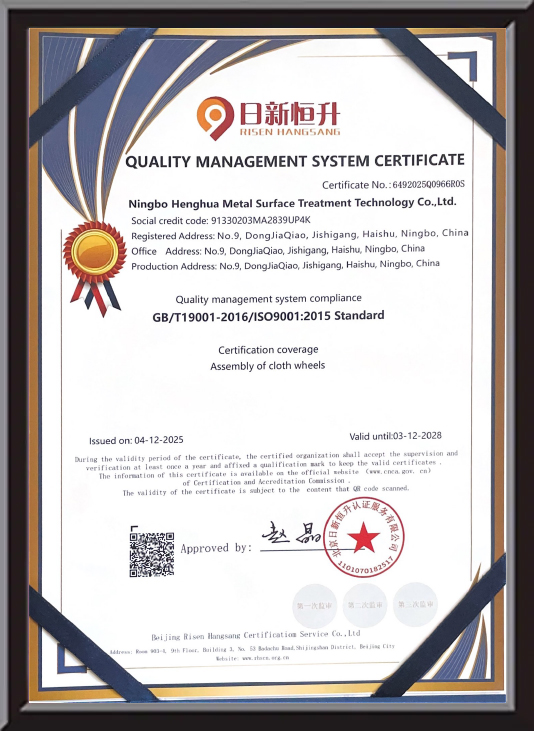
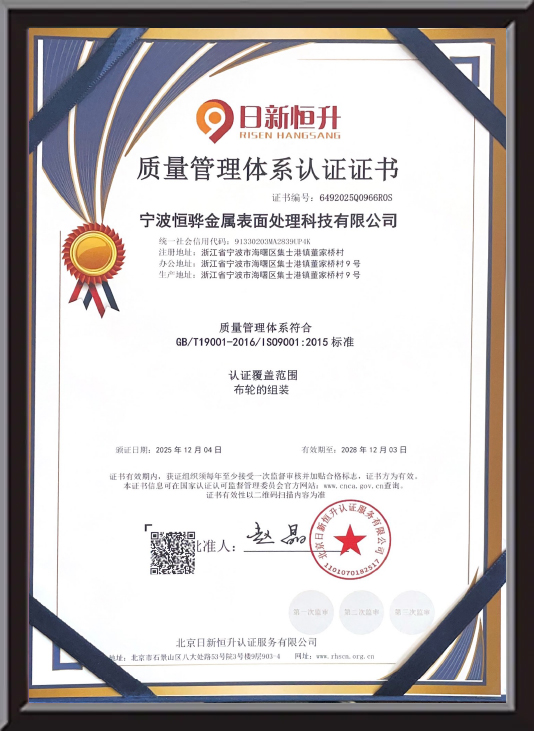
Certificate Of Honor
Message Feedback
Soft Cloth Pneumatic Wind Wheel Industry Knowledge
A Soft Cloth Pneumatic Wind Wheel is a pneumatically driven polishing tool that combines flexible cloth layers with centrifugal airflow to achieve high-efficiency surface finishing. Unlike rigid abrasive wheels, it relies on the interplay between compressed air rotation and layered cloth segments to deliver consistent, adaptive contact with workpiece surfaces. This makes it especially effective for curved, irregular, and complex-geometry metal parts where rigid tools fall short.
As a specialized category of Cloth Polishing Wheel, the pneumatic wind wheel is widely used in industries such as stainless steel hardware, automotive trim, sanitary fittings, and decorative metalwork. Its design allows operators to achieve mirror-like finishes with Ra values below 0.2 μm under proper operating parameters.
Key Advantages of Soft Cloth Pneumatic Wind Wheels
- Adaptive surface contact: The soft cloth layers conform naturally to contoured surfaces, reducing the risk of over-grinding or uneven finish—critical for decorative stainless steel or aluminum profiles.
- High polishing efficiency: Pneumatic drive enables rotational speeds between 3,000–8,000 RPM, significantly improving throughput compared to manual buffing.
- Extended service life: Quality cloth polishing wheels made from multi-ply cotton or sisal composites can sustain 200–500 operating hours before replacement, reducing downtime.
- Compatibility with compounds: These wheels work synergistically with polishing compounds and buffing pastes, allowing users to tailor the finish from coarse cutting to final mirror polish in one tooling setup.
- Lower heat generation: The open cloth structure disperses heat more effectively than solid abrasive discs, protecting heat-sensitive alloys and coatings.
- Environmentally considerate: Cloth-based consumables generate less hazardous dust compared to resin-bonded abrasive wheels, supporting cleaner workshop environments.
How a Soft Cloth Pneumatic Wind Wheel Works
The operating principle centers on pneumatic rotation combined with cloth elasticity. Compressed air—typically supplied at 0.4–0.8 MPa—drives the central pneumatic motor, spinning the wheel assembly at controlled speeds. The cloth segments, arranged radially around the hub, fan outward due to centrifugal force and make contact with the workpiece surface.
When polishing compound is applied, the cloth fibers act as micro-carriers, distributing abrasive particles evenly across the contact zone. The combination of speed, pressure, and compound chemistry removes surface oxidation, scratches, and tool marks layer by layer. For final buffing, a softer cloth polishing wheel grade (e.g., flannel or cotton muslin) is used with fine finishing compound to bring the surface to a high-gloss state.
Typical Process Flow
- Coarse cutting with sisal or stitched cloth wheel + cutting compound
- Intermediate finishing with stitched cotton wheel + medium compound
- Final mirror polish with loose cotton muslin wheel + fine buffing compound
Comparing Cloth Polishing Wheel Types
| Wheel Type | Material | Hardness | Best Use |
|---|---|---|---|
| Sisal Cloth Wheel | Natural sisal fiber | Hard | Coarse cutting, rust/scale removal |
| Stitched Cotton Wheel | Multi-ply cotton | Medium | Intermediate finishing on steel/aluminum |
| Soft Cloth Pneumatic Wind Wheel | Loose cotton/flannel | Soft | Mirror polish, complex curves |
| Flannel Buff Wheel | Fine flannel | Very Soft | Final color buffing, jewelry, decorative parts |
Selection Guide: Choosing the Right Cloth Polishing Wheel
Selecting the appropriate wheel depends on the material, finish requirement, and geometry of the workpiece. Ningbo Henghua Metal Surface Treatment Technology Co., Ltd., with years of R&D experience in polishing materials, recommends the following selection criteria:
- Material hardness: Harder metals like stainless steel (HRC 30+) benefit from sisal or stitched wheels at the cutting stage before transitioning to soft cloth wheels for finishing.
- Geometry complexity: For tubular, concave, or multi-radius parts, the Soft Cloth Pneumatic Wind Wheel outperforms rigid disc tools due to its flexible contact.
- Target finish grade: If the specification calls for Ra ≤ 0.4 μm (N5 or finer), a multi-step process ending with a soft cloth wheel and fine compound is recommended.
- Production volume: For high-volume automated lines, pneumatically driven cloth polishing wheels with auto-compound feeding improve consistency and reduce per-part labor costs by up to 40%.
Frequently Asked Questions
Q1: What air pressure is recommended for operating a Soft Cloth Pneumatic Wind Wheel?
Most soft cloth pneumatic wind wheels are designed for an inlet pressure of 0.4–0.6 MPa (approximately 58–87 PSI). Operating below this range reduces rotational speed and polishing efficiency, while exceeding it can cause premature cloth wear or tool vibration. Always verify the rated pressure range on the tool's specification label before connecting to an air supply.
Q2: How often should a Cloth Polishing Wheel be replaced?
Replacement frequency depends on material hardness, compound aggressiveness, and operating speed. Under standard conditions (carbon steel, medium compound, 5,000 RPM), a quality cloth polishing wheel typically lasts 200–400 operating hours. Signs of replacement include visible cloth fraying, loss of buffing performance, or visible core exposure. Rotating the wheel 90° periodically extends lifespan by distributing wear more evenly.
Q3: Can soft cloth wheels be used on non-metal surfaces?
Yes. Soft cloth polishing wheels are also widely used on plastics, acrylics, composites, and painted surfaces when paired with appropriate compounds. For plastic polishing, a non-silicone, water-based compound is recommended to avoid surface crazing. However, operating speed should be reduced to 2,000–3,500 RPM to prevent heat distortion in thermoplastic materials.
Q4: What safety precautions are required when using a Soft Cloth Pneumatic Wind Wheel?
Operators should always wear face shields, gloves, and hearing protection during operation. Ensure the wheel is securely mounted and rated for the tool's maximum RPM before use. Never exceed the wheel's rated speed, and inspect the cloth layers for tears or loose sections before each session. Work in a ventilated area when using chemical polishing compounds to avoid inhalation of fine particles or vapors.
Ningbo Henghua Metal Surface Treatment Technology Co., Ltd. has specialized in the R&D and production of polishing cloth wheels, polishing wax, liquid polishing wheels, and metal polishing paste.
Classification
Contact Info
-
[email protected]
[email protected]
[email protected] -
+86-13777066809
+86-574-88187397 - No.9, Xiaodongjiaqiao, Jishigang Town, Haishu District, Ningbo City, Zhejiang Province, China
Keep in Touch
Copyright © Ningbo Henghua Metal Surface Treatment Technology Co., Ltd. Soft Cloth Polishing Wheel Factory Cloth Polishing Wheel Suppliers All Rights Reserved.
