Español
 Deutsch
 عربى
Content
If an aluminum part comes off the buffing wheel looking grey, smeared, or covered in fine black streaks, the compound is almost never the real problem. The usual causes are too much wheel speed, a grit step that was skipped, or a buff that was last used on stainless steel. Aluminum is softer and stickier than most shops expect, and a buffing wheel reflects both of those properties straight back at you.
The short answer, before the reasoning: wet sand to 320–400 grit, follow with 800 and 1500, cut with a sisal or hardened cloth wheel and a red compound, then finish with a soft cloth wheel and a white compound. Hold the wheel edge at roughly 3,100–3,600 surface feet per minute for cutting, then drop to around 2,400–2,600 SFPM for the last pass.
Everything below explains what that means on the shop floor: which wheel to fit, how much wax to load, what spindle speed suits a given diameter, and where the hidden cost sits when a run is 300 parts instead of three.
Why Aluminum Buffs Differently Than Stainless Steel
Pure aluminum typically sits around 20–35 HV, while 304 stainless runs near 200 HV. That is roughly an order of magnitude, and it means aluminum cuts deeper and faster the moment abrasive touches it.
Aluminum also moves heat quickly, but not evenly. A thin panel can feel cool in your hand while the contact spot under the wheel is already hot enough to re-melt compound and press aluminum into the cloth fibers. Those black trails that seem to wipe away and then return are usually embedded metal, not dried wax.
The third factor is oxide. Bare aluminum forms a new oxide layer within minutes, and that natural film is harder and duller than the metal beneath. A part left overnight reads as hazy even when the surface under it is fine — and pressing harder to chase that haze is exactly how good work gets ruined.
- Use finer abrasives and lighter pressure, and never skip a grit step.
- Run lower wheel speeds than you would on steel, because aluminum scorches in seconds.
- Keep aluminum wheels separate — steel swarf trapped in a cloth wheel gouges aluminum deeply.
Choosing the Buff: Cut, Blend, Then Color
Rough cut: sisal and hardened cloth
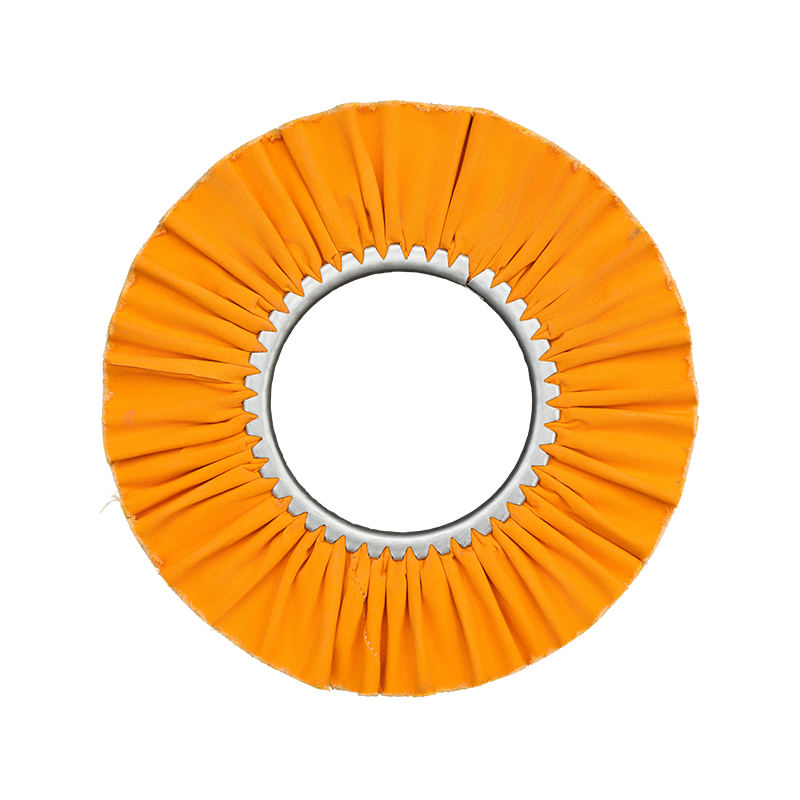
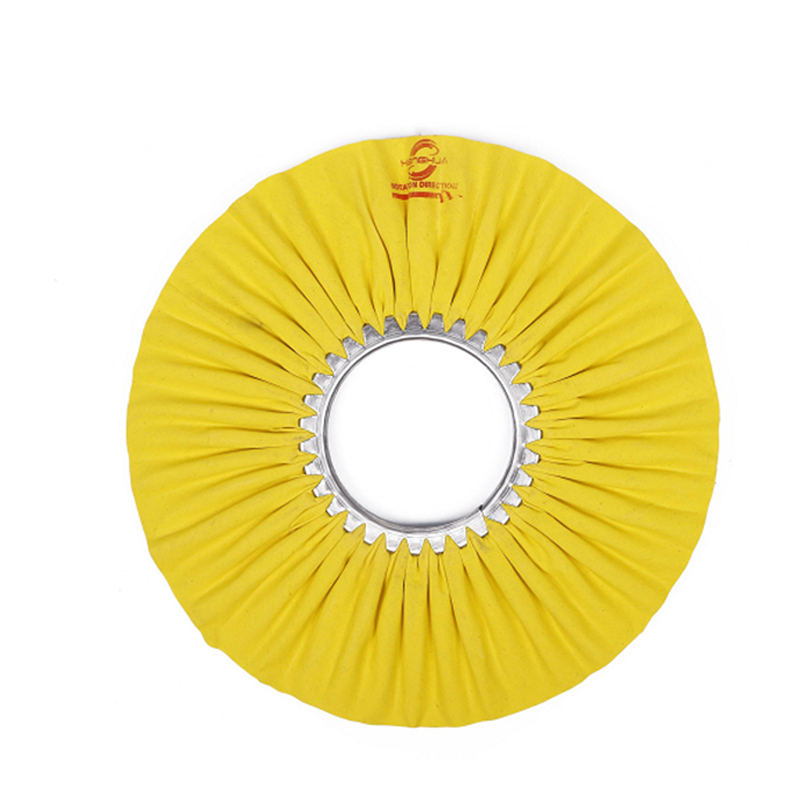
After 1500 grit, the first wheel job is to remove sanding marks without scorching the part. Sisal cuts hardest and holds up to heat best because the fiber itself is stiff; a yellow hardened cloth wheel graded for aluminum sits in the middle, trading some bite for a cleaner cut that leaves fewer deep swirls.
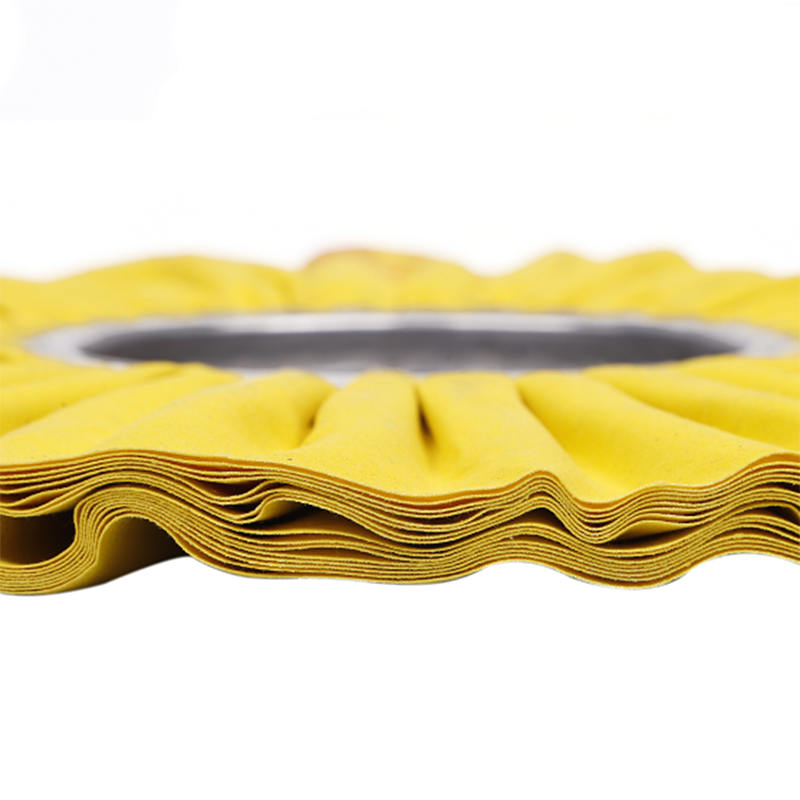 Yellow Hardened Cloth Wheel For AluminumYellow Hardened Cloth Wheel For Aluminum is a polishing tool specifically designed for aluminum alloys and light metals. Made with high-wear-resistant, hardened cloth ...View Product →
One detail worth planning for: a new wheel has a nap that takes roughly ten minutes to settle. Either break it in on scrap, or accept that the first few pieces are rework.
Blending: folded and standard flat wind wheels
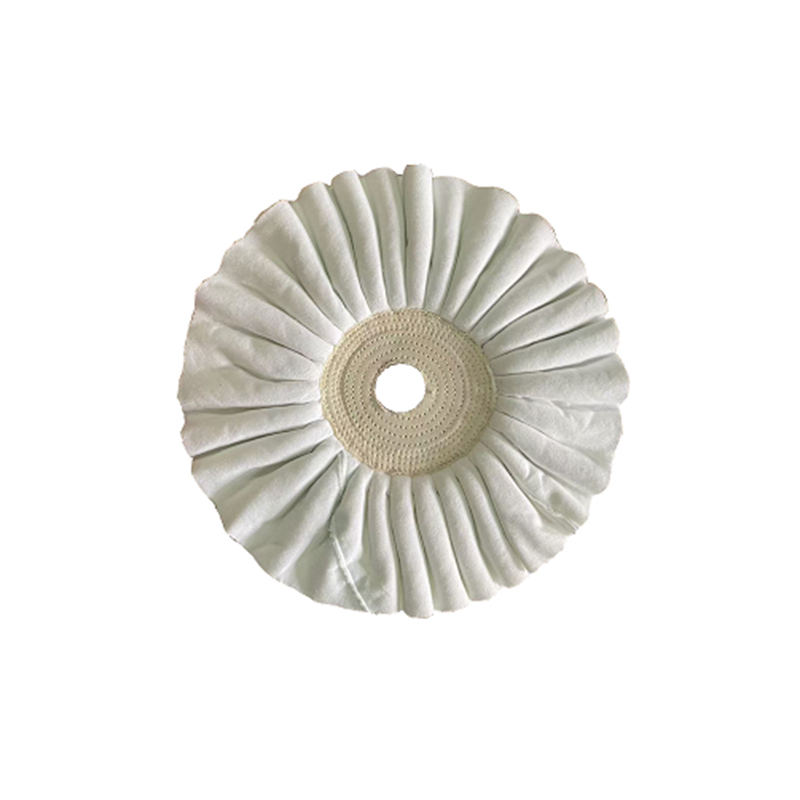
Once the cut is done, what remains on the surface is shallow and scattered. This stage is about bringing up brightness, not removing more material. Folded cloth wheels are layered, so they stay slightly stiffer; standard flat wheels intended for aluminum tend to be softer and more forgiving, which keeps them from pressing flat spots into the part. This is the step where most mirror finishes are actually lost.
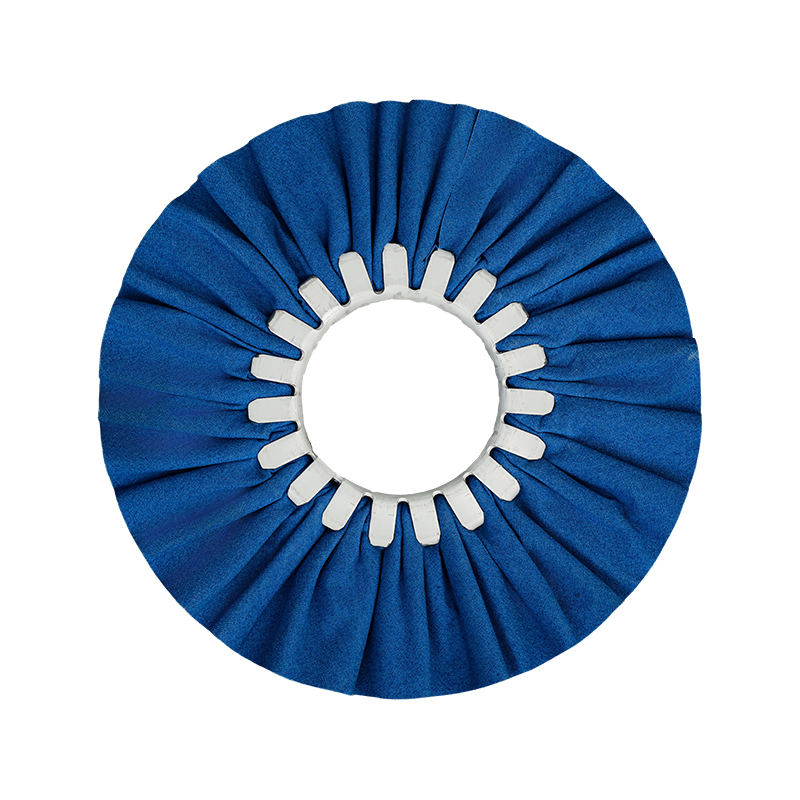 Standard Blue Wind Wheel For Aluminum PolishingStandard Flat-Plane Wind Wheel is an efficient tool widely used for grinding and polishing, made from high-quality cloth, and specially designed for grinding and finis...View Product →
Final color: soft pneumatic and flannel wheels
The last wheel should barely cut at all. Soft cloth pneumatic wheels mounted on a flexible spindle follow contours and radiused edges; flannel and white soft cloth wheels suit flat work where you would rather not hand-buff afterward. By this point pressure should be light and the part itself should never get hot.
Compound Pairing: Cut First, Then Color
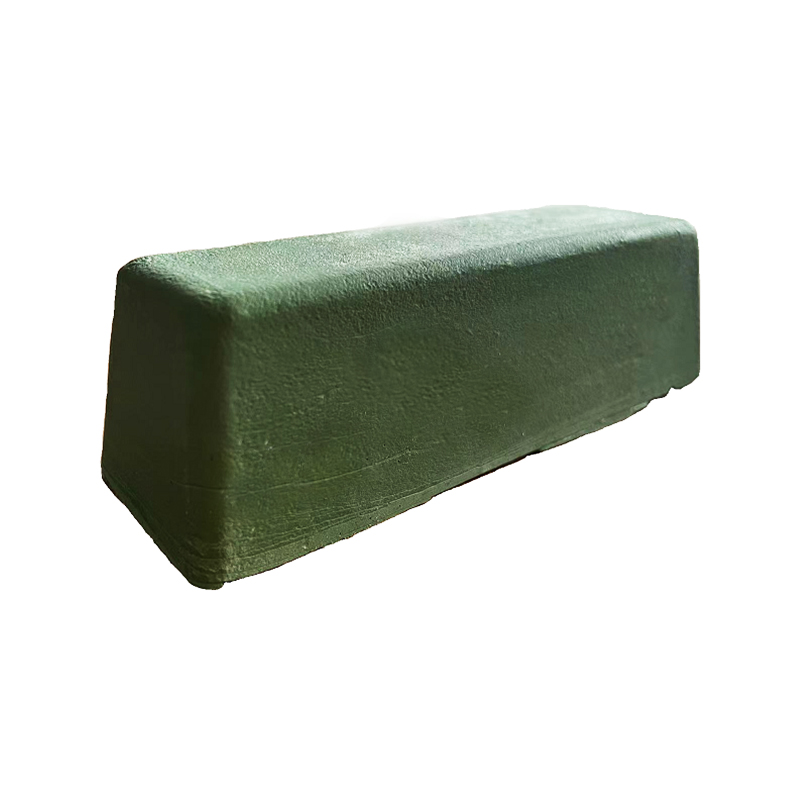
Polishing compounds confuse people on aluminum because color is remembered as a brand rather than a stage. What the color actually signals is aggression. Red and brown compounds bite; yellow sits in the middle; white barely cuts and mostly colors the surface.
One rule prevents most trouble: one wheel, one compound, one material. Compound stays in the cloth fibers, and brown residue mixed into a white finishing wheel shows up instantly as grey smearing.
Loading matters too. One or two seconds against the bar is enough. Overloaded wheels hold a film of grease that traps aluminum dust instead of letting the cloth carry it away, and the part ends up with dark smears that look like burn marks but clean off. If the surface feels slick or oily, you are overloading.
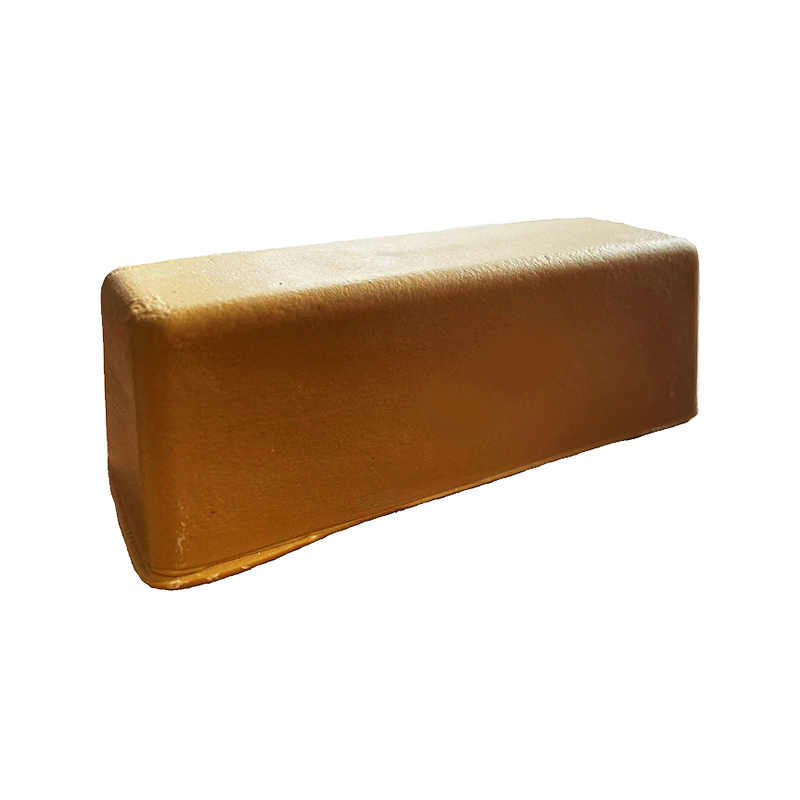
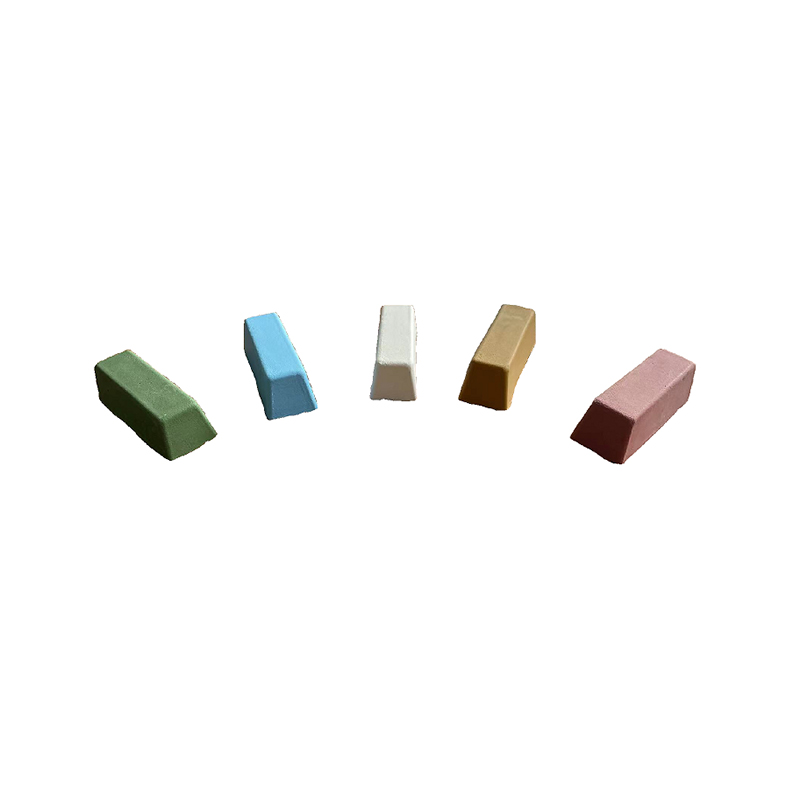 White Buffing WaxWhite Polishing WaxWhite Buffing Wax (White Polishing Wax) is a high-performance polishing wax specifically designed for fine polishing. It features a carefully selected alumina and sili...View Product →
Wheel Diameter, RPM, and Surface Speed
Edge speed decides the result, not the number on the spindle plate. At a constant 3,000 rpm, a 4-inch wheel travels about 3,100 SFPM at the rim while an 8-inch wheel reaches roughly 6,300 SFPM — double the cut. That is why the same setting that works on a bench grinder scorches parts on a pedestal buffer.
| Buff Diameter | Rough Cut RPM | Final Color RPM | Edge Speed, Cutting |
|---|---|---|---|
| 4 in | 3,000–3,400 | 2,300–2,500 | ~3,100–3,600 SFPM |
| 6 in | 2,000–2,300 | 1,500–1,650 | ~3,100–3,600 SFPM |
| 8 in | 1,500–1,700 | 1,150–1,250 | ~3,100–3,600 SFPM |
| 10 in | 1,200–1,400 | 900–1,000 | ~3,100–3,700 SFPM |
Two figures are worth memorizing: 3,100–3,600 SFPM for cutting and roughly 2,400–2,600 SFPM for color. Work backward from the wheel diameter on your machine and the spindle speed follows.
Step by Step: From 320 Grit to Mirror
- Wash the aluminum with mild detergent and water, then dry it completely. Leftover oil makes sandpaper skate and pushes abrasive into the surface.
- Wet sand at 320 or 400 grit with water or a light oil as lubricant, keeping one consistent direction. The goal is removing the previous scratch pattern, not making anything shine.
- Switch to 800 grit and turn your sanding direction 90 degrees. Changing direction is the only reliable way to see whether the coarser marks are gone.
- Repeat at 1500 grit, again at 90 degrees. The surface should now look uniformly dull rather than striped.
- Fit a sisal or hardened cloth wheel with red cutting compound. Medium pressure, roughly two to three seconds per spot, then keep moving. Wipe the black residue off before you shift position.
- Change to a clean soft cloth wheel with white compound. Pressure should be close to the weight of the tool alone, two or three passes over the whole part. Heat is the enemy here.
- Wipe residue with a microfiber cloth and inspect under strong light. A remaining haze usually means a missed 800 or 1500 pass, not too little wax.
Common Mistakes and What They Cost
- Jumping from 400 grit straight to the wheel. A buff hides scratches optically; it does not remove them.
- Swapping a 6-inch wheel for an 8-inch wheel without touching the spindle speed. Cut doubles and scorching starts.
- Sharing wheels between aluminum and stainless. Swarf hides in the cloth, and the resulting scratches reappear after cleaning.
- Holding one spot for too long. Aluminum burns in three or four seconds where steel tolerates much more.
- Treating oxide haze as scratching and cutting deeper. That is how parts go out of tolerance.
- Buying wheels by unit price instead of by hour. A soft wheel that fades in twenty minutes can send the back half of a batch to rework.
When to Bring Your Supplier Into the Process
A single part can be hand-buffed to a mirror with patience. At 200 or 500 parts of the same surface, the variables change: wheel wear, compound consumption, and operator-to-operator variation all become visible. What decides the outcome then is abrasive consistency, cloth weight, and whether the supplier holds those steady batch to batch.
Automotive work is the clearest example. Aluminum polishing in automotive manufacturing often has to cut and color on one line, and the wheel needs to return to the same condition after six to eight cycles instead of softening run by run. The first fifty pieces may be flawless; the six-hour mark is what decides whether the order makes money.
If you want to understand one wheel family properly — how folded construction manages to cut without scorching aluminum and still reach a mirror — this guide to wind wheel buffing and mirror finishing goes into the structure in detail.
If aluminum buffing on your line keeps drifting — black marks returning, wheel life too short, batches not matching — send your current grit sequence, wheel diameter, and spindle speed to a supplier and ask them to size the wheel and compound against your process. It is usually cheaper than another month of trial and error on the floor.