Español
 Deutsch
 عربى
عربىContent
- 1 What Makes a Wind Wheel Different: The Airway Construction Explained
- 2 Understanding Wind Wheel Color Codes and Treatment Grades
- 3 How to Match a Wind Wheel with the Right Buffing Compound
- 4 Wind Wheel vs. Other Buffing Wheel Types: Where Each Fits in the Polishing Process
- 5 Industries and Products Where Wind Wheels Are Used
- 6 How to Select the Right Wind Wheel: Key Specification Factors
- 7 Step-by-Step: Achieving a Mirror Finish with Wind Wheels
- 8 Safety and Maintenance Best Practices for Wind Wheels
- 9 Frequently Asked Questions About Wind Wheels
- 10 Conclusion: Why the Wind Wheel Is the Professional Choice for Mirror Finishing
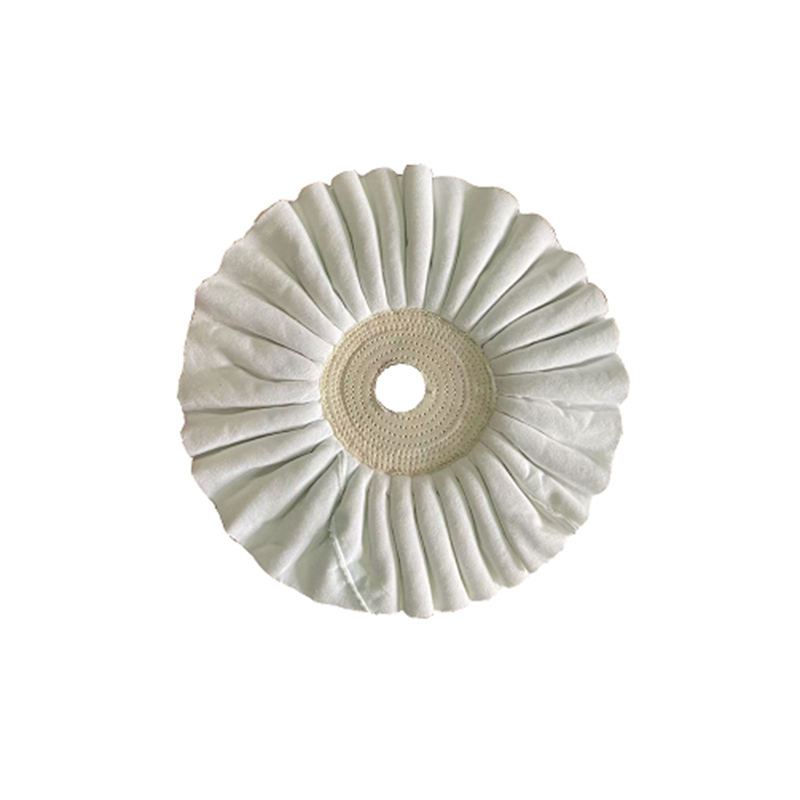
A wind wheel — also widely referred to as an airway buffing wheel, ventilated buff, or bias airway buff — is a high-performance polishing tool designed specifically for the final or intermediate stages of metal surface finishing. Unlike sisal or stitched cotton wheels that prioritize aggressive material removal, the wind wheel is engineered for precision: its pleated, folded cloth construction creates internal air channels that allow continuous airflow through the wheel during operation. This ventilation actively dissipates heat from both the wheel and the workpiece surface, enabling longer uninterrupted polishing runs, more consistent compound distribution, and a cleaner, brighter final finish than conventional buffing wheels can typically deliver.
In practical terms, wind wheels are the tool of choice for achieving mirror-level finishes on stainless steel, aluminum, brass, copper, zinc alloy, and a wide range of non-ferrous metals. They are used extensively across automotive manufacturing, hardware production, kitchenware fabrication, furniture metalwork, building materials, and electroplating pre-treatment workflows. Whether you are sourcing wind wheels for a high-throughput industrial polishing line or selecting one for precision finishing work, understanding how they are built, how they behave, and how to pair them correctly with buffing compounds is essential for getting consistent, professional results.
This guide covers the full picture: the construction and mechanics of wind wheels, the role of color-coded treatment grades, compound pairing by metal type, application industries, a practical comparison with alternative wheel types, and a step-by-step workflow for achieving a true mirror finish.
What Makes a Wind Wheel Different: The Airway Construction Explained
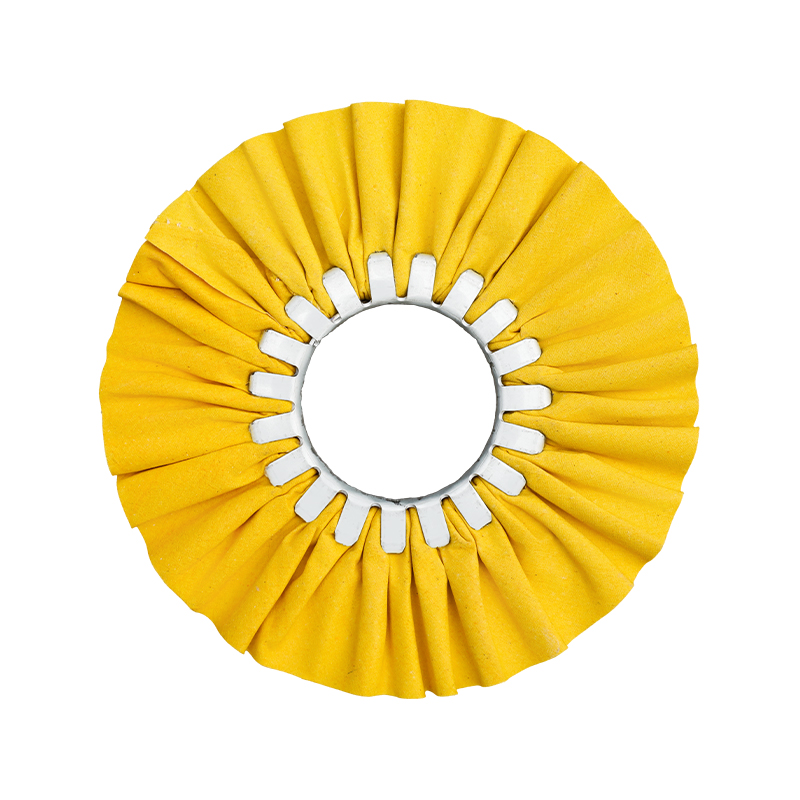
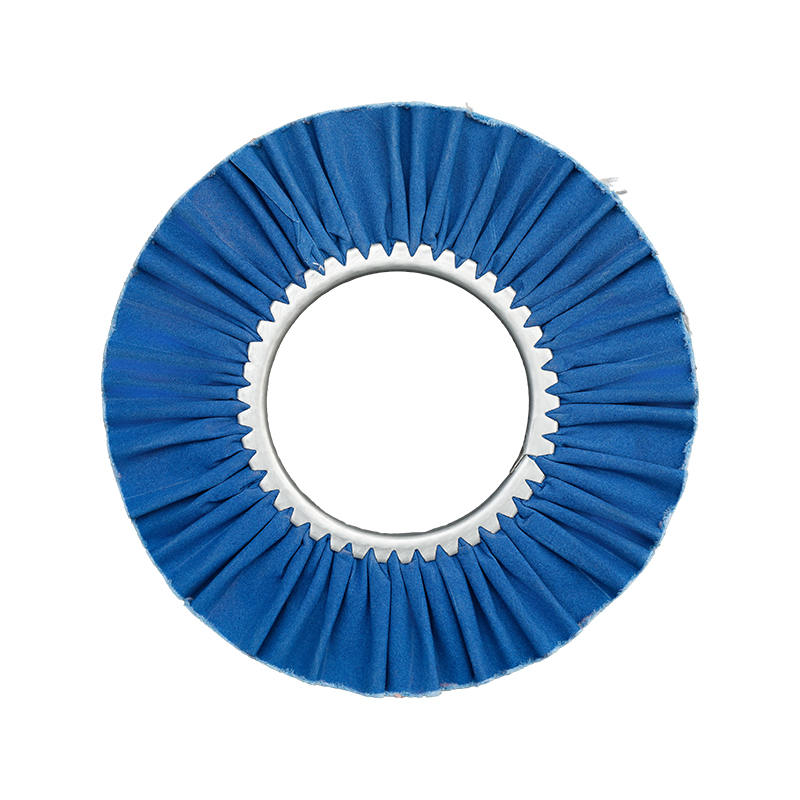
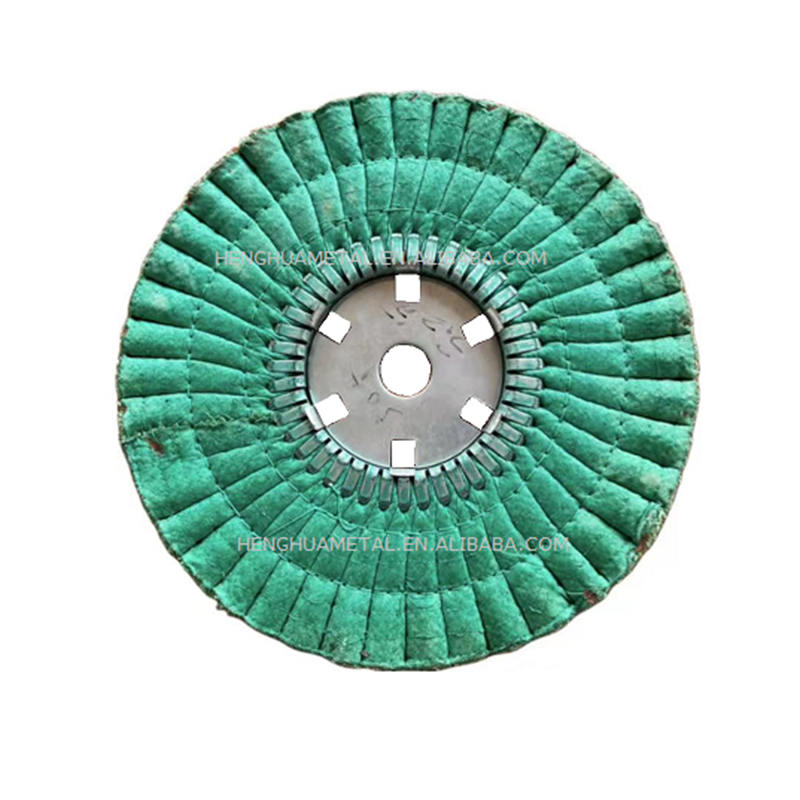
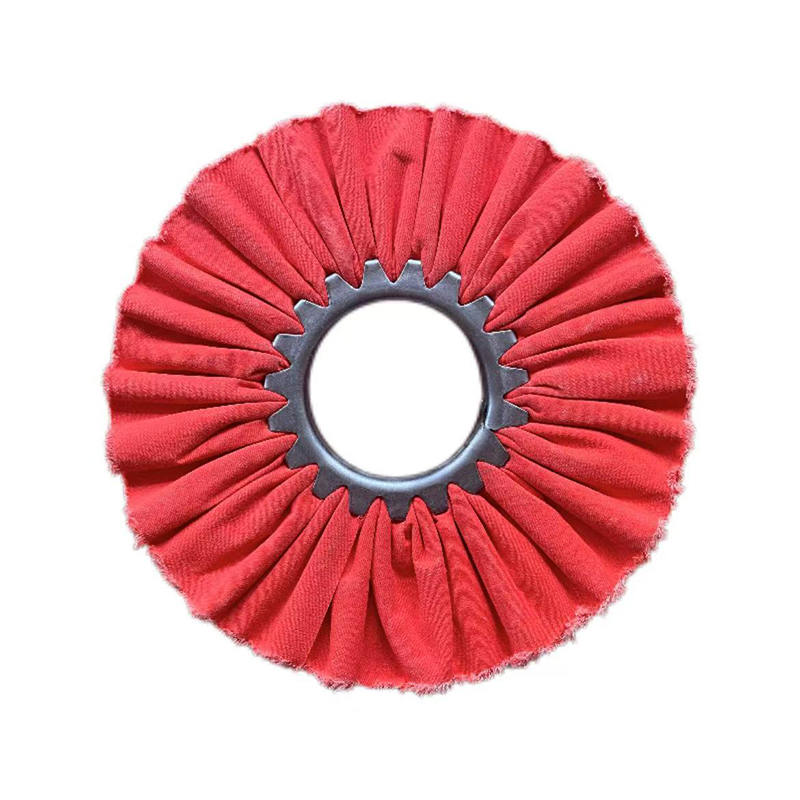
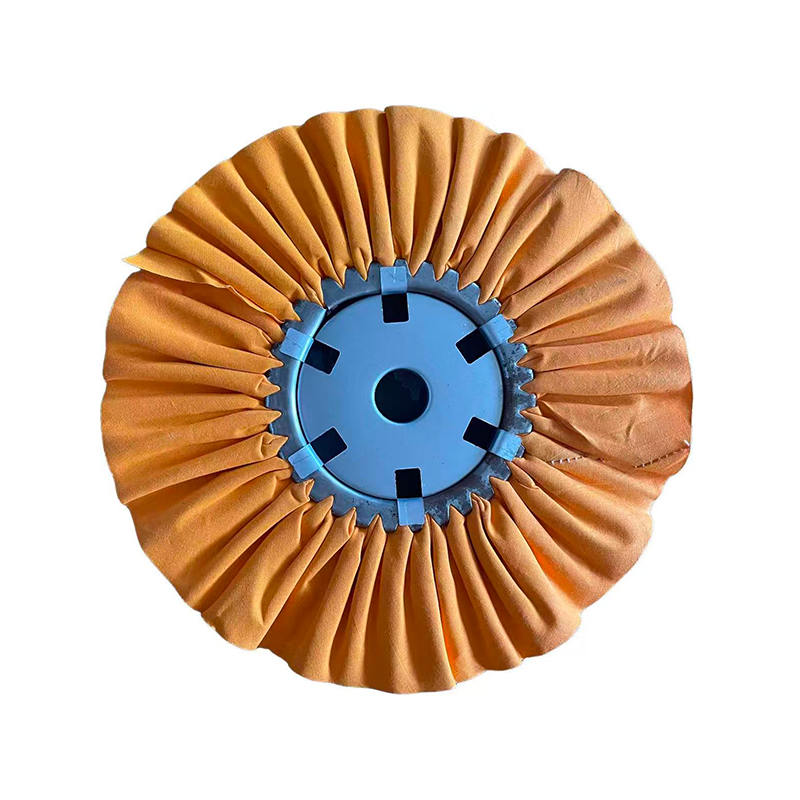
The defining feature of a wind wheel is its pleated, folded structure. Unlike a conventional buffing wheel — which is built from flat layers of cotton, muslin, or sisal stacked parallel to one another — a wind wheel is constructed by attaching multiple plies of cotton cloth to a central steel clinch ring in a way that forces each layer to form a radial pleat or fold. These folds project outward from the center, creating a wheel face composed of hundreds of individual fabric edges rather than a smooth flat surface.
The practical consequences of this design are significant:
- Active ventilation: The channels between each pleat allow air to move freely through the wheel body during rotation. This airflow carries heat away from the contact zone continuously, preventing the thermal buildup that can discolor soft metals or harden polishing compound on the wheel face prematurely.
- Enhanced compound retention: Each pleat acts as a small pocket that holds and releases polishing compound as the wheel rotates against the workpiece. This provides a more even and sustained compound delivery than flat-layer wheels, reducing the frequency of reapplication during extended polishing sessions.
- Edge contact polishing: Wind wheels are designed for edge buffing — the technique of pressing the workpiece against the outer edge of the wheel face rather than the flat side. This edge contact concentrates polishing pressure precisely, making wind wheels well suited to profiled, curved, or complex-geometry workpieces.
- Cooler surface temperature: Because the ventilation actively manages heat, wind wheels can be operated for longer periods before the workpiece or the wheel needs to cool down. This is a key efficiency advantage on large surface area applications such as stainless steel tanks, aluminum panels, trailer bodies, and architectural cladding.
The steel center plate or clinch ring at the core of the wheel is not merely a mounting component — it also acts as a heat sink and structural anchor that keeps the pleats under consistent tension during high-speed rotation. Standard wind wheels are built to operating speeds typically in the range of 2,000 to 3,500 RPM depending on wheel diameter, and the center ring plays a critical role in preventing delamination at these speeds. Always use a self-centering safety flange when mounting a wind wheel to ensure secure clamping and prevent the cloth plies from separating from the center ring during operation.
Understanding Wind Wheel Color Codes and Treatment Grades
One of the most practical aspects of working with wind wheels is the standardized color-coding system used across the industry to indicate the treatment grade and relative stiffness of each wheel. The colors are not decorative — each one signals a specific level of fabric firmness, a corresponding stage in the polishing process, and a recommended metal type. Understanding this system allows operators to select the correct wheel instantly without trial and error.
| Color | Stiffness Level | Polishing Stage | Primary Metal Suitability | Typical Compound Pairing |
|---|---|---|---|---|
| Blue (Mill Treated) | Highest | Step 1 — Cut buffing | Stainless steel, hard alloys | Black emery compound |
| Red (Treated) | High | Step 1 — Cut buffing | Stainless steel | Black magic / grey compound |
| Orange (Treated) | Medium-High | Step 1 — Cut buffing | Aluminum, non-ferrous metals | Brown tripoli compound |
| Yellow (Mill Treated) | Medium | Step 2 — Color buffing | Aluminum, brass, copper | Green rouge compound |
| Pink (Treated) | Medium-Soft | Step 2 — Color buffing | Stainless steel (second pass) | Yellow deluxe compound |
| White / Domet Flannel | Softest | Step 3 — Final mirror finish | All metals, plastics, wood lacquer | White diamond / blue rouge / purple rouge |
The underlying principle is straightforward: stiffer wheels cut more aggressively, while softer wheels deliver finer color and luster. A properly executed polishing sequence moves progressively from harder, more aggressive wheels paired with coarser compounds in the early stages, toward softer wheels with finer finishing compounds in the final stage. Attempting to skip stages — for instance, applying a soft white flannel wind wheel directly to a heavily scratched stainless steel surface — will not produce a mirror finish; it will simply polish over the scratches without removing them, resulting in a hazy, uneven surface.
It is important to note that color conventions can vary slightly between manufacturers. Always verify the stiffness and application data provided by your specific supplier rather than relying solely on color as an absolute guide. That said, the broad framework described above reflects the widely accepted industry standard and is a reliable starting reference for most applications.
How to Match a Wind Wheel with the Right Buffing Compound
The relationship between the wind wheel and the buffing compound is not optional — it is the foundation of the entire polishing process. The wheel provides the mechanical delivery mechanism; the compound provides the abrasive cutting or finishing chemistry. Using either element incorrectly undermines the output of both.
Stainless Steel Polishing Sequence
For stainless steel, the recommended approach is a minimum two-step process using wind wheels. Begin with a red or blue treated wind wheel loaded with black emery (black magic) compound. This first step operates at approximately 3,000 to 3,500 RPM and removes 320–400 grit scratch marks, surface oxidation, and any residual grinding lines left from earlier processing. The second step uses a pink treated wind wheel paired with yellow deluxe compound at around 3,000 RPM to bring the surface from a satin to a high-luster finish. For show-quality results, a final pass with a white domet flannel wind wheel loaded with blue or purple rouge compound will produce a deep mirror finish that is effectively free of visible surface texture.
Aluminum Polishing Sequence
Aluminum requires a slightly different approach. Because aluminum is softer and more porous than stainless steel, it absorbs compound more readily and can develop deep grooves if overly aggressive wheels are used. Start with an orange treated wind wheel and brown tripoli compound at 3,000 to 3,500 RPM to remove 400 and 600 grit sanding marks from the surface. Follow with a yellow mill-treated wind wheel paired with green rouge compound at 2,500 to 3,000 RPM to develop color depth and luster. For show-grade finishes on aluminum wheels, tanks, or diamond plate, finish with a flannel wind wheel and a fine purple or blue rouge compound. Apply moderate pressure and avoid dwelling in one position to prevent heat-induced surface warping on thin aluminum panels.
Brass, Copper, and Zinc Alloy
For brass and copper workpieces, brown tripoli compound paired with an orange or yellow wind wheel serves as an effective first-pass cutting step that removes surface marks and light oxidation without over-cutting the softer metal substrate. The second stage uses red rouge compound with a soft flannel wind wheel to develop the rich, warm luster characteristic of high-quality brass and copper finishes. Zinc alloy hardware components — common in decorative fittings, door hardware, and bathroom accessories — respond well to a direct two-step sequence using yellow compound for cutting and white diamond compound on a flannel wind wheel for final color.
Non-Metal Surfaces: Plastics, Wood Lacquer, and Leather
The wind wheel's cooler operating profile also makes it suitable for certain non-metal applications. On painted surfaces, high-gloss furniture lacquer, and leather goods, the soft flannel wind wheel variant — used at low speed (typically below 2,200 RPM) with white or blue compound — can remove light surface scratches and restore gloss without generating the heat levels that would blister or soften the surface. This versatility makes wind wheels a useful tool not only in metalworking environments but also in automotive detailing, woodworking finishing shops, and leather goods manufacturing.
Wind Wheel vs. Other Buffing Wheel Types: Where Each Fits in the Polishing Process
Metal finishing professionals work with multiple wheel types, each positioned at a specific stage of the polishing sequence. Understanding where the wind wheel fits — and where it does not — prevents costly mistakes and wasted consumable spend.
| Wheel Type | Construction | Heat Generation | Cutting Aggression | Best Stage | Mirror Finish Capable |
|---|---|---|---|---|---|
| Sisal Wheel | Stitched sisal fiber layers | High | Very High | Step 1 — Heavy cut-down | No |
| Spiral-Sewn Cotton | Flat cotton, stitched rings | Medium | Medium | Step 2 — Intermediate cut & color | Partial (satin) |
| Wind Wheel (Treated) | Pleated cloth, center ring | Low–Medium | Medium–High (by grade) | Step 1–2 (color grade dependent) | Yes (with flannel grade) |
| Wind Wheel (Flannel) | Pleated flannel, center ring | Very Low | Low | Step 3 — Mirror finish | Yes |
| Loose Cotton Mop | Unstitched soft cotton | Very Low | Very Low | Step 3 — Final color | Yes |
The key takeaway from this comparison is that wind wheels occupy a unique position in the polishing sequence: they are capable of delivering both cut and color depending on treatment grade, making them one of the most versatile wheel types available. A well-equipped polishing station can potentially complete an entire multi-step finishing sequence using only wind wheels of progressively softer grades — from a hard treated blue or red wheel for initial cut-down through to a flannel wind wheel for the final mirror pass. This workflow consolidation is a meaningful efficiency advantage in industrial settings where tool changes represent real downtime costs.
Industries and Products Where Wind Wheels Are Used
Wind wheels are found across a broad range of manufacturing industries. Their combination of cooling ventilation, versatile treatment grades, and consistent compound retention makes them well suited to any production environment where metal surface appearance is a quality criterion — which encompasses a large proportion of manufactured consumer and industrial goods.
Automotive Parts and Accessories
Wind wheels are standard polishing tools in automotive parts manufacturing and aftermarket detailing. Aluminum alloy wheels, stainless exhaust systems, chrome trim, bumpers, fuel tanks, and engine housings all require high-quality mirror finishes that meet both aesthetic and corrosion-resistance standards. The cooler operation of wind wheels is particularly valuable when polishing aluminum wheel rims — a thin-walled component that can warp or develop uneven surfaces if exposed to excessive heat during buffing. A standard two-step sequence using orange and yellow wind wheels with tripoli and green rouge compounds can bring a raw-machined aluminum wheel to a show-quality finish efficiently.
Stainless Steel Kitchenware and Cookware
Pots, pans, sinks, countertop equipment, and food processing machinery are among the highest-volume applications for wind wheels in stainless steel fabrication. The food service and catering industry imposes strict surface finish requirements — both for hygiene reasons (smooth, non-porous surfaces resist bacterial adhesion) and for consumer aesthetics. Wind wheels paired with appropriate stainless steel compounds deliver the high-luster, directionally uniform finish required for commercial kitchen products to pass inspection standards in major export markets.
Hardware and Precision Components
Door handles, hinges, locks, faucets, valves, pipe fittings, and decorative architectural hardware are frequently polished with wind wheels in both manual and automated configurations. For zinc alloy and brass hardware components destined for chrome or nickel electroplating, wind wheel polishing is typically the final step before the plating bath — the quality of the polished substrate surface directly determines the adhesion quality and appearance uniformity of the deposited plating layer. Any surface defects not removed by polishing will be amplified, not concealed, by the plating process.
Furniture and Interior Metalwork
Metal furniture frames, decorative steel and brass inlays, stainless steel table legs, and high-end cabinet hardware all use wind wheel polishing to achieve the smooth, reflective finishes demanded by furniture designers and interior contractors. In this application context, the flannel wind wheel is particularly valued for its ability to produce a high-luster result on complex profiles and curved geometry without leaving directional buffing marks.
Building Materials and Architectural Components
Stainless steel cladding panels, handrails, elevator interiors, signage, and structural decorative elements in commercial buildings are polished to specification using wind wheels in large-format buffing machine configurations. Large-diameter wind wheels — 10 inches and above — are commonly used on automated polishing lines for processing long sections of flat or tube material where consistent surface finish across the full length of the part is critical for architectural acceptance.
Electroplating and Surface Treatment Pre-Processing
In electroplating facilities, wind wheel polishing is often the last manual or automated processing step before parts enter the plating bath. The requirement is to deliver a surface that is geometrically smooth and free from embedded polishing compound residue, scale, or micro-scratches. The cool-running characteristic of the wind wheel reduces the risk of thermal stress marks on thin base metal sections, which is especially relevant for components with fine detail or sharp interior corners.
How to Select the Right Wind Wheel: Key Specification Factors
For procurement managers and polishing line operators selecting wind wheels, the following specification factors determine fitness for purpose. Buying the wrong grade or size is a common and easily avoided source of inconsistent finish quality and unnecessary consumable cost.
- Wheel Diameter: Available from approximately 100 mm (4 inches) to 500 mm (20 inches) depending on the manufacturer. Smaller diameters suit bench grinders and handheld polishers for precision or small-part work; larger diameters are used on industrial buffing machines processing larger panels, tubes, or bars. Match the diameter to the physical size of the workpiece and the machine's arbor capacity.
- Ply Count: Wind wheels are commonly available in 16-ply configurations, though heavier-duty industrial variants may have more plies for additional face density. Higher ply counts generally deliver more compound retention and a slightly firmer face — useful for heavier cut applications. Lower ply counts produce a softer, more flexible face suited to contour polishing.
- Center Ring Size: The inner diameter of the steel center plate must match the spindle or arbor size of your machine. Standard inner diameters include 55 mm, 76 mm, and larger sizes for industrial machines. Always confirm compatibility before ordering in quantity.
- Treatment Grade (Color): As described in the color code section above, select the treatment grade appropriate for the metal type and polishing stage. For a two-step stainless steel workflow, you will need at minimum a red or blue treated wheel for cutting and a pink or flannel wheel for color and finish. For aluminum, orange and yellow grades cover the standard two-step sequence.
- Maximum Operating Speed: Always verify the wheel's rated maximum RPM against your machine's spindle speed. Larger diameter wheels have lower maximum RPM ratings; running a wind wheel above its rated speed risks center plate delamination and poses a serious safety hazard to operators.
- Cloth Material: Standard wind wheels use cotton cloth in varying grades of softness. Premium flannel (domet flannel) wind wheels use a plush, ultra-soft flannel material and are reserved exclusively for final mirror polishing. Some application-specific variants use non-woven nylon fabric for surface cleaning, sanding, and wire drawing operations on irregular or contoured surfaces where conventional fabric wind wheels would be too stiff.
Step-by-Step: Achieving a Mirror Finish with Wind Wheels
The following workflow applies to stainless steel workpieces as a primary example, but the same logic — with appropriate compound substitutions — applies to aluminum, brass, and other metals.
Stage 1: Surface Preparation
Before introducing any buffing wheel, ensure the base surface has been sanded to at least 320–400 grit. Heavier scratches, weld seams, and scale should have been addressed with a sisal wheel or abrasive belt earlier in the process. The wind wheel is not designed for heavy stock removal; bringing a heavily damaged surface directly to a wind wheel will result in a prolonged, inefficient cutting session and a poor outcome. Starting the wind wheel stage with a clean, 400-grit sanded surface delivers the best cost-to-result ratio.
Stage 2: First-Pass Cut Buffing (Red or Blue Wind Wheel)
Mount the red or blue treated wind wheel and load it with black emery compound. Set the machine to approximately 3,000–3,500 RPM. Press the edge of the wheel to the workpiece with steady, consistent pressure and work in overlapping passes. The goal at this stage is to remove all visible 400-grit sanding lines and produce a uniform satin surface. Re-apply compound to the spinning wheel every 45–60 seconds to maintain cutting efficiency. Do not allow the wheel to run dry — a dry sisal or treated cotton wheel can produce deep, irregular scratches that are difficult to remove in subsequent stages.
Stage 3: Second-Pass Color Buffing (Pink Wind Wheel)
After cleaning off residual black compound from the workpiece surface with a clean cloth, switch to the pink treated wind wheel and load with yellow deluxe compound. Reduce machine speed to approximately 2,800–3,200 RPM. The pink wheel is softer than the red and will blend out any remaining cut marks from stage 2 while developing a clear, high-brightness luster. This stage transitions the surface from a satin appearance to a near-mirror reflectivity. For many industrial applications — hardware components, kitchenware, pipe fittings — the result at the end of this stage is sufficient for delivery.
Stage 4: Final Mirror Finish (Flannel Wind Wheel)
For applications requiring a true mirror finish — architectural hardware, show-grade automotive components, premium kitchenware, or decorative stainless steel products — add a final pass with a white domet flannel wind wheel loaded with blue rouge or purple rouge compound. Reduce machine speed to 1,800–2,200 RPM to minimize heat and maximize surface response to the fine abrasive. The flannel wheel's ultra-soft face and the fine compound's chromium oxide or aluminum oxide abrasive content work together to eliminate any remaining micro-scratches and produce a highly reflective, distortion-free mirror surface.
After the final polishing stage, clean the surface immediately with a clean dry cloth or microfiber towel to remove all compound residue. For stainless steel components that will be handled frequently, a thin coat of protective wax or lacquer applied after polishing helps preserve the mirror finish by preventing surface oxidation and fingerprint contamination during storage and transit.
Safety and Maintenance Best Practices for Wind Wheels
Operating wind wheels safely and maintaining them correctly protects both operators and the quality of the finished output. The following practices are standard in professional polishing environments and should be followed consistently.
- Always use a ventilated safety flange: Wind wheels must be mounted with a self-centering safety flange rather than standard solid flanges. The ventilated flange grips the center ring of the wheel evenly and prevents delamination of the pleated cloth layers from the steel center plate under the centrifugal forces generated at operating speed.
- Wear PPE at all times: Face shield or safety glasses, work gloves, and a respirator rated for fine metal dust and compound particulates are required. At 3,000 RPM, compound debris and metal particles become airborne at high velocity. Long-term inhalation exposure to fine metal and compound dust is a recognized occupational health hazard.
- Never exceed rated RPM: Overspeeding a wind wheel causes stress fractures in the center ring and can result in catastrophic wheel disintegration. Match wheel size to machine speed before each use and verify this at every wheel change.
- Rake the wheel regularly: As compound is applied and heat cycles occur, polishing compound hardens and glazes the face of the wind wheel, reducing cutting or finishing efficiency. Use a wheel rake (a coarse abrasive tool held against the spinning wheel face) before initial use and periodically between extended polishing sessions to restore the wheel face and remove hardened compound buildup.
- Dedicate each wheel to one compound: Cross-contaminating a wind wheel with different compounds introduces inconsistent abrasive chemistry that can leave unpredictable surface marks. Mark each wheel clearly with its designated compound and enforce this discipline on the production floor.
- Inspect wheels before use: Check the center ring for signs of cracking, distortion, or loose clinching. Inspect the cloth pleats for fraying, missing sections, or compound buildup that cannot be removed by raking. A damaged wind wheel should be removed from service immediately — the risk of mid-operation failure is not acceptable in a professional polishing environment.
- Store correctly: Keep unused wind wheels in a cool, dry environment away from direct sunlight, solvents, and moisture. Exposure to humidity can weaken the adhesive bonding between the cloth and center ring in treated wheels, reducing their effective service life.
Frequently Asked Questions About Wind Wheels
Can a wind wheel replace a sisal wheel in the polishing sequence?
In most cases, no. A hard treated (blue or red) wind wheel can handle light to moderate cut-down work on surfaces that have been sanded to 320–400 grit, but it lacks the structural rigidity and fiber abrasiveness of a sisal wheel when dealing with deep scratches, heavy die marks, or weld seam preparation. For surfaces that have only minor sanding marks or previous polishing lines, a treated wind wheel is fully capable as a first-step tool. For heavily damaged surfaces, a sisal wheel should be used first before introducing the wind wheel.
How long does a wind wheel last in production use?
Service life depends on operating speed, applied pressure, frequency of compound application, and maintenance diligence. Wind wheels that are raked regularly, operated within their rated speed, and used with appropriate compound loading will typically outlast conventional stitched cotton wheels in equivalent applications, because the pleated construction distributes wear more evenly across the wheel face. Flannel-grade wind wheels used for final finishing at lower speeds tend to have the longest service life among the range.
What is the difference between a wind wheel and a regular airway buff?
These are the same product category under different regional naming conventions. In Chinese manufacturing and export contexts, the pleated ventilated buffing wheel is commonly called a wind wheel (风轮 / 风叶轮). In North American and European professional metalworking contexts, the same product is typically referred to as an airway buff, airway buffing wheel, ventilated buff, or bias airway buff. The structural design and function are identical.
Can wind wheels be used on a handheld angle grinder?
Yes — edge buffing with a wind wheel mounted on an angle grinder is a widely used technique, particularly for polishing aluminum wheels, vehicle body panels, and large flat metal sections that cannot be brought to a bench-mounted polishing machine. Ensure the wheel diameter is rated for the RPM of the angle grinder being used, and use a center reducer plate and appropriate flanges for secure mounting. Maintain a consistent angle and avoid pressing the wheel flat against the surface — the edge contact technique is critical for achieving even results with a wind wheel on a handheld tool.
Conclusion: Why the Wind Wheel Is the Professional Choice for Mirror Finishing
The wind wheel's combination of active ventilation, versatile treatment grades, and consistent compound delivery addresses the core challenges of high-quality metal finishing: heat management, surface uniformity, and process efficiency. No other single wheel type covers as wide a range of polishing stages — from first-pass cut buffing on hard metals through to final mirror finishing on aluminum, stainless steel, brass, and non-metal surfaces — while maintaining the cooler operating profile that protects both the workpiece and the operator.
For production managers and procurement professionals sourcing polishing consumables, the practical recommendation is to invest in a complete set of wind wheel grades — at minimum a hard treated grade for cutting, a medium grade for color development, and a flannel grade for final mirror work — and to pair each grade consistently with the appropriate buffing compound for the metals being processed. Consistency in wheel selection, compound pairing, and operating parameters is the foundation of a repeatable, high-quality polishing output.
When evaluating wind wheel suppliers, look for consistent ply density, verified center ring quality, and reliable treatment hardness across production batches. The difference between a well-manufactured wind wheel and a substandard one becomes visible very quickly in the polishing results — and the cost of scrapped or reworked parts far outweighs the savings from low-cost tooling. For B2B buyers sourcing at scale, requesting material certifications and sample batch testing before committing to large volumes is standard practice and strongly advisable.