

 Español
 Deutsch
 عربى
عربى
Hardened Cloth Wind Wheel Factory
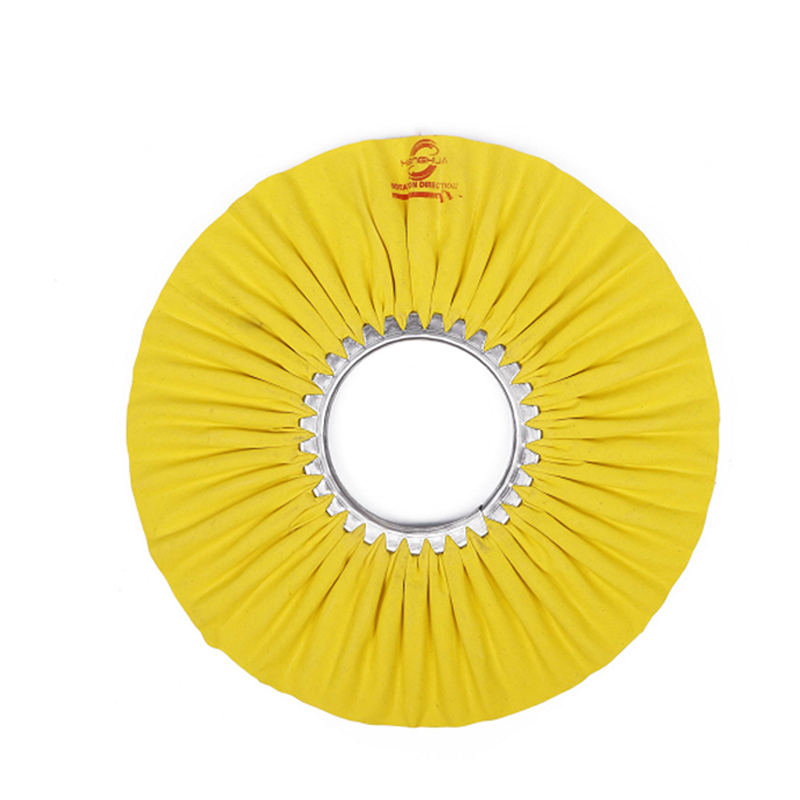
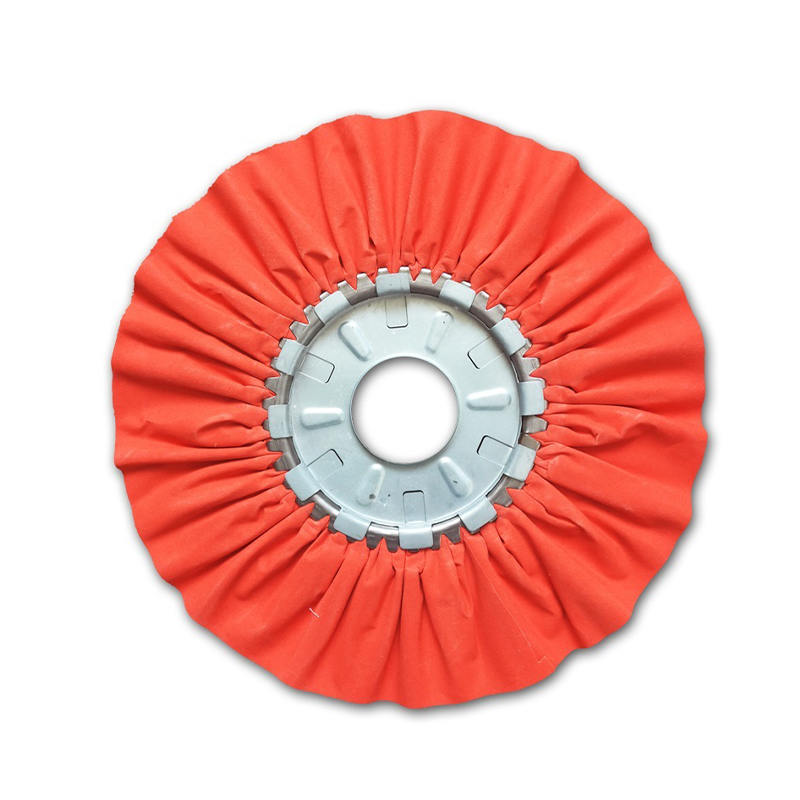
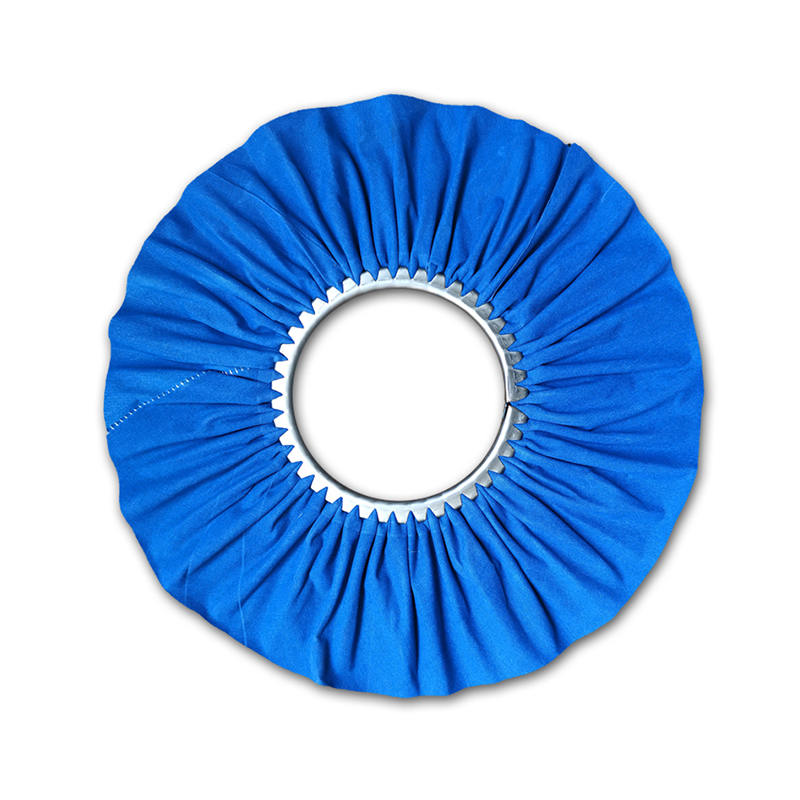
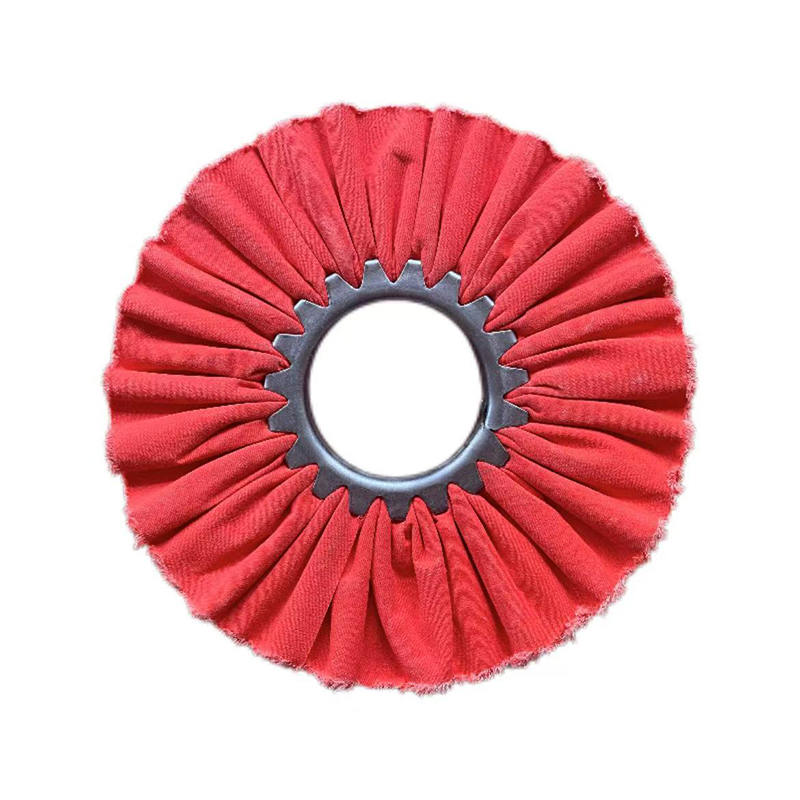
The Hardened Cloth Wind Wheel is a professional polishing and sanding tool made of multiple layers of cloth hardened with starch or a special resin. The hardened cloth possesses moderate rigidity and good cutting force, designed specifically for removing minor scratches and performing initial polishing. Whether on metal, wood, or plastic surfaces, the Hardened Cloth Wind Wheel provides a uniform and controlled grinding effect, laying a solid foundation for subsequent fine polishing.
Advantages:
Minor Scratch Removal – The moderate cutting force of the hardened cloth effectively removes minor scratches and imperfections, preparing the surface for subsequent polishing.
Initial Polishing – Even pressure during sanding results in a smooth surface and improved material finish.
Durable and Efficient – The hardened cloth is highly resilient, less prone to breakage or deformation, extending its lifespan and increasing work efficiency.
Suitable for:
· Preliminary polishing of metal parts and sheets
· Surface treatment of wooden crafts
· Light polishing of plastic and composite material surfaces
· Industrial processing and fine hand polishing
Instructions for use:
1. Install the hard cloth impeller on an electric polisher or manual polishing tool.
2. Clean the work surface and apply even pressure while polishing.
3. Repeat the process as needed to achieve the best results, depending on the severity of the scratches.
Product highlights:
· Hardened cloth with moderate cutting force
· High durability and resistance to deformation over long-term use
· Removes minor scratches and provides a uniform initial polishing effect
· Suitable for both industrial and hand polishing
About
Ningbo Henghua Metal Surface Treatment Technology Co., Ltd.
Ningbo Henghua Metal Surface Treatment Technology Co., Ltd. is located in Dongjiaqiao, Jishigang, Haishu District, Ningbo Bo City, Zhejiang Province, China. As a China Hardened Cloth Wind Wheel suppliers, Henghua Metal Surface Treatment Technology Co., Ltd. provides various customized polishing materials. The company was established in 2016, with a plant area of 3,500 square meters, more than 10 sets of advanced cloth wheel production equipment, 2 fully automatic canning lines, and can customize the production of wind cloth wheels of various types and sizes. Ma wheel, polishing wax, chiye wheel, metal polishing paste and other products, customers are all over South America, the United States, Europe, the Middle East, etc. In recent years, the company has continuously innovated to improve the work efficiency of polishing materials, and has won the recognition of customers. Welcome customers in need to call to negotiate cooperation!
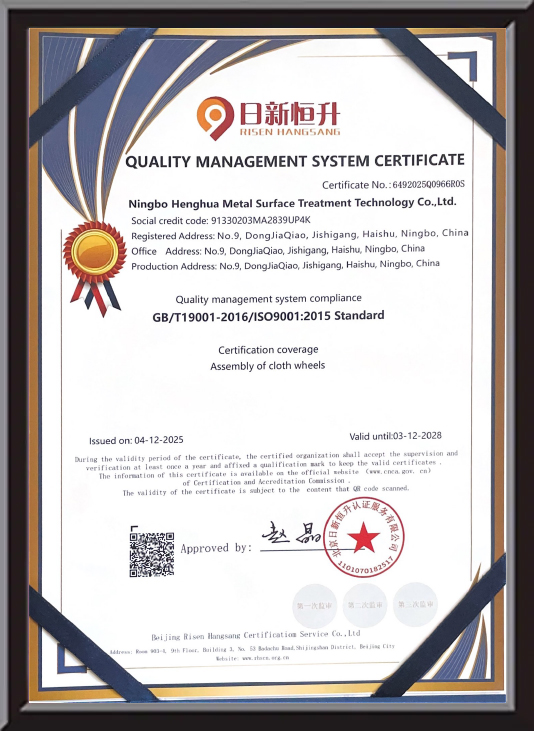
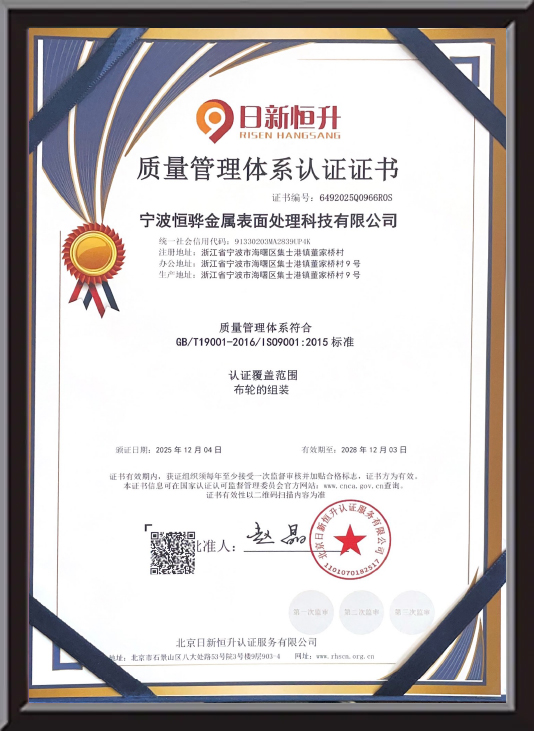
Certificate Of Honor
Message Feedback
Hardened Cloth Wind Wheel Industry Knowledge
A hardened cloth wind wheel is a high-performance abrasive tool engineered for demanding metal surface treatment applications. Unlike standard polishing wheels, it combines a rigid, resin-bonded cloth structure with precisely graded abrasive grains, delivering consistent cutting action and a refined surface finish in a single operation. For manufacturers seeking reliable deburring, blending, and finishing results across ferrous and non-ferrous metals, the hardened cloth wind wheel has become an essential component in modern polishing workflows.
Key Advantages of the Hardened Cloth Wind Wheel
The hardened cloth wind wheel offers a set of measurable benefits that distinguish it from conventional fiber or sisal wheels. Its layered cloth construction is impregnated with hardening resin, giving each layer structural rigidity while retaining enough flexibility to conform to contoured workpiece surfaces.
- Consistent abrasive contact: The hardened layers maintain uniform pressure across irregular profiles, reducing uneven wear patterns common with softer wheels.
- Extended service life: Resin hardening significantly slows surface degradation, making the wheel cost-effective for high-volume production lines.
- Broad material compatibility: Suitable for stainless steel, carbon steel, aluminum alloys, brass, and copper workpieces.
- Reduced heat buildup: The wind-wheel structure promotes airflow around the contact zone, limiting thermal discoloration on heat-sensitive substrates.
- Clean finish output: Produces a bright, uniform surface suitable for downstream plating, anodizing, or coating processes.
How the Hardened Cloth Wind Wheel Works
The working principle of the hardened cloth wind wheel centers on controlled abrasive cutting combined with centrifugal flexibility. The wheel is assembled from multiple layers of cloth cut into petal or fan shapes, then bonded at the core with resin compounds to create a hardened central body. During rotation, the outer cloth petals fan outward under centrifugal force, creating a self-renewing abrasive surface that consistently presents fresh grain to the workpiece.
As the wheel contacts the metal surface, the hardened inner layers provide structural support while the outer petals flex to follow surface contours. This dual-action behavior allows operators to blend welds, remove mill scale, and achieve a pre-polish finish without the aggressive gouging associated with harder grinding wheels. The open petal design also dissipates heat efficiently, which is critical when working with stainless steel or aluminum where thermal damage can compromise corrosion resistance.
Typical Applications Across Manufacturing Industries
The hardened cloth wind wheel is widely deployed wherever metal surfaces require a combination of material removal and aesthetic refinement. The table below summarizes the most common industrial scenarios:
| Industry | Application | Typical Workpiece |
|---|---|---|
| Sanitary Ware & Plumbing | Weld blending, pre-chrome finish | Faucets, pipe fittings |
| Automotive Parts | Deburring, surface blending | Brackets, exhaust components |
| Hardware & Fasteners | Edge rounding, scale removal | Bolts, hinges, handles |
| Kitchenware | Mirror pre-polish, scratch removal | Pots, cutlery, sinks |
| Industrial Equipment | Surface reconditioning | Shafts, frames, enclosures |
Selecting the Right Hardened Cloth Wind Wheel for Your Process
Choosing the correct wheel specification directly impacts both finishing quality and operational efficiency. The primary variables to evaluate are abrasive grit size, wheel diameter, bore size, and hardness grade of the cloth layers.
Grit selection follows the general rule of matching coarseness to the degree of surface correction needed: coarser grits (60–120) for scale removal and weld blending, medium grits (150–240) for general polishing, and fine grits (320+) for pre-mirror finishing. Wheel diameter should be matched to the machine spindle speed to stay within the manufacturer's recommended surface speed range—operating outside this range accelerates wear and can compromise finish consistency.
As a supplier focused on efficient, precise, and environmentally friendly polishing materials, Ningbo Henghua Metal Surface Treatment Technology Co., Ltd. provides customized hardened cloth wind wheel solutions tailored to specific substrate materials and production line requirements—offering B2B buyers a reliable path to consistent surface quality at scale.
Frequently Asked Questions
Q1: What is the difference between a hardened cloth wind wheel and a standard sisal polishing wheel?
A standard sisal wheel is made from natural fiber and relies primarily on applied polishing compound for its cutting action, making it suited to final buffing and high-gloss work. The hardened cloth wind wheel, by contrast, incorporates abrasive grains directly into or onto its cloth layers and uses resin hardening to maintain structural integrity under load. This makes it more effective for intermediate-stage work such as deburring, weld removal, and surface blending before a final mirror polish step.
Q2: Can a hardened cloth wind wheel be used on automated polishing lines?
Yes. The hardened cloth wind wheel is well-suited to both manual bench grinders and automated polishing machines. Its consistent diameter and balanced construction minimize vibration on high-speed spindles. For automated lines, it is advisable to specify wheels with uniform hardness grades across the batch to ensure repeatable finish output from part to part.
Q3: How should the hardened cloth wind wheel be stored to maintain its performance?
Store wheels in a dry, temperature-stable environment away from direct sunlight and chemical exposure. Humidity can soften the resin binder over time, reducing the hardness advantage that defines this wheel type. Wheels should be kept flat or hung vertically to prevent deformation of the cloth layers. Following correct storage practices helps preserve dimensional accuracy and abrasive consistency until the wheel is put into service.
Getting the Most from Your Hardened Cloth Wind Wheel
Maximizing wheel life and finish quality comes down to operating discipline. Apply consistent, moderate pressure rather than forcing the wheel into the workpiece—excessive force compresses the cloth petals and shortens service life without improving cut rate. Keep the contact angle between 15° and 30° for most applications to ensure the petal tips do the work rather than the wheel face.
Periodically inspect the wheel for uneven petal wear, which can signal incorrect spindle speed or improper contact angle. Established since 2016, Henghua Metal has built its production capability around technology-driven quality standards, offering B2B partners not just standardized products but engineered solutions aligned to their specific surface treatment targets—backed by a supply network reaching manufacturers across Europe, the Americas, and the Middle East.
Whether your operation requires off-the-shelf grit selections or a customized specification for a unique alloy or coating requirement, partnering with a supplier experienced in the full surface treatment process chain ensures that the hardened cloth wind wheel you select performs reliably from the first part to the last.
Ningbo Henghua Metal Surface Treatment Technology Co., Ltd. has specialized in the R&D and production of polishing cloth wheels, polishing wax, liquid polishing wheels, and metal polishing paste.
Classification
Contact Info
-
[email protected]
[email protected]
[email protected] -
+86-13777066809
+86-574-88187397 - No.9, Xiaodongjiaqiao, Jishigang Town, Haishu District, Ningbo City, Zhejiang Province, China
Keep in Touch
Copyright © Ningbo Henghua Metal Surface Treatment Technology Co., Ltd. Hardened Cloth Wind Wheel Factory Hardened Cloth Wind Wheel Suppliers All Rights Reserved.
