

 Español
 Deutsch
 عربى
عربى
Jewelry Cotton Wheel Manufacturers
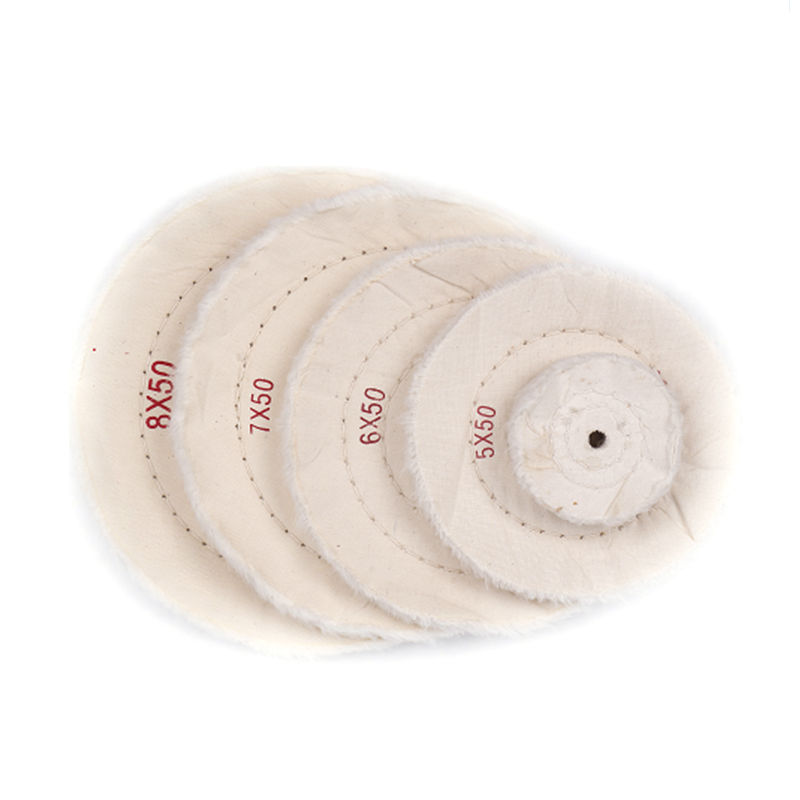
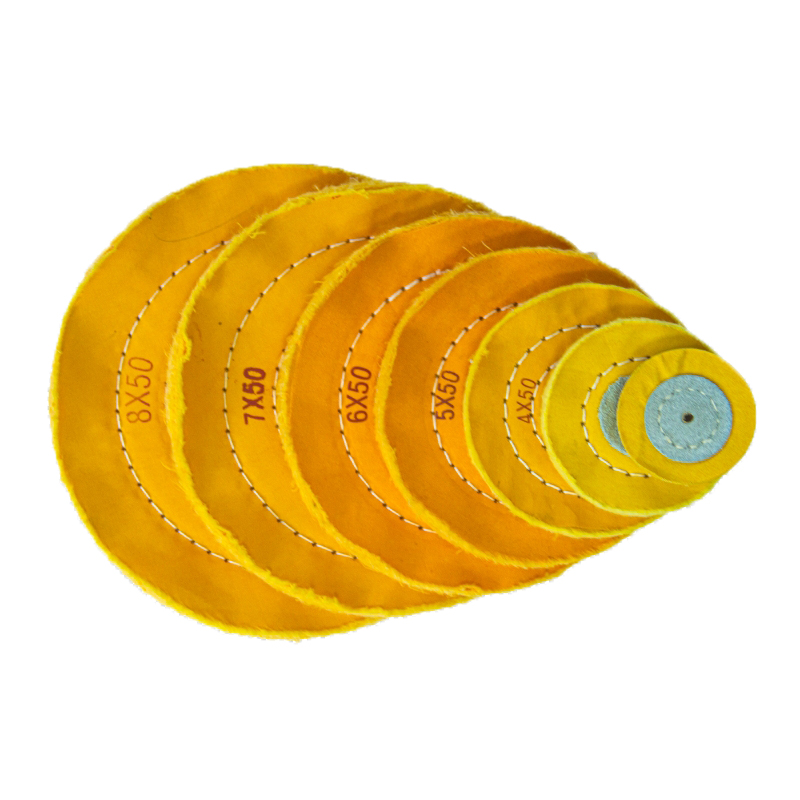
Jewelry Cotton Wheel is a precision polishing tool specifically designed for the jewelry industry. Made from high-quality cotton fabric, it is suitable for polishing and finishing the surfaces of gold and silver jewelry, precious metals, and other precision workpieces. Its soft structure provides a delicate and even polishing effect, helping to enhance the gloss and surface quality of the products.
Core Features:
Delicate and Even Polishing: The cotton fabric ensures uniform pressure distribution during polishing, improving the smoothness of the surface.
Surface Finishing: Removes minor scratches, imperfections, and uneven areas, refining the surfaces of jewelry and precious metals.
High Gloss Enhancement: Enhances the gloss of jewelry and metal surfaces, maintaining their delicate and smooth texture.
Product Advantages:
Soft Protection: The cotton fabric is soft and gentle, making it ideal for the delicate polishing of jewelry and precious metals, avoiding surface damage.
Strong Durability: The specially processed cotton fabric is highly wear-resistant, making it suitable for long-term use and providing stable polishing results.
Efficient Polishing: Effectively enhances the surface gloss of jewelry and precious metals, ensuring product quality.
Wide Application: In addition to jewelry processing, it can also be widely used for polishing other precision metals and small items.
About
Ningbo Henghua Metal Surface Treatment Technology Co., Ltd.
Ningbo Henghua Metal Surface Treatment Technology Co., Ltd. is located in Dongjiaqiao, Jishigang, Haishu District, Ningbo Bo City, Zhejiang Province, China. As a China jewelry polishing wheel suppliers, Henghua Metal Surface Treatment Technology Co., Ltd. provides various customized polishing materials. The company was established in 2016, with a plant area of 3,500 square meters, more than 10 sets of advanced cloth wheel production equipment, 2 fully automatic canning lines, and can customize the production of wind cloth wheels of various types and sizes. Ma wheel, polishing wax, chiye wheel, metal polishing paste and other products, customers are all over South America, the United States, Europe, the Middle East, etc. In recent years, the company has continuously innovated to improve the work efficiency of polishing materials, and has won the recognition of customers. Welcome customers in need to call to negotiate cooperation!
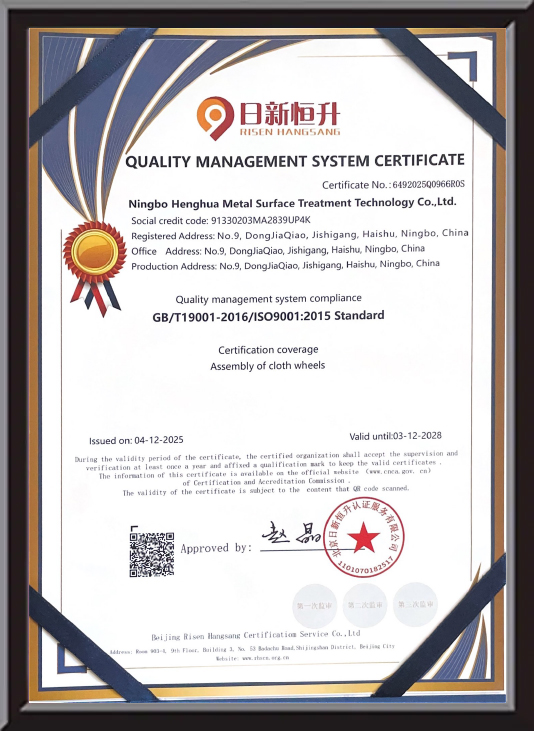
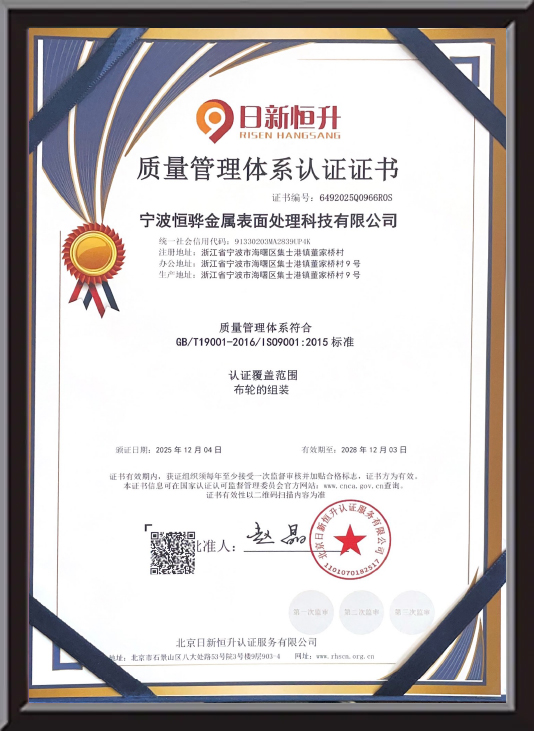
Certificate Of Honor
Message Feedback
Jewelry Cotton Wheel Industry Knowledge
A jewelry cotton wheel is a specialized buffing tool designed for the precise polishing and finishing of rings, pendants, bracelets, chains, and other fine metal pieces. Unlike heavy-duty industrial buffing wheels, the jewelry cotton wheel is constructed from soft, fine-weave cotton layers that deliver gentle yet effective abrasive action — protecting delicate surface details, gemstone settings, and intricate engravings while achieving a high-gloss or mirror finish. As a core component in any professional jewelry polishing wheel setup, selecting the right type directly determines the quality and consistency of the final surface.
Key Advantages of Using a Jewelry Cotton Wheel
The jewelry cotton wheel offers a unique set of properties that make it the standard choice for precious metal finishing across both artisan workshops and large-scale jewelry manufacturing facilities.
- Non-damaging surface contact: Soft cotton fibers conform to fine surface details without scratching, deforming, or wearing down delicate features such as prong settings or milgrain edges.
- High compound absorption: Cotton naturally retains polishing compounds — including rouge, white compound, and tripoli — ensuring even distribution across the workpiece surface.
- Versatility across metals: Suitable for gold, silver, platinum, copper, brass, and their alloys — covering the full range of materials used in jewelry production.
- Consistent finish quality: The uniform fabric structure produces repeatable results across production batches, which is critical for mass jewelry manufacturing.
- Low heat generation: Compared to harder buffing materials, cotton wheels generate minimal friction heat, reducing the risk of oxidation or color change on precious metals.
How a Jewelry Polishing Wheel Works
A jewelry polishing wheel operates by combining rotational speed with the abrasive action of a polishing compound carried within the cotton fabric. When mounted on a bench polishing motor or flexible shaft machine — typically running at 1,500 to 3,000 RPM — the wheel's outer surface contacts the jewelry piece, and the compound particles micro-abrade the metal surface, progressively removing fine scratches and oxidation to reveal a smooth, reflective finish.
The process generally follows a two- or three-stage sequence. A firmer cotton wheel loaded with a cutting compound such as tripoli handles initial scratch removal and surface leveling. A softer, looser jewelry cotton wheel loaded with rouge or a fine finishing compound then brings the surface to its final bright or mirror state. Each stage builds on the previous, and the transition between wheel types is what defines the overall finish quality.
Common Jewelry Cotton Wheel Types and Their Uses
| Wheel Type | Construction | Recommended Compound | Application Stage |
|---|---|---|---|
| Sewn Cotton Wheel | Tightly stitched layers | Tripoli, cutting compound | Pre-polishing, scratch removal |
| Loose Cotton Wheel | Unsewn, soft layers | Rouge, white compound | Final color buffing, mirror finish |
| Flannel Wheel | Soft flannel fabric | Pink or blue finishing compound | High-gloss finish on gold and silver |
| Knife-Edge Wheel | Narrow profile cotton | Rouge, fine finishing compound | Grooves, channels, engraved details |
Selecting the Right Jewelry Polishing Wheel for Your Process
Choosing the correct jewelry polishing wheel requires matching wheel hardness, diameter, and fabric type to the specific metal and surface geometry being processed.
Wheel Diameter and Thickness
Standard jewelry cotton wheels range from 50 mm to 150 mm in diameter. Smaller wheels are preferred for detail work on rings and pendants, while larger wheels suit flat surfaces and chain link polishing. Thickness affects compound retention — thicker wheels hold more compound and are used for extended polishing runs.
Metal Type and Finish Target
Gold and platinum require the softest wheels and finest compounds to avoid microscratches visible under inspection. Silver, brass, and copper tolerate slightly firmer wheels in earlier stages. Always finish with a clean, dedicated jewelry cotton wheel reserved for final buffing to prevent compound cross-contamination between stages.
Ningbo Henghua Metal Surface Treatment Technology Co., Ltd., established in 2016, focuses on providing precise and environmentally friendly polishing materials for the global manufacturing industry — including specialized jewelry polishing solutions. With production capacity expanded through fully automatic lines and an active customer network across four continents, Henghua delivers consistent wheel quality suited to both artisan workshops and high-volume jewelry production facilities.
Frequently Asked Questions
Q1: Can the same jewelry cotton wheel be used for different metals?
It is not recommended. Different metals require different compounds, and compound residue from one metal can contaminate and discolor another. For example, a wheel used for copper polishing should never be applied to silver or gold. Dedicate one wheel per metal type and per finishing stage for reliable, consistent results.
Q2: How do I know when to replace a jewelry polishing wheel?
Replace the wheel when it becomes heavily loaded with hardened compound, when fabric layers begin to separate or fray unevenly, or when polishing results become inconsistent despite correct compound application. Periodically raking or combing the wheel face with a metal tool removes surface buildup and extends usable life before full replacement is needed.
Q3: What is the correct speed for running a jewelry cotton wheel?
For most jewelry cotton wheel applications, a spindle speed of 1,800 to 2,800 RPM is appropriate. Lower speeds suit soft metals and fine finishing; higher speeds increase cutting action for scratch removal on harder alloys. Always confirm the maximum rated RPM printed on the wheel before mounting, especially for smaller-diameter wheels where peripheral speed is proportionally higher.
Q4: How should jewelry polishing wheels be stored?
Store wheels in sealed bags or covered containers in a cool, dry environment. Exposure to humidity causes cotton fibers to absorb moisture, which reduces compound adhesion and can cause the wheel to run out of balance. Keep different wheel types and compound grades in clearly labeled, separate storage to prevent cross-contamination.
A properly selected and maintained jewelry cotton wheel is an essential investment for any operation where surface finish is central to product value. By understanding wheel construction, compound pairing, and correct operating practice, jewelers and manufacturers can achieve consistent, high-quality finishes that meet the exacting standards of the global jewelry market.
Ningbo Henghua Metal Surface Treatment Technology Co., Ltd. has specialized in the R&D and production of polishing cloth wheels, polishing wax, liquid polishing wheels, and metal polishing paste.
Classification
Contact Info
-
[email protected]
[email protected]
[email protected] -
+86-13777066809
+86-574-88187397 - No.9, Xiaodongjiaqiao, Jishigang Town, Haishu District, Ningbo City, Zhejiang Province, China
Keep in Touch
Copyright © Ningbo Henghua Metal Surface Treatment Technology Co., Ltd. Jewelry Cotton Wheel Manufacturers Jewelry Polishing Wheel Suppliers All Rights Reserved.
