Español
 Deutsch
 عربى
Content
- 1 What Polishing Compound Is Made Of
- 2 The Abrasive Sets the Ceiling on Finish
- 3 Bars, Pastes, and Liquids: Same Chemistry, Different Delivery
- 4 Color Codes Are a Convention, Not a Standard
- 5 Rubbing Compound, Polishing Compound, and Polish
- 6 Matching the Compound to the Metal and the Operation
- 7 Running the Compound Correctly
- 8 What to Confirm Before You Buy
A stainless steel handle leaves the belt sander with a uniform 400-grit scratch pattern, and the next station has one job: turn that haze into a mirror without rounding off the edges. That job belongs to polishing compound, and the reason two bars that look identical can behave completely differently comes down to what is inside them.
So, what is polishing compound? It is a formulated abrasive medium, supplied as a bar, paste, or liquid, that is charged onto a rotating buffing wheel or a foam pad to remove material at a controlled rate until the surface reaches the required finish. It cuts. It does not protect. Any gloss it leaves behind is the result of scratches being made small enough to stop scattering light, not a coating sitting on top.
Three components decide how a compound behaves: the abrasive that cuts, the binder that holds and releases it, and the carrier that manages heat and dust. Everything else on the label, including color, price, and brand, is secondary to those three.
What Polishing Compound Is Made Of
Almost every compound on the market, from a green bar for stainless steel to a liquid for automotive clear coat, is built on the same three-part structure.
- Abrasive — the hard particles that do the cutting. Aluminum oxide, silicon carbide, chromium oxide, iron oxide (rouge), cerium oxide, and diamond are the common families.
- Binder — the waxy or fatty matrix, usually stearic acid, tallow, paraffin, or glycerin. It holds the abrasive together and releases it as friction heat builds.
- Carrier — oils, water, or solvents that lower working temperature, flush away swarf, and control dusting.
The ratio matters more than the ingredient list. Twenty percent coarse alumina in a hard stearic binder behaves like a cutting bar. The same alumina at five percent in a soft tallow binder behaves like a coloring compound. That is why two bars sold under the same color name can sit a full finishing step apart in cut.
The Abrasive Sets the Ceiling on Finish
Abrasive choice does two jobs at once. It sets the cut rate, and it sets the finest finish the compound can possibly leave. Hard, tough grains cut quickly on hard metals but keep scratching as they wear. Friable grains fracture and dull, polishing out their own tracks.
| Abrasive | Hardness profile | Typical substrate | Practical note |
|---|---|---|---|
| Aluminum oxide | Hard, tough | Carbon steel, stainless, general metal | Leaves a deep track if run past its stage |
| Silicon carbide | Very hard, brittle | Cast iron, non-ferrous metals | Fast cut; calcined grades run cooler |
| Chromium oxide | Fine, hard | Stainless steel, hard chrome | Slow cutting; needs a clean, dedicated wheel |
| Iron oxide (rouge) | Fine, soft | Gold, silver, brass, copper | Low cut rate; mainly a coloring step |
| Diamond | Hardest | Carbide, ceramic, hardened tool steel | High cost; contamination ruins repeatability |
Bars, Pastes, and Liquids: Same Chemistry, Different Delivery
Solid bars are pressed against a spinning wheel and suit bench and automated buffing, where the binder has to melt on contact. Pastes and creams go on by hand or on low-speed pads, which makes them practical for small areas, repair work, and contoured parts. Liquids are metered by pump or spray bar on automated lines, where a fixed volume per part matters more than convenience.
When cycle time and repeatability are part of the specification, a metered liquid is usually the practical choice.
 Custom Liquid Polishing Compound for Metal, Jewelry, and PlasticA metered liquid option when repeatable cycle times matter, offering fine abrasive action to remove oxides, stains, and fine scratches while producing uniform gloss.View Product →
Color Codes Are a Convention, Not a Standard
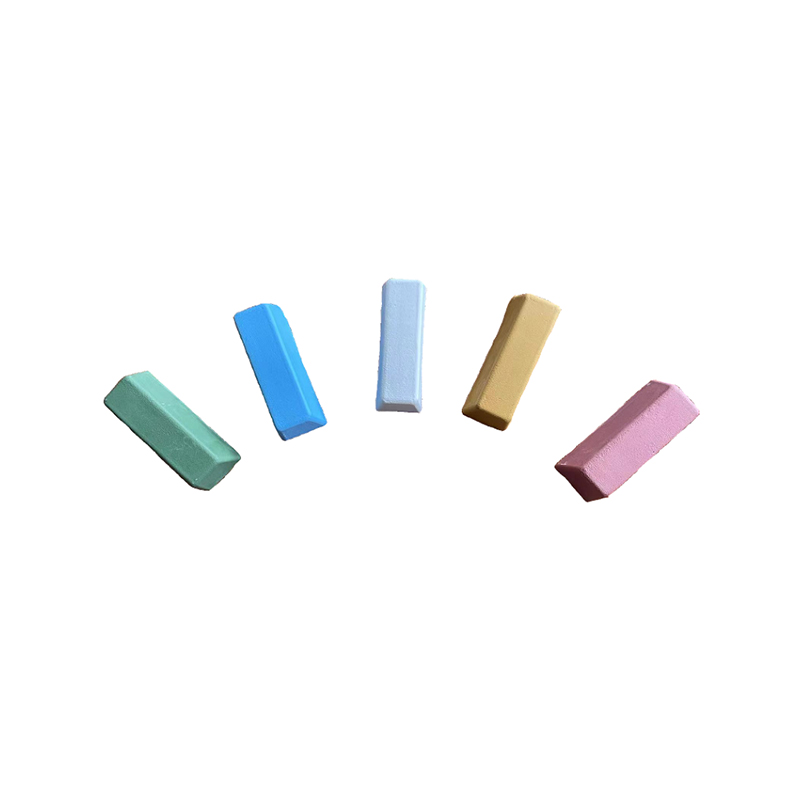
Red, white, green, yellow, black — the color of a bar is shop-floor shorthand, and it is only reliable inside one supplier's catalogue. There is no ISO shade chart for polishing compound. As a rough guide: black is usually the coarsest, red covers mid-to-fine cutting and coloring, white sits at the clean fine end, green normally signals chromium oxide for hard steel and stainless, and yellow is often a general-purpose or aluminum grade.
The risk appears during substitution. Reorder "green" from a new supplier without checking abrasive type and particle size, and a fine coloring bar can arrive as a cutting bar. The shop finds out when parts leave the wheel with a deeper scratch pattern or a haze that will not clear no matter how long the operator works it.
The fix is straightforward: buy the specification, not the color. Ask for the abrasive family, nominal particle size in microns, binder type, and the wheel the compound was formulated for.
Green chromium oxide is still one of the most widely used grades in stainless work, and it is a sensible starting point when a line is setting up a new finishing cell.
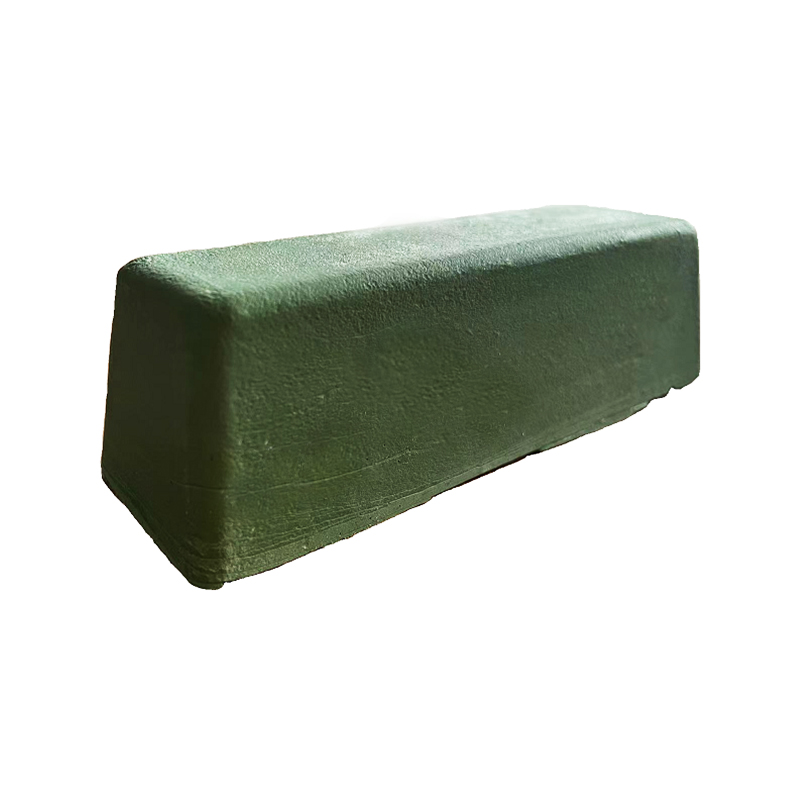 Green Chromium Oxide Buffing Compound for Stainless SteelA practical starting point for stainless finishing, this chromium oxide wax removes minor scratches and brings mirror-like shine to decorative and precision metal parts.View Product →
Rubbing Compound, Polishing Compound, and Polish
Metal finishing uses these terms loosely. Automotive finishing separates them by cut, which is a useful discipline for any shop.
| Stage | Cut level | Removes | Typical role |
|---|---|---|---|
| Rubbing compound | Aggressive | 800 to 1,500 grit marks | First step after sanding or weld dressing |
| Polishing compound | Moderate | 1,500 to 2,500 grit marks | Middle step; builds clarity |
| Finishing polish | Minimal | Haze and 2,500 grit and finer | Final gloss with almost no stock removal |
One rule holds across every product line: never start a step coarser than the scratch pattern you are trying to remove, or the next step exists only to erase the marks you just made.
Matching the Compound to the Metal and the Operation
The substrate narrows the choice faster than any other factor, because hardness and heat sensitivity both change what the abrasive and binder must do.
Stainless Steel
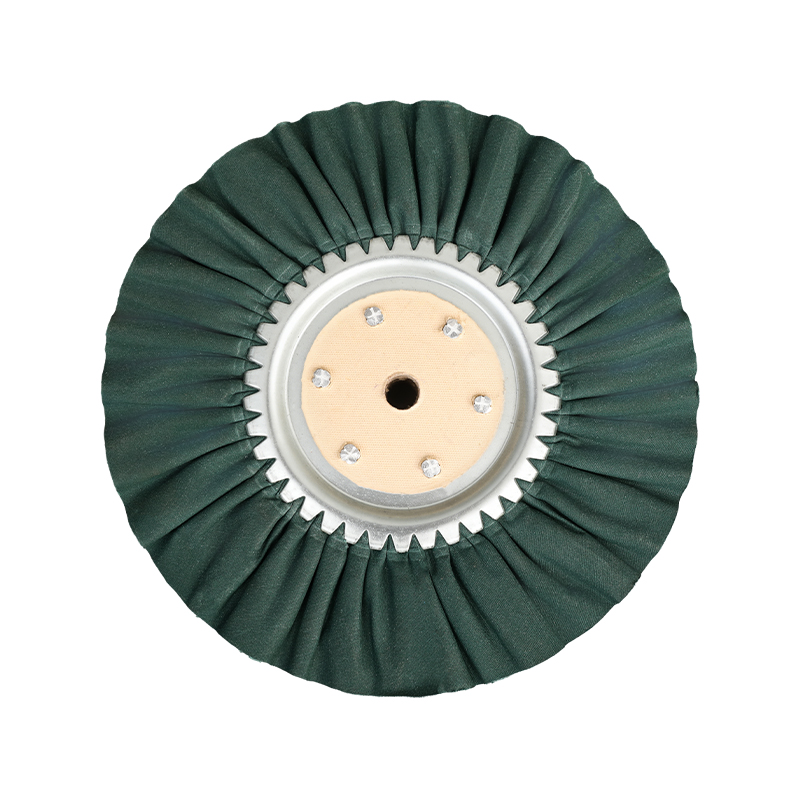
Green chromium oxide or fine alumina on a sisal wheel for the cutting stage, then a soft cloth wheel for color. Heat control is critical because stainless discolors long before it visibly burns.
Aluminum
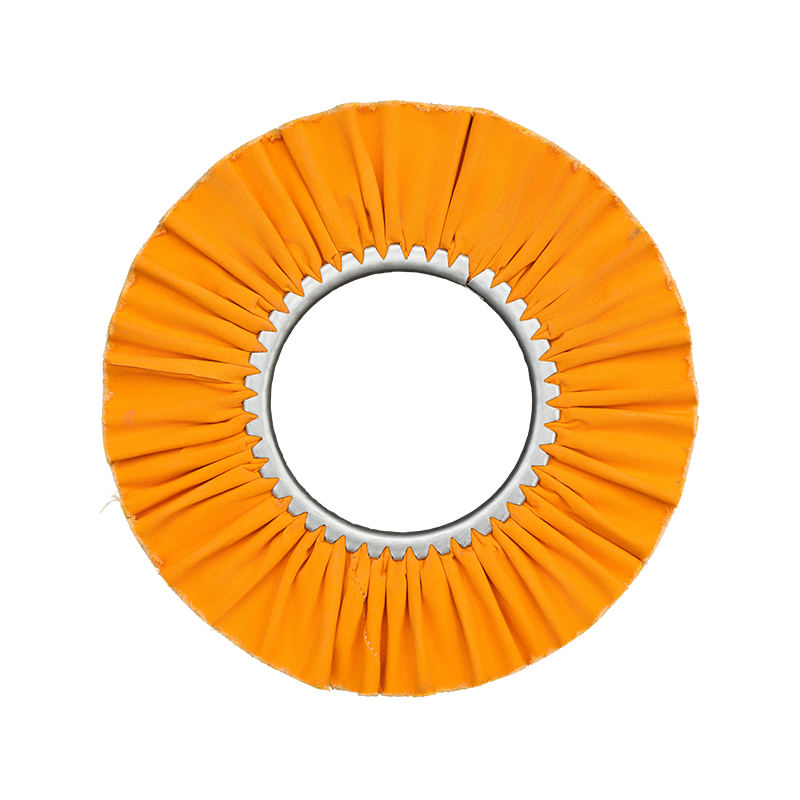
Softer and gummy. A softer binder and a wheel dedicated to aluminum prevent iron contamination, which shows up later as rust spotting. Yellow hardened cloth wheels are a common pairing.
Copper, Brass, and Precious Metals
Rouge or a fine white compound at low speed and light pressure. Cotton wheels are standard in jewelry work, and our jewelry polishing page covers the sequence for precious metal parts.
For mirror-level work on steel, the usual sequence is a sisal wheel with a cutting bar followed by a cloth wheel with a coloring bar. The mechanics of that progression are explained in our guide to mirror finishing with buffing wheels.
 Metal Polishing Compound for Rust, Scratches, and Shine RestorationFor mirror-level metal work, this compound removes rust, oxide, and minor scratches while forming a protective layer that helps delay oxidation, corrosion, and re-rusting.View Product →
Running the Compound Correctly
Most finish problems trace back to how a compound is applied rather than to the compound itself.
- Dedicate one wheel to one compound. Cross-contamination between a cutting bar and a coloring bar is the most common reason a finish never fully clears.
- Charge for two to three seconds at low speed. An overloaded wheel clogs, traps heat, and cuts less than a properly charged one.
- Run at the speed the binder expects. Hard binders need surface speed to release abrasive; soft binders break down quickly at high speed and stop working.
- Keep pressure light. Pressure raises temperature faster than it raises cut rate, and heat is what distorts edges and burns through thin coatings.
- Test on a coupon of the same alloy and heat treatment before production parts run.
What to Confirm Before You Buy
A compound is a specified consumable, not a commodity item, and the questions are the same whether the order is one bar or a pallet.
- Abrasive family and nominal particle size in microns, not a vague word such as "fine".
- Binder type and hardness, especially on automated lines with a fixed cycle time.
- Form and packaging details: bar weight, liquid viscosity, and pump compatibility.
- Lot control. Is particle size distribution checked per batch, and how much drift is allowed?
- Shelf life, storage temperature, and a current safety data sheet.
Strip away the color names and the marketing, and the answer to what polishing compound is stays short: a controlled abrasive system with three variables that decide the outcome. The abrasive determines what the compound can cut and how fine it can finish. The binder determines how quickly that abrasive is released onto the work. The carrier determines how manageable the process is on the wheel.
Get those three matched to the substrate, the wheel, and the scratch pattern in front of you, and the finish follows predictably from part to part. Get them wrong, and no amount of extra pressure, speed, or time on the wheel will bring the surface back.