Español
 Deutsch
 عربى
Content
- 1 Why Brass Tarnishes and What Polishing Actually Removes
- 2 The Three Families of Brass Polishing Media
- 3 Matching Polishing Compound Color to the Stage of Work
- 4 Matching Buffing Wheels to the Brass Part
- 5 A Brass Polishing Sequence That Works on Real Parts
- 6 Mistakes That Ruin a Brass Surface
- 7 Polishing Different Brass Workpieces
- 8 Buying Polishing Consumables Without Guesswork
A dull brass handle does not need a pantry experiment. It needs the right abrasive on the right wheel, applied in the right order. The household remedies that fill search results — ketchup, lemon juice with baking soda, vinegar with flour and salt — do lift light oxidation, and they are fine for a decorative tray that never gets touched. They will not touch the scratches on a brass valve body, a machined bushing, or a set of instrument fittings that has been handled for twenty years.
The practical answer to what you use to polish brass is a graded polishing compound applied with a buffing wheel matched to the part. The compound supplies the abrasive and the binder that carries it. The wheel supplies the pressure, speed, and working surface that turn a coarse abrasive into a mirror finish. Get either half of that pairing wrong and you either polish nothing at all or cut away the shape you were trying to preserve.
Why Brass Tarnishes and What Polishing Actually Removes
Brass is a copper-zinc alloy, and the copper fraction is chemically active. Exposed to air, it forms a thin copper oxide layer that darkens the surface. Add moisture, sulfur compounds, and constant handling, and that film develops into copper sulfide — the brown-black patina most people describe as "dirty brass."
The distinction that matters is between cleaning and polishing. Cleaning removes oil, dust, and loose surface film. Polishing is a controlled scratching process: progressively finer abrasives replace deep scratches with shallow ones until the remaining marks are smaller than the wavelength of visible light. That is why no single product does the whole job. A paste that strips heavy tarnish will leave visible haze if you stop there, and a fine finishing polish will never cut through a decades-old sulfide layer.
One more variable decides the entire approach: lacquer. Many brass fixtures, cabinet hardware, and instrument parts ship with a clear coating that slows tarnish. Polishing compound strips that coating, leaving a patchy surface unless you remove the rest deliberately and re-coat the part afterward.
The Three Families of Brass Polishing Media
Everything sold for brass falls into three groups. They are not interchangeable, and mixing them without understanding what each one does is the most common way a polishing job goes wrong.
| Media family | Typical products | Best stage | Main limitation |
|---|---|---|---|
| Household acid or paste | Ketchup, lemon juice and baking soda, vinegar with flour and salt | Light, even tarnish on flat decorative surfaces | Leaves residue in crevices; cannot remove scratches |
| Liquid or cream polish | Bottled brass polish, metal polishing cream | Cleaning and brightening between full polishing jobs | Slow on thick sulfide layers; often leaves a protective film |
| Wheel plus compound | Sisal wheels, cloth buffing wheels, colored polishing waxes | Coarse cutting through to mirror finishing | Requires matched wheel, speed, and technique |
For anything handled daily, or anything that carries visible machining marks, only the third family delivers a durable result. The first two are maintenance tools, not production tools.
Matching Polishing Compound Color to the Stage of Work
Polishing compounds are color-coded, and the color is functional rather than decorative. It signals the abrasive type and the particle size suspended in the binder. The convention shifts a little between suppliers, but the pattern is consistent enough to use as a starting point.
- Red compound: medium cutting action, commonly specified for copper and brass to remove tarnish and shallow scratches.
- Green compound: harder abrasive, traditionally used on stainless steel, acceptable on brass for a final cutting pass once the surface is already flat.
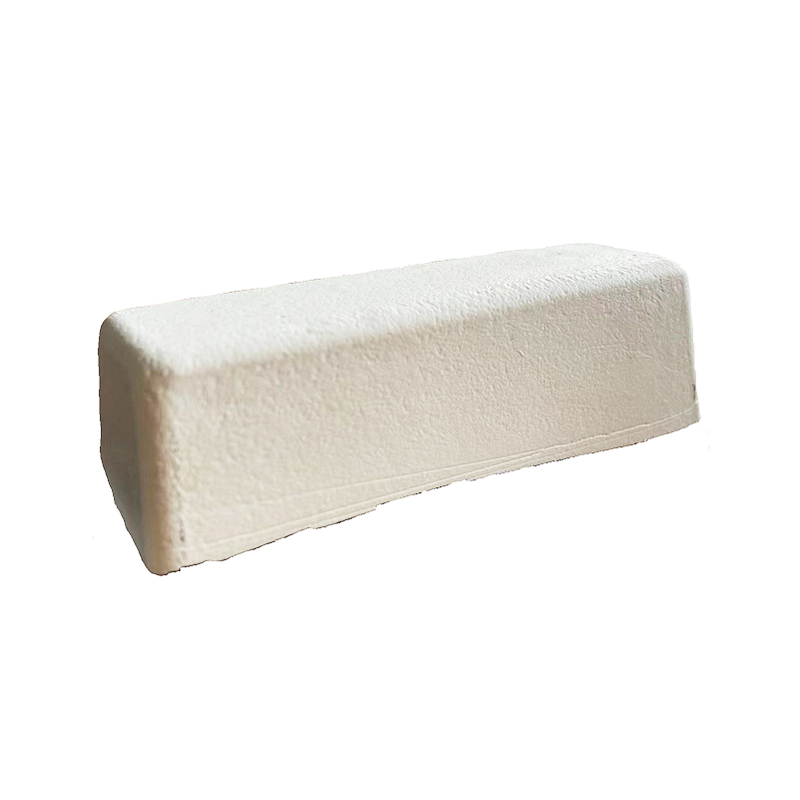
- White compound: fine and clean-burning, used for the finishing pass where surface clarity matters most.
- Yellow compound: general purpose with a softer binder, suited to aluminum and other softer non-ferrous metals.
A standard brass sequence runs red to cut, then white or green to finish. Skipping the cutting stage and going straight to a fine compound produces a surface that looks shiny but reads as wavy, because the fine abrasive polishes the tops of scratches instead of removing them.
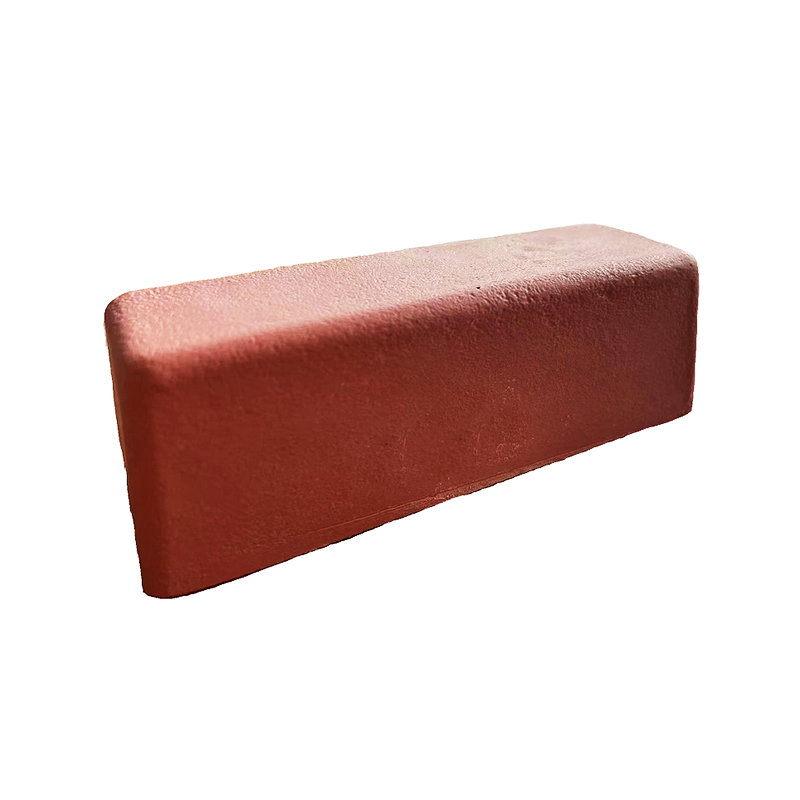 Red Polishing CompoundRed Polishing Compound is a high-efficiency, medium-polishing-effect all-purpose polishing wax. Rich in high-quality iron oxide, it is specifically designed for metal,...View Product →
Matching Buffing Wheels to the Brass Part
The wheel decides how much pressure reaches the surface and how quickly the compound breaks down. Three variables matter more than the brand on the label: material, density, and diameter.
Wheel material sets the cutting level
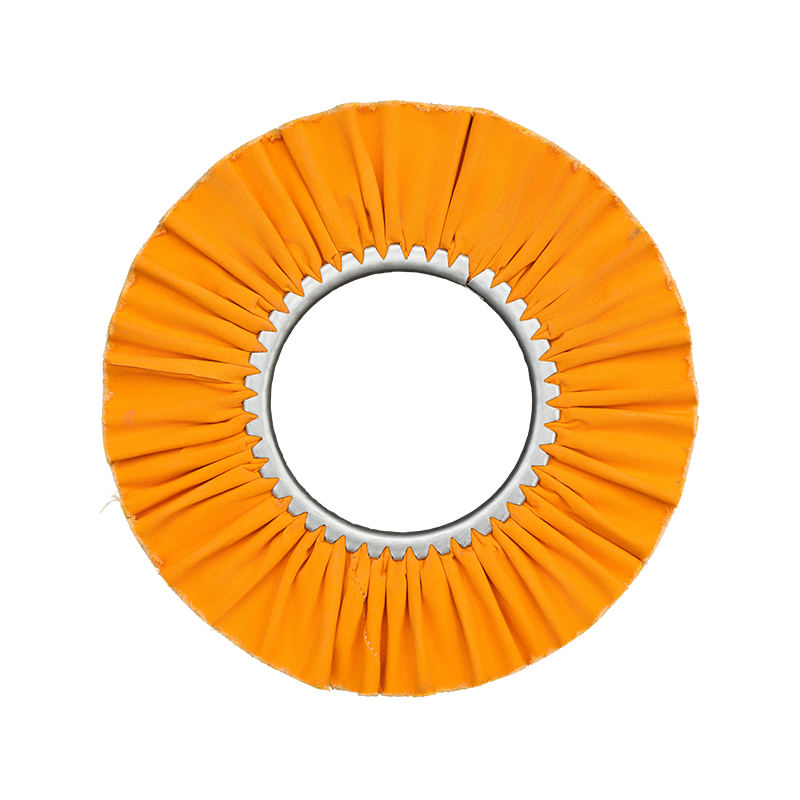
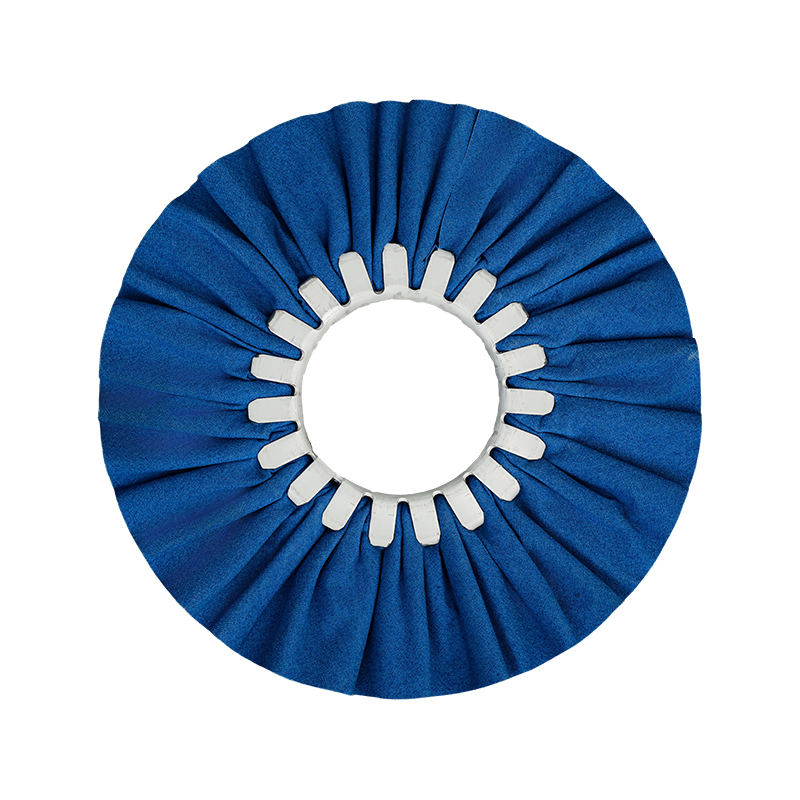
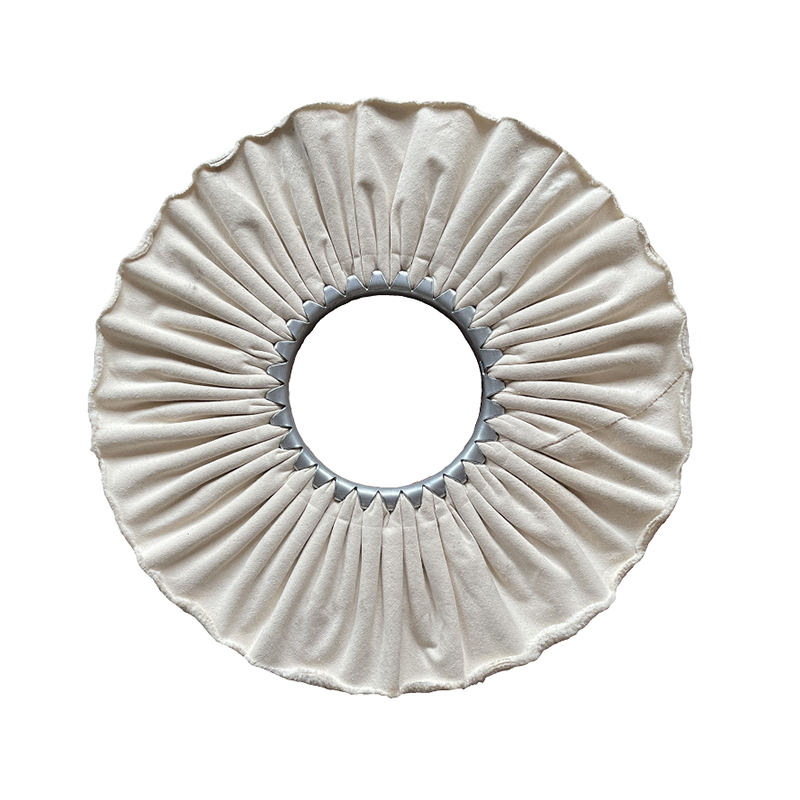
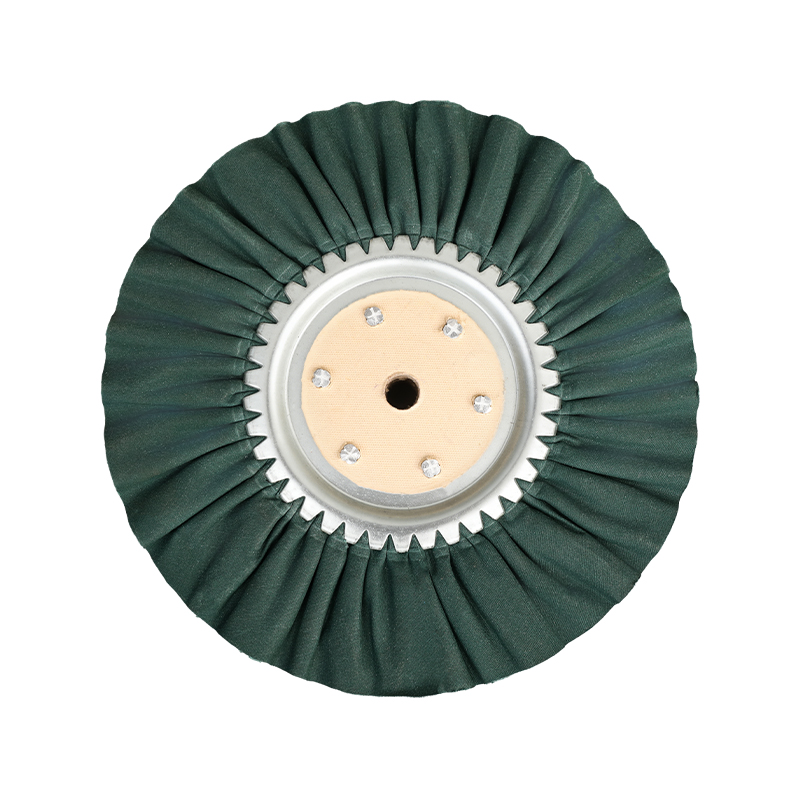
Sisal wheels are woven from agave fiber and are the most aggressive option in common use. They handle heavy oxidation, casting skin, and deep scratches, but leave a directional scratch pattern that a second stage has to remove. Cloth wheels — folded, hardened, or soft — sit in the middle. Cotton wheels are the finest option and are standard for jewelry and small precision parts.
Density and diameter follow the part geometry
A dense, hardened wheel holds its edge on flat faces and corners. A soft, loosely folded wheel conforms to curves, grooves, and contoured castings without burning the high spots. Diameter is a speed decision: a larger wheel at the same spindle speed produces a higher surface speed, which generates heat and can soften the compound or distort thin brass sheet.
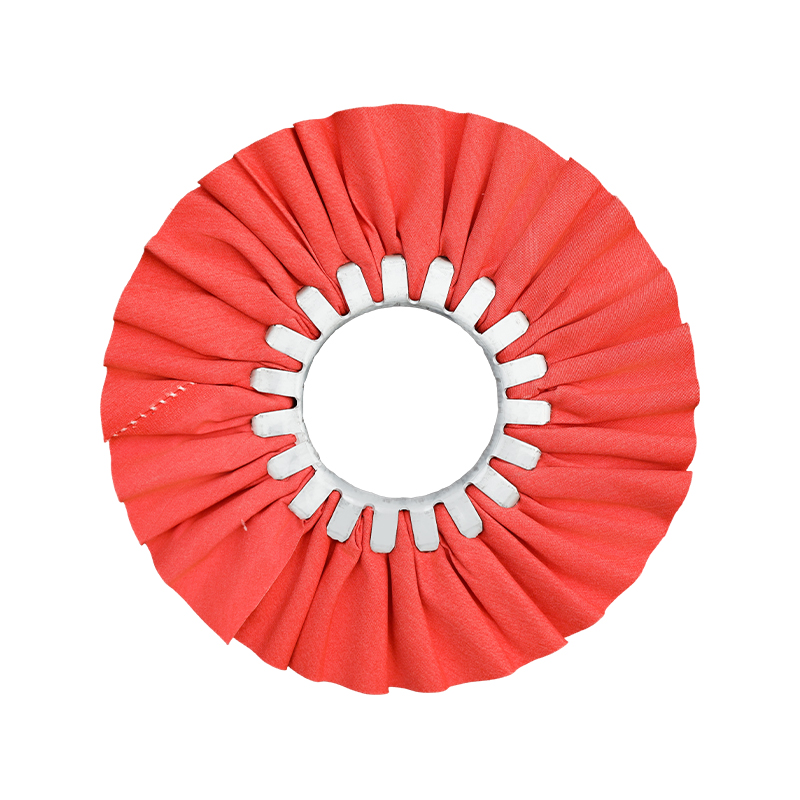
For production runs on copper and brass components, a hardened cloth wheel keeps its shape across long shifts and spreads compound evenly. Sisal wheels remain the first stage whenever the part arrives with visible tool marks.
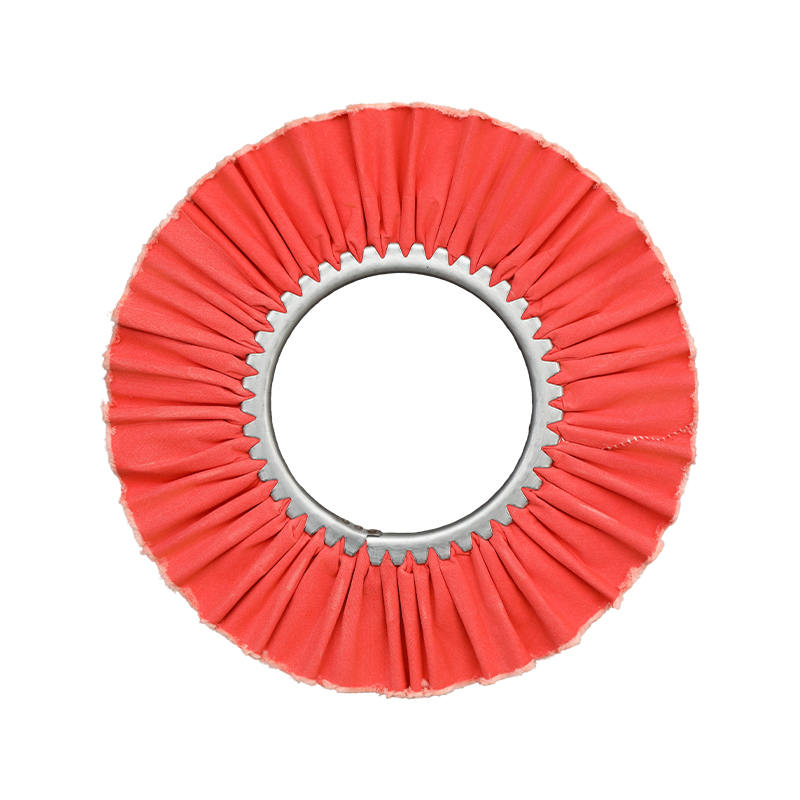 Red Hardened Wind Wheel For CopperRed Hardened Wind Wheel For Copper is a high-efficiency grinding and polishing tool specially designed for copper materials and other soft metals. Made from high-densi...View Product →
A Brass Polishing Sequence That Works on Real Parts
Polishing is sequential by nature. Each stage removes the marks left by the previous one, and the only route to a consistent mirror finish is to complete each step before moving on.
- Identify the coating. If the brass is lacquered, remove the finish completely with a solvent before any abrasive touches it, or the result will be blotchy.
- Degrease. Wash with mild detergent or wipe with isopropyl alcohol. Compound cannot cut through an oil film, and a dirty surface loads the wheel with metal paste.
- Cut with a sisal wheel and a medium compound. Keep the wheel moving, use light pressure, and stop when the tarnish and scratches are gone — not when the surface looks bright.
- Refine with a cloth wheel and a finer compound. This stage removes the scratch pattern left by step three.
- Finish with a soft or cotton wheel and a fine white compound. This is where the mirror appears.
- Clean and protect. Remove all compound residue with a soft cloth and a mild solvent, then apply a lacquer or a wax film if the part will be exposed.
Between stages, change wheels rather than adding more compound to a loaded one. Cross-contamination between a coarse and a fine compound is the single largest cause of a finish that never quite clears.
Mistakes That Ruin a Brass Surface
Most damaged brass parts did not fail because the operator picked the wrong polish. They failed because of one of these:
- Using steel wool or abrasive pads. Steel particles embed in soft brass and rust later, leaving permanent dark specks.
- Polishing a lacquered part. The abrasive cuts through the coating unevenly and the surface ends up mottled.
- Running too fast. High spindle speed with a dry wheel burns the surface and can warp thin brass.
- Reusing a wheel across metals. A wheel used on steel carries hard particles that scratch brass on the next run.
- Skipping degreasing. Handling residue loads the wheel and produces streaks that look like scratches.
- Stopping at the cutting stage. A medium compound leaves a bright but hazy surface that tarnishes faster, because the remaining scratches hold moisture.
Polishing Different Brass Workpieces
The same compound behaves differently depending on the size and shape of the part in front of you.
Small precision and jewelry parts
Use cotton wheels at moderate speed and keep pressure low. Small brass components heat up quickly, and the real risk is not scratching but rounding over fine edges and engraved detail.
Hardware and fittings
Hardware runs benefit from a fixed sequence with consistent wheel diameters, because operators judge the finish by eye and any change in setup shows up as a batch-to-batch color difference.
Cookware and appliance trim
These parts carry a food-contact or appearance requirement. Residue removal matters as much as the polish itself, so the final pass should use a clean, dedicated wheel and a compound that wipes off completely.
Parts that combine brass with other metals — common in hardware and tools — should be sorted by base metal before polishing so that wheels and compounds stay dedicated to one material.
 Metal Polishing CompoundMetal polishing compound is a professional care product designed for the maintenance of various metal surfaces. Whether it's stainless steel knives and bowls in the ki...View Product →
Buying Polishing Consumables Without Guesswork
Once a sequence is set, the variables that decide whether it repeats are consumable consistency and availability. Compound that varies in abrasive size from batch to batch forces operators to adjust pressure by feel, and that is where finish quality drifts.
For production buyers, three questions separate a usable supplier from a risky one:
- Can the compound and the wheel be supplied in the same color and grade across multiple orders?
- Are non-standard diameters and densities available, since most brass parts are not standard sizes?
- Is there a written recommendation for the specific material being polished, or only a generic catalog?
A supplier with in-house wheel production and filling equipment can answer all three, because the wheel and the compound are matched at the point of manufacture rather than assembled from unrelated stock. That matters most on mixed-material lines, where a single mismatch between wheel density and compound grade shows up as rejected parts rather than a slightly slower shift.
Start with one brass part, one wheel, and one compound. Run the full sequence, record the wheel diameter, speed, and compound color at each stage, and keep that record with the job. Everything after that is repetition.