Español
 Deutsch
 عربى
Content
Ask what grit is made of, and the answer depends on the room. At a Southern breakfast table, grits are ground dried corn. On a metal finishing line, "grit" means something more engineered: the mineral particles that grind away weld seams, remove tooling marks, and refine a surface until it reads as a mirror. For manufacturers who buy polishing wheels, flap wheels, and buffing compounds, the practical question is not just what grit is made of, but which mineral sits behind that word on the specification sheet.
Here is the conclusion up front. Industrial grit is made of crushed, screened mineral crystals — most commonly aluminum oxide, silicon carbide, zirconia alumina, or ceramic aluminum oxide — each with a distinct hardness, toughness, and fracture behavior. This guide explains what each material actually is, how grit size changes the result, and how to use that information when selecting tools for a polishing line.
The Four Grit Materials That Do Almost All the Work
Most wheels and compounds used in metal finishing are built around four mineral families. The differences between them are not cosmetic; they change cutting speed, heat generation, and service life.
| Grit material | Chemical identity | Hardness (Mohs) | Best suited for |
|---|---|---|---|
| Aluminum oxide | Al2O3 | 9 | Carbon steel, stainless steel, general polishing |
| Silicon carbide | SiC | 9.5 | Aluminum, copper, glass, carbide, low-pressure finishing |
| Zirconia alumina | ZrO2-Al2O3 | ~8.5 (tough) | High-pressure grinding, heavy stock removal |
| Ceramic aluminum oxide | Al2O3 (microcrystalline) | 9 | Self-sharpening belts, alloy and stainless steels |
Notice the pattern across the table: every one of these grits is a hard, brittle crystalline mineral. The particles are designed to fracture in a controlled way. When a grain becomes dull, it breaks along a crystal plane and exposes a fresh cutting edge. Manufacturers call this property friability. Toughness and friability, more than brand names, are what determine how a grit actually performs against a workpiece.
What Aluminum Oxide Grit Is Made Of
Aluminum oxide (Al2O3) starts as bauxite ore, refined and fused in an electric-arc furnace at roughly 2,000 °C. The molten material cools into a dense crystalline block that is crushed, screened, and sorted into abrasive grains. In practice, you will encounter three shades of alumina grit:
- Brown aluminum oxide: 94–97 percent Al2O3 with small amounts of titanium and silica. It is the toughest of the three, resists premature breakdown, and is the default for grinding and polishing carbon steel and stainless steel.
- White aluminum oxide: more than 99 percent Al2O3 from purified feedstock. It is more friable, fractures sooner, and runs cooler, which suits fine finishing and heat-sensitive alloys.
- Pink or ruby aluminum oxide: alumina with a chromium oxide addition, balancing toughness and friability. It often appears in the last wheel stages before buffing.
Because fused aluminum oxide combines reasonable hardness (Mohs 9) with low cost and predictable breakdown, it is the most widely used grit in metal finishing. It dominates flap wheels, sisal wheels, and many bar compounds.
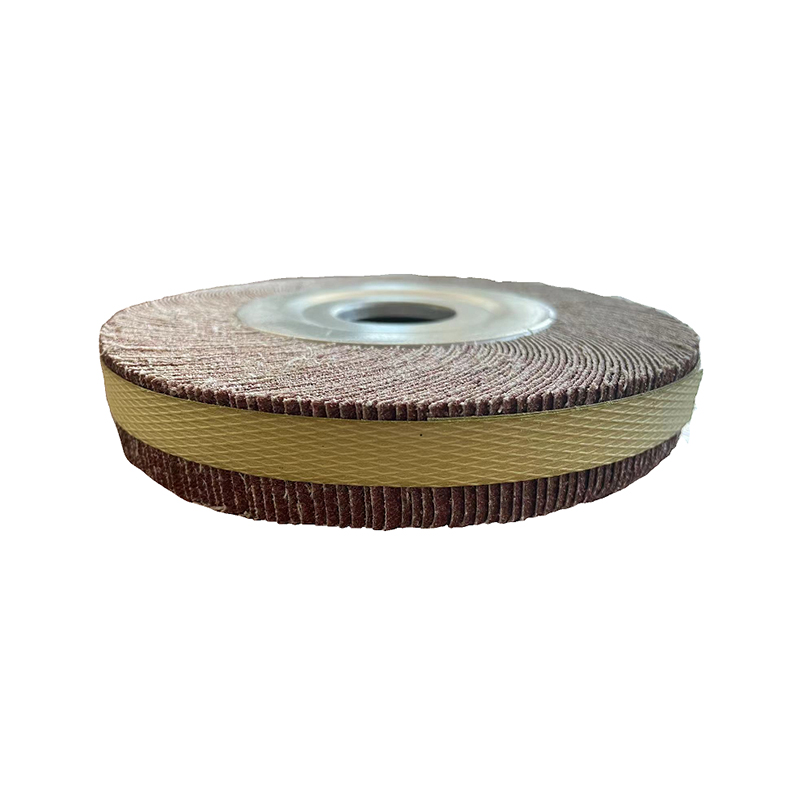 Alumina Flap Wheel for Efficient Metal FinishingMade from fused aluminum oxide with Mohs hardness 9, this wheel balances cost and performance for grinding, deburring, and surface finishing on common metals like stainless steel and aluminum.View Product →
Silicon Carbide: The Grit That Cuts Cooler and Sharper
Silicon carbide (SiC) is made in an Acheson furnace by fusing silica sand and petroleum coke above 2,200 °C. The resulting crystal is nearly as hard as diamond, Mohs 9.5, with a sharp, brittle structure.
Two properties set silicon carbide apart from aluminum oxide. First, it is harder, so it can cut materials that dull alumina quickly. Second, it is more friable: grains fracture early and often, exposing fresh edges and keeping the cut cool. That behavior prevents smearing on aluminum, brass, copper, and titanium, where softer wheels tend to load and rub instead of cutting.
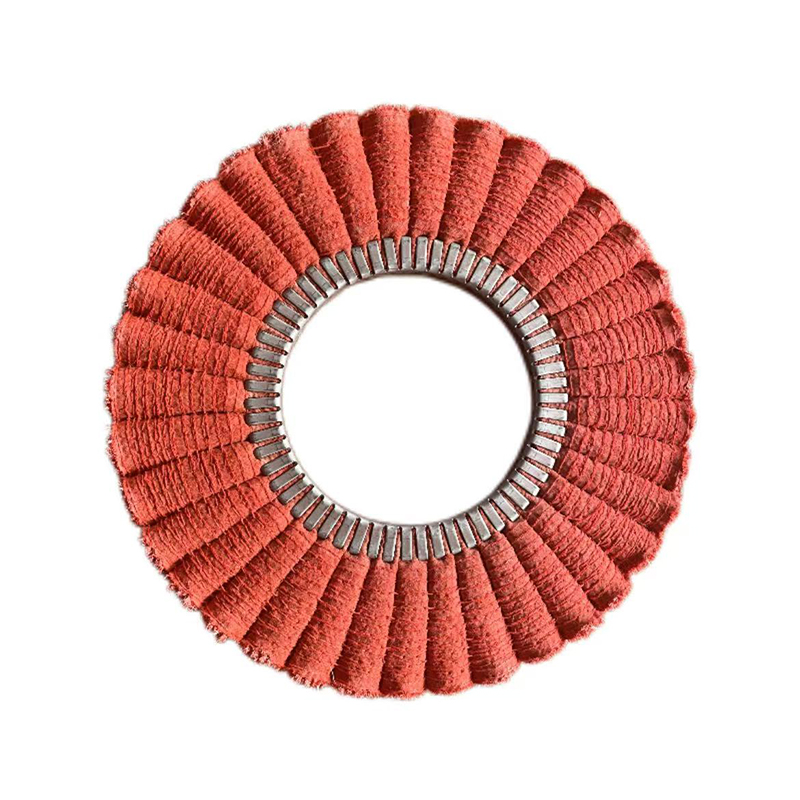
Some silicon carbide wheels are made with calcinated grains: the raw SiC is heat-treated so a micro-crystalline oxide layer grows on each particle, improving edge retention. This is the material behind our calcinated silicon carbide flap wheel, a good choice when you want the cutting action of SiC without sacrificing wheel life.
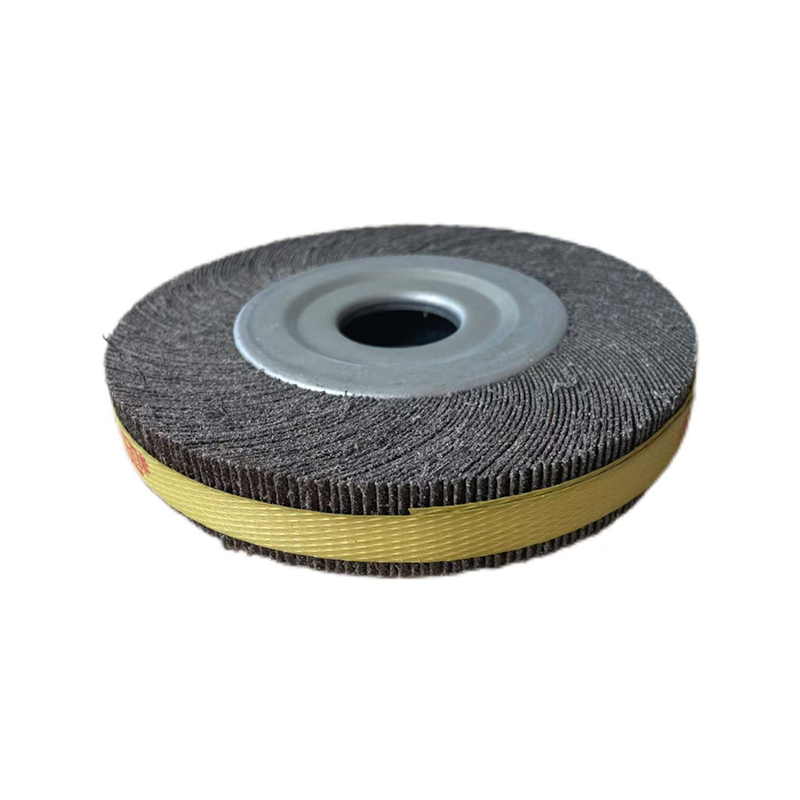 Calcinated Silicon Carbide Flap Wheel for Tough AlloysFeaturing heat-treated silicon carbide grains, it delivers cool cutting and self-sharpening action ideal for stainless steel, titanium, and nickel alloys without burning or discoloration.View Product →
What Grit Size Really Tells You
The word "grit" also names particle size. A grit number such as 60, 120, or 400 is a mesh count: the number of openings per linear inch of the screen that graded the grains. Lower numbers mean coarser particles and faster cutting; higher numbers mean finer particles and smoother finishes.
| Grit number | Particle diameter (approx.) | Typical role |
|---|---|---|
| 40–60 | 250–400 µm | Heavy stock removal, weld seam leveling |
| 80–120 | 125–180 µm | General deburring and grinding |
| 220–320 | 45–70 µm | Intermediate scratch removal |
| 400–800 | 15–35 µm | Fine pre-polish before buffing |
| 1000+ | 5 µm and below | Mirror and cosmetic finishes |
The most useful point about grit size is the sequence, not a single number. A mirror finish on stainless steel is normally reached by stepping through three or four grit sizes, letting each stage remove the scratches left by the previous one. Final buffing compounds typically carry abrasive particles below 10 µm, which is why they feel smooth to the fingers yet still refine a surface at a microscopic level. If you are planning a full finishing line, our wind wheel buffing guide covers the step-by-step wheel combinations used for mirror finishing.
How Grit Is Held in a Polishing Tool
Powdered grit cannot do useful work on its own. In production tools, the particles are held in one of three constructions:
- Coated abrasives — grit is applied electrostatically to paper, cloth, or film backing; abrasive belts and discs are the most common examples.
- Bonded abrasives — grit is mixed into a resin or vitrified bond and pressed into a wheel; the bond wears away in use and exposes fresh grains.
- Loose grains in compounds — grit is suspended in a wax, liquid, or paste carrier and worked against a cloth or sisal wheel; the carrier controls lubrication while the grains do the cutting.
The third group is easy to underestimate. When you pick up a colored polishing bar, the color is a code for the abrasive inside. Green compound is usually chromium(III) oxide, a very fine, hard abrasive used for stainless mirror finishes. Red compound is iron oxide, sold for centuries as jeweler's rouge. White and blue bars typically use aluminum oxide or calcined alumina in a softer carrier.
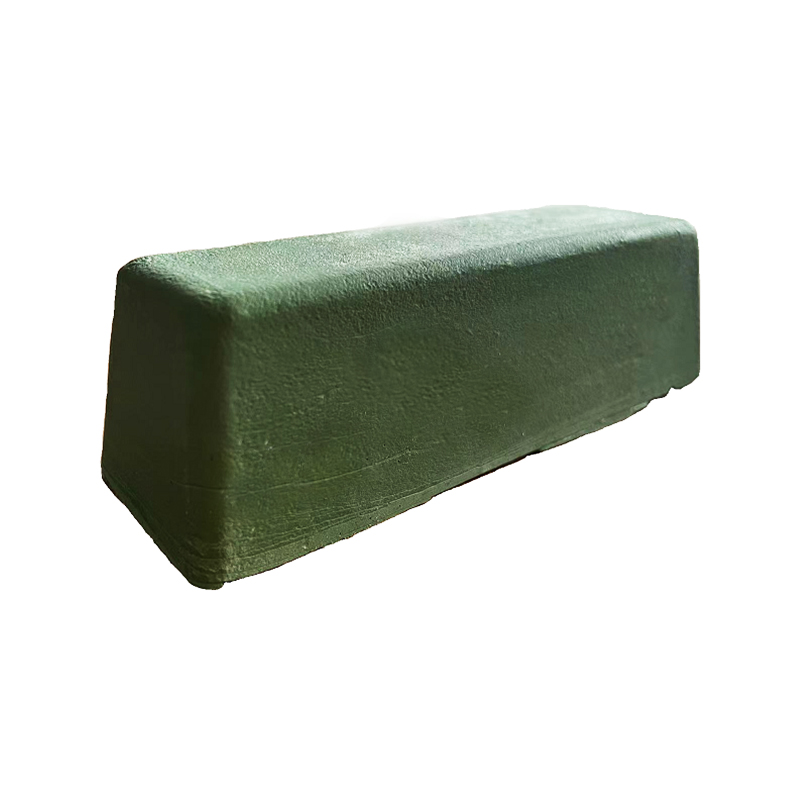 Green Buffing Compound for Stainless Steel Mirror PolishInfused with chromium oxide, this fine polishing wax removes minor scratches and produces a mirror-like finish on stainless steel and high-end metal decorative parts.View Product →
Matching the Grit to Your Workpiece
Selection becomes simpler when you start from the workpiece material rather than the machine. Here is the short version:
- Stainless steel: brown aluminum oxide for stock removal, white aluminum oxide or silicon carbide for intermediate passes, then green chromium oxide compound for the mirror finish.
- Aluminum, brass, and copper: silicon carbide for the cutting stages, because it cuts instead of loading; finish with a low-pressure cloth wheel.
- Hard metals, cemented carbide, glass: silicon carbide or diamond grit; aluminum oxide will dull too quickly.
- Heavy weld seams on steel: zirconia alumina belts under high pressure remove metal faster per dollar than any other common grit.
If you produce automotive components, the same material logic applies, but the sequence usually starts coarser because as-received forgings and castings carry scale. Our automotive manufacturing application page shows typical stage combinations used by parts suppliers before plating or coating.
Cost analysis should be based on cost per finished part, not price per wheel. Brown fused alumina is the cheapest mineral to buy. Silicon carbide costs more, and zirconia alumina costs the most per pound. But a grit that keeps cutting removes more metal in the same machine time, often making the more expensive mineral the most economical choice overall.
The Bottom Line
So, what is grit made of? In metal finishing, grit is made of engineered mineral crystals: primarily fused aluminum oxide, silicon carbide, zirconia alumina, or specialty ceramic grains, sorted by mesh size and bonded into a wheel, belt, or compound bar. The mineral controls the cut; the grain size controls the finish; the bond controls the way the tool feels on the workpiece.
When a spec sheet says "aluminum oxide," you can now picture fused Al2O3 from bauxite, crushed to a defined mesh range and selected for toughness. When you see a green buffing bar, you recognize the chromium oxide abrasive inside. That knowledge pays off directly: matching the grit material to the workpiece is the most cost-effective improvement most finishing lines can make. If you are unsure which combination fits your product, review the application-specific pages on this site, then test the progression on a sample part before committing to full production.