Español
 Deutsch
 عربى
Content
- 1 Why Aluminum Polishing Compound Needs a Different Approach
- 2 What Is Inside an Aluminum Polishing Compound
- 3 Cutting and Coloring: The Two-Stage Logic of Aluminum Buffing
- 4 Matching Compound to Wheel: The Combination That Matters
- 5 Production Considerations Before You Buy Aluminum Polishing Compound
- 6 Where Aluminum Polishing Compound Does the Heavy Lifting
Here is a scene that repeats in metal finishing shops more often than it should. A polishing operator switches a buffing line from stainless steel to aluminum parts, keeps the same compound on the bench, and the surface comes out grey, smeared, or streaky instead of bright. The part is not the problem, and neither is the machine. The compound is. Aluminum polishing compound is not a generic paste: it is a balanced mix of abrasive grain, binder, and lubricant that has to match the softness of the metal, the hardness of the wheel, and the finish you are chasing. Get that combination right, and a mirror finish on aluminum becomes repeatable. Get it wrong, and every batch is a gamble.
Why Aluminum Polishing Compound Needs a Different Approach
Pure aluminum melts at about 660 °C, but the practical problem for polishers is not melting — it is gumminess. When a buffing wheel presses against aluminum, the surface film heats up and deforms before the abrasive grain can cut cleanly. Too coarse a grit fractures the surface. Too hard a wheel pushes the swarf back into the part. Too aggressive a compound leaves the cloudy smear that anodizing always exposes.
The production conclusion is straightforward: aluminum needs a compound that cuts with light pressure, carries enough lubricating binder to keep the contact zone cool, and leaves no residue that requires extra cleaning. That is why finishing departments do not treat polishing compound as a commodity. They set one product for 6061 sheet, another for die-cast ADC12, and another for forged alloy wheels. Die-cast aluminum tolerates a slightly more aggressive compound; rolled sheet smears quickly and needs a finer grain. The compound absorbs most of that adjustment.
What Is Inside an Aluminum Polishing Compound
A conventional compound is made of abrasive particles suspended in a soap-like binder of fats and waxes. Under friction, the binder melts and transfers a fresh film of abrasive onto the rotating wheel. The abrasive does the cutting; the binder controls temperature, lubricates, and carries away the swarf. For aluminum, fused aluminum oxide is the standard abrasive — brown aluminum oxide for fast stock removal, white aluminum oxide for a cooler, cleaner action. Silicon carbide compounds exist, but they cut aggressively and are usually reserved for harder alloys.
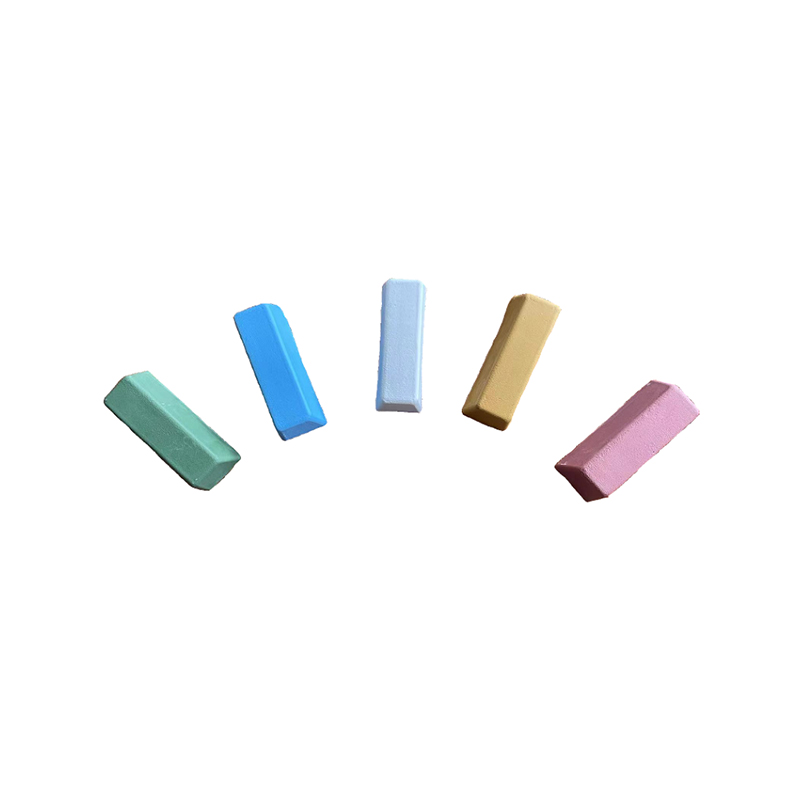
Color coding is the finishing industry's shortcut for sorting compounds on the bench. The chart below shows how the common colors read on an aluminum line:
| Compound | Abrasive character | Typical job on aluminum |
|---|---|---|
| Yellow | Medium aluminum oxide | Cutting and bright base finish on 6061 and 5052 |
| Red | Fine aluminum oxide | Final coloring and decorative trim |
| White | Very fine aluminum oxide | Mirror finish before clear coating or anodizing |
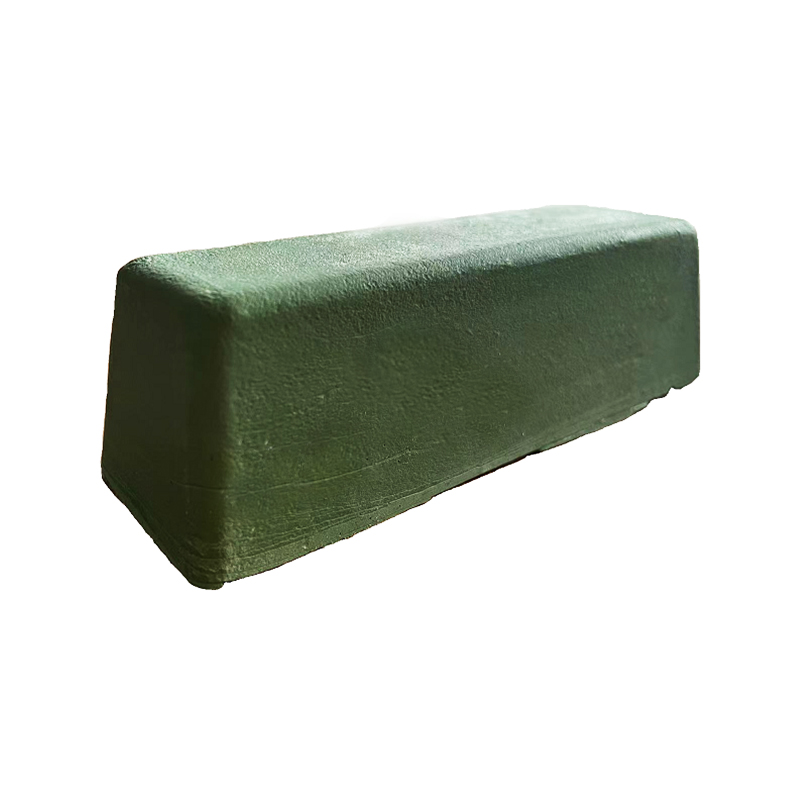
| Green | Fine silicon carbide / chrome oxide | Satin and brushed finishes; less common on soft sheet |
| Liquid compound | Formulation dependent | Automated lines with spray or roller dosing |
For many aluminum parts, a yellow buffing compound is the everyday workhorse: it cuts fast enough to remove light machining lines and leaves a clean base that a white or red compound turns into a mirror in the next pass.
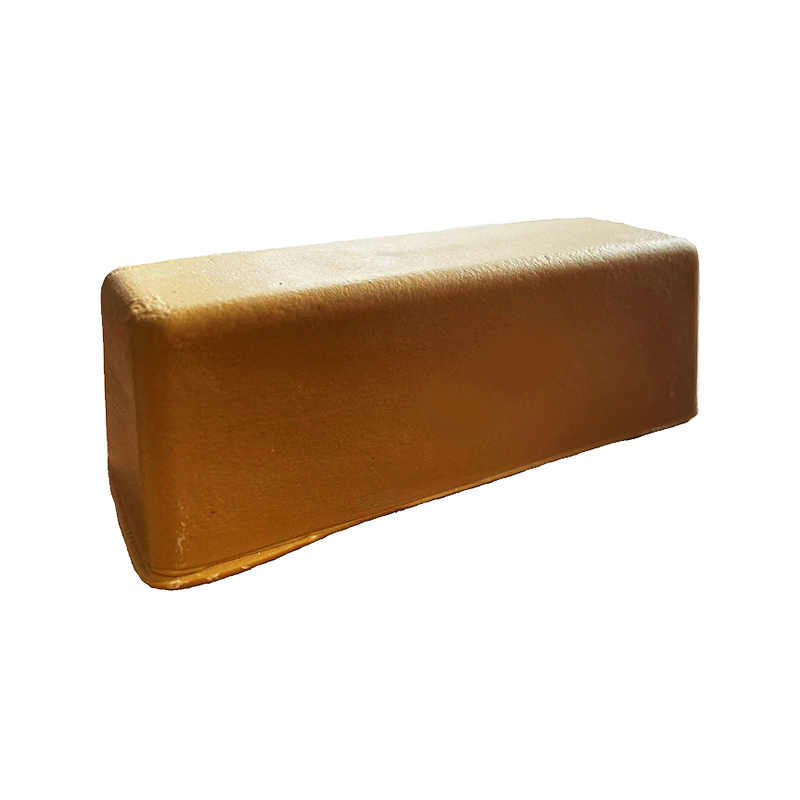 Coarse Yellow Buffing Compound for Aluminum Pre-PolishingThis high-alumina compound removes deep scratches, burrs, and oxide layers in the first polishing stage, creating an even base for later finer compounds.View Product →
Cutting and Coloring: The Two-Stage Logic of Aluminum Buffing
Professional aluminum finishing separates the process into two deliberately different stages. In the cutting stage, a coarser compound removes machining marks, scratches, and heat tint. In the coloring stage, a finer compound refines the surface to a clean, uniform luster. Running both stages in one step produces a compromise: the surface is either still scratched, or polished so long that the finish becomes wavy.
On a production line, the two stages are distinct jobs, each with its own wheel and compound:
- Cutting: medium aluminum oxide compound on a sisal or hardened cloth wheel, moderate pressure, one or two controlled passes.
- Coloring: fine white or red compound on a soft cloth wheel, light pressure, until the surface reflects evenly under angled light.
- Inspection: check under a raking lamp; smears and hazy patches here almost always mean a compound mismatch, not an operator error.
Henghua's range covers both sides of this sequence — buffing compounds for the finishing bar and cloth wheels matched to each stage. The yellow hardened cloth wheel for aluminum sits deliberately in the middle: it cuts harder than a plain cotton wheel but finishes smoother than a raw sisal wheel, which makes it a practical bridge between cutting and coloring.
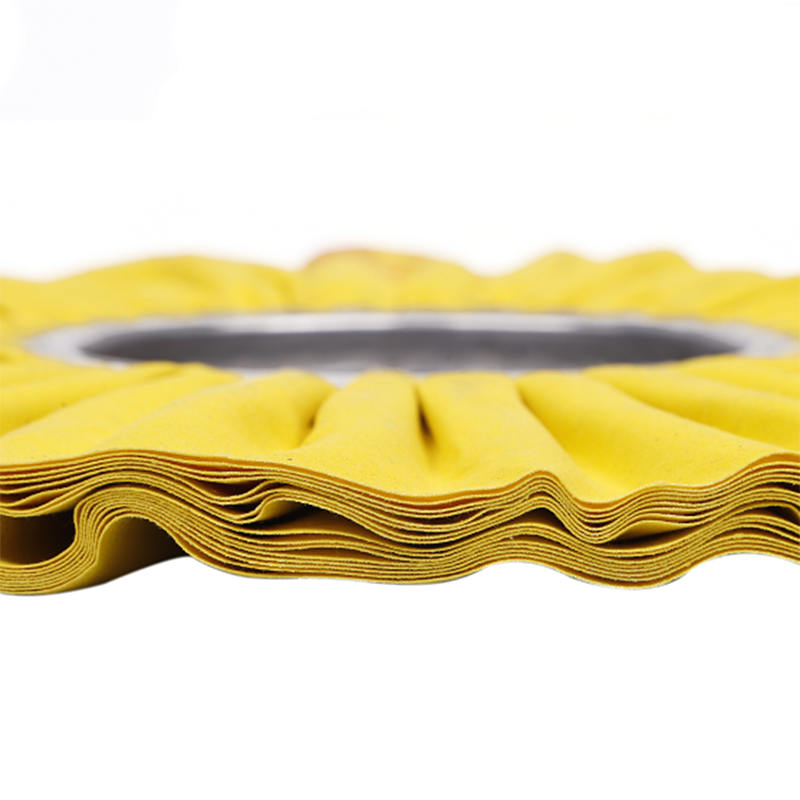 Yellow Hardened Cloth Wheel for Aluminum FinishingA balanced polishing wheel for aluminum that cuts harder than plain cotton yet finishes smoother than sisal, bridging the cutting and coloring stages effectively.View Product →
Matching Compound to Wheel: The Combination That Matters
An aluminum polishing compound only performs as well as the wheel it rides on. A coarse compound on a soft, fluffy wheel loses most of its bite because the wheel flexes and rolls over the swarf instead of presenting the abrasive cleanly. A fine compound on a hard wheel can burnish and smear. For aluminum, the practical combinations look like this:
- Sisal wheel + yellow compound — fast stock removal and deep line removal for the first contact pass.
- Folding or hardened cloth wind wheel + yellow compound — blending and brightening after the sisal stage.
- Soft cloth pneumatic wheel + white compound — final coloring and mirror development.
- Standard flat-plane wheel + liquid compound — uniform finishes on formed or contoured parts in automated cells.
One operator habit matters as much as the product choice. Charge the wheel briefly — touch the compound bar to the rotating wheel for one or two seconds — rather than pressing it on continuously. Excess compound is thrown off unused, loads the wheel face with binder, and raises the temperature that smears aluminum. A correctly charged wheel releases compound only at the contact point.
For a full overview of wheel structures, hardness choices, and how liner variations change the cut, our buffing wheel guide walks through the options wheel by wheel.
Production Considerations Before You Buy Aluminum Polishing Compound
Buying aluminum polishing compound is different from buying general hardware. The real specification is how the product behaves under friction, and several points decide whether it works on the floor or fails after the first drum:
- Batch consistency. The abrasive percentage and binder hardness must stay the same from drum to drum; a batch that runs hotter will smear exactly like an operator error.
- Abrasive dispersion. Poorly mixed compound releases clustered grain, and every cluster becomes a random deep scratch that no finishing pass can remove.
- Softening point and storage. Compounds soften in summer heat and harden in cold warehouses. Check the softening point and keep bars away from radiators and direct sun.
- Packing format. Bars suit manual benches, liquid suits automatic dosing systems, and custom block sizes reduce waste on shaped wheels.
The manufacturer's process control is part of the product. Ningbo Henghua has produced the full compound range since 2016 in a 3,500-square-meter workshop with more than 10 buffing wheel production lines and automatic filling lines for liquid compounds, exporting to South America, Europe, the United States, and the Middle East. In practice, that means the same melting behavior and the same cut from drum to drum — which is exactly what an operator cannot verify by eye.
Before ordering in bulk, run a trial on your actual material under production conditions. Test at least a few dozen parts across three variables — wheel speed, wheel type, and contact pressure — and record the result in the operator work instruction. A compound that passes this test will keep the line stable for the whole batch.
Where Aluminum Polishing Compound Does the Heavy Lifting
Aluminum is one of the most polished metals in modern manufacturing. Automotive alloy wheels and bright trim, aerospace structural parts, aluminum cookware, and hardware fittings all pass through a buffing station before coating or assembly. Each industry sets a different standard: automotive buyers accept no haze on a wheel face; aerospace surface prep has to be defect-free before anodizing; cookware makers need a clean, consistent inside finish that does not trap residue.
For automotive parts makers, the compound is usually the difference between a stable mirror finish and a daily reject pile. Our automotive surface finishing application page shows how the compound and wheel sequence is arranged for that sector. In aerospace, kitchenware, and hardware, the logic is the same — identify the alloy, define the required finish, then select the compound and wheel pair — even when the tolerances differ.
For job shops that switch between aluminum, stainless steel, and copper on the same bench, a dedicated metal polishing compound keeps the number of SKUs under control. It produces an acceptable cut and color across several soft metals, which makes scheduling easier, even if the ultimate mirror finish on aluminum still calls for a dedicated white compound.
 Versatile Metal Polishing Compound for Multiple MetalsA single compound that works on stainless steel, copper, and chrome, simplifying job-shop inventories while delivering acceptable cut and shine across soft metals.View Product →
Aluminum polishing compound is rarely the most expensive item on the consumables list, but it decides whether the surface finishes like a product or like a prototype. Buy with a clear process: identify the alloy, define the required finish, set the wheel sequence, and test the compound under real production speed before it reaches the bench. Once those variables are under control, polishing aluminum becomes a planned operation with repeatable results — not a trial-and-error craft.