Español
 Deutsch
 عربى
عربىContent
- 1 Why Cotton Is the Material of Choice for Jewelry Polishing
- 2 Types of Jewelry Cotton Wheels: Construction and Application Differences
- 3 Jewelry Cotton Wheel Types at a Glance
- 4 Choosing the Right Polishing Compound for Each Metal
- 5 Industries and Products That Use Jewelry Cotton Wheels
- 6 Jewelry Cotton Wheel vs. Other Polishing Wheel Materials
- 7 Step-by-Step: Professional Jewelry Polishing Workflow with Cotton Wheels
- 8 Selecting the Right Cotton Wheel: Specification Factors for Buyers
- 9 Maintenance and Best Practices for Jewelry Cotton Wheels
- 10 Frequently Asked Questions About Jewelry Cotton Wheels
- 11 Conclusion: The Jewelry Cotton Wheel as the Foundation of Fine Metal Finishing
A jewelry cotton wheel is a soft, multi-layer cotton buffing tool designed specifically for the final polishing stages of precious metals and delicate jewelry pieces. Unlike abrasive wheels used for material removal, the jewelry cotton wheel works in partnership with fine polishing compounds — most commonly jeweler's rouge — to eliminate micro-scratches, blend surface texture, and develop the deep, mirror-level luster that distinguishes a professionally finished piece from one that merely looks clean. It is the last tool in the polishing sequence, and in many ways the most important: the quality of the final shine is decided almost entirely at this stage.
Jewelry cotton wheels are used across a wide range of applications — from artisan bench jewelers working on one-off fine jewelry pieces to industrial production lines finishing gold, silver, brass, copper, and platinum components at scale. They are also widely used in related fields: lapidary work for gemstone polishing, clock and watch restoration, decorative hardware finishing, musical instrument manufacturing, and luxury goods production. Understanding the construction differences between cotton wheel types, how to select the right wheel for each metal, and which compounds to pair with them is the foundation of consistent, professional jewelry polishing results.
This guide covers everything you need to know: the material characteristics of jewelry cotton wheels, the major structural types and their applications, a compound selection guide organized by metal, step-by-step polishing workflow, maintenance practices, and a comparison with alternative wheel materials used in jewelry finishing.
Why Cotton Is the Material of Choice for Jewelry Polishing
The selection of cotton as the primary material for fine jewelry polishing wheels is not arbitrary — it reflects a set of physical properties that align precisely with the demands of working on soft, high-value precious metals and intricate gem-set pieces.
Cotton fibers are naturally soft and flexible, which means a cotton buffing wheel conforms to the contours of a jewelry piece rather than pressing against it as a rigid tool. This conformability is critical when polishing rings with prong settings, chain links, carved surfaces, or filigree work, where a rigid wheel would either miss recessed areas entirely or exert uneven pressure that creates an inconsistent finish. The softness of cotton also means the wheel exerts minimal risk of scratching the workpiece surface — provided the correct compound grade is used — making it safe for use on gold as soft as 10 karat, fine silver, copper, and other ductile metals.
Cotton's second important property is its capacity to absorb, retain, and release polishing compound evenly. When a bar of rouge or polishing compound is applied to a spinning cotton wheel, the compound is distributed through the fiber matrix of the wheel face and released in a thin, consistent film as the wheel contacts the workpiece. This even delivery is responsible for the smooth, streak-free high-gloss finish that cotton wheels are known for — compared to harder wheels where compound can clump and leave uneven polishing marks.
Finally, cotton generates relatively low heat during polishing compared to harder or more abrasive wheel materials. This is significant for precious metals: gold in particular is highly susceptible to surface discoloration from localized heat, and silver can develop heat tarnish rapidly. The low thermal profile of cotton buffing keeps the workpiece surface cooler, protecting the metal's color and finish quality throughout the polishing process.
Types of Jewelry Cotton Wheels: Construction and Application Differences
Not all jewelry cotton wheels are built the same way. The construction method — specifically the way the cotton layers are held together and arranged — determines the wheel's stiffness, the surface contact profile it presents to the workpiece, and which stage of the polishing sequence it is suited for. The four primary types are described below.
Spiral Sewn Cotton Wheel
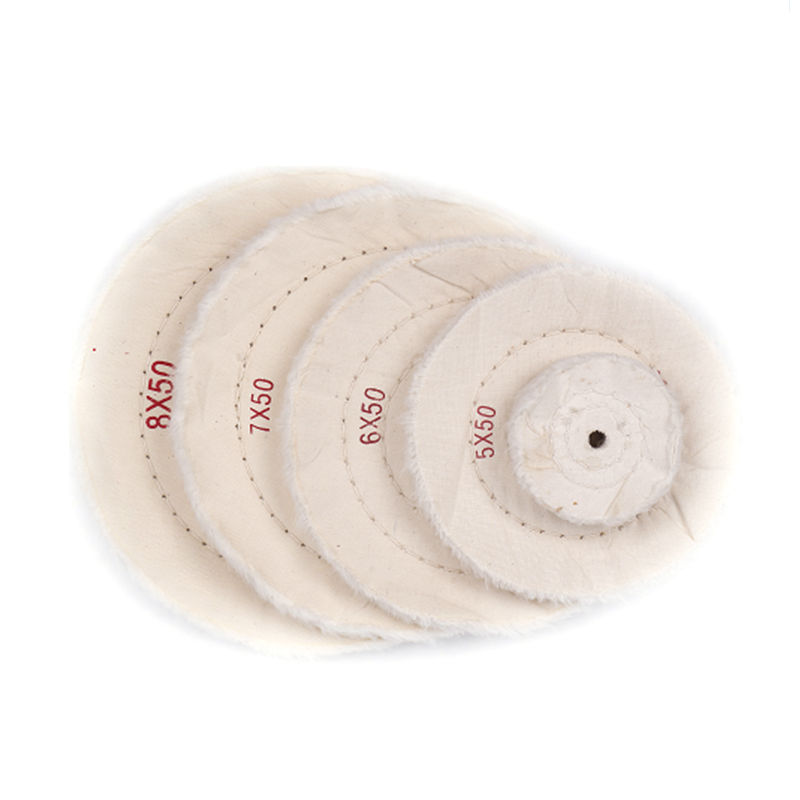
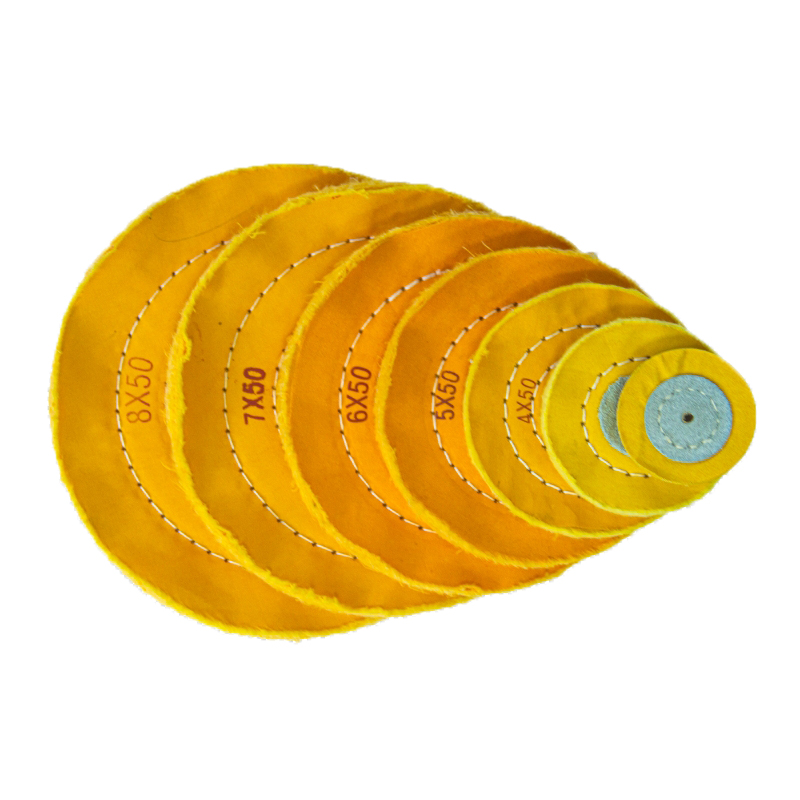
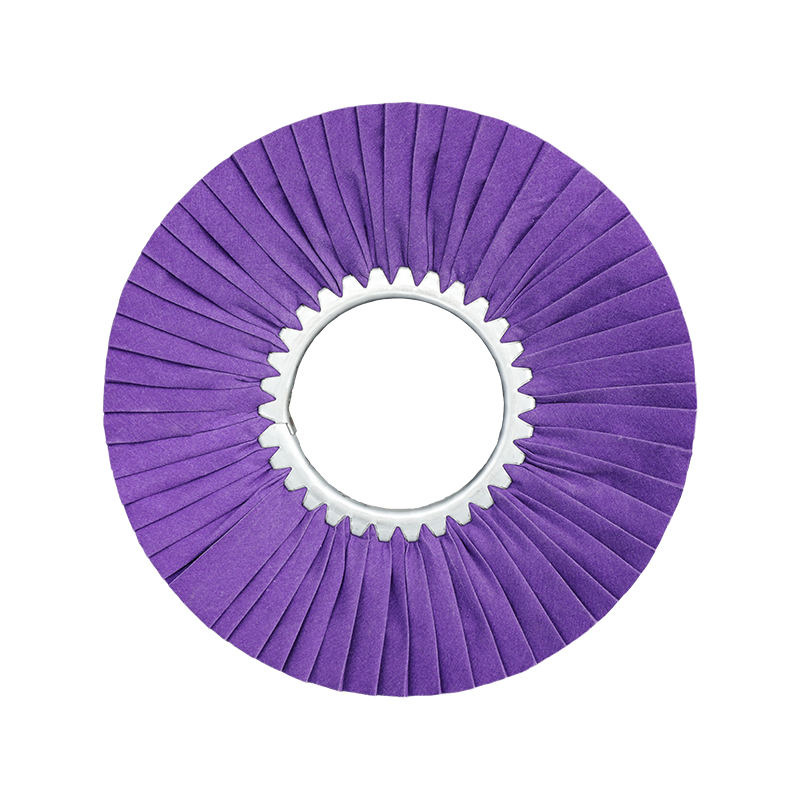
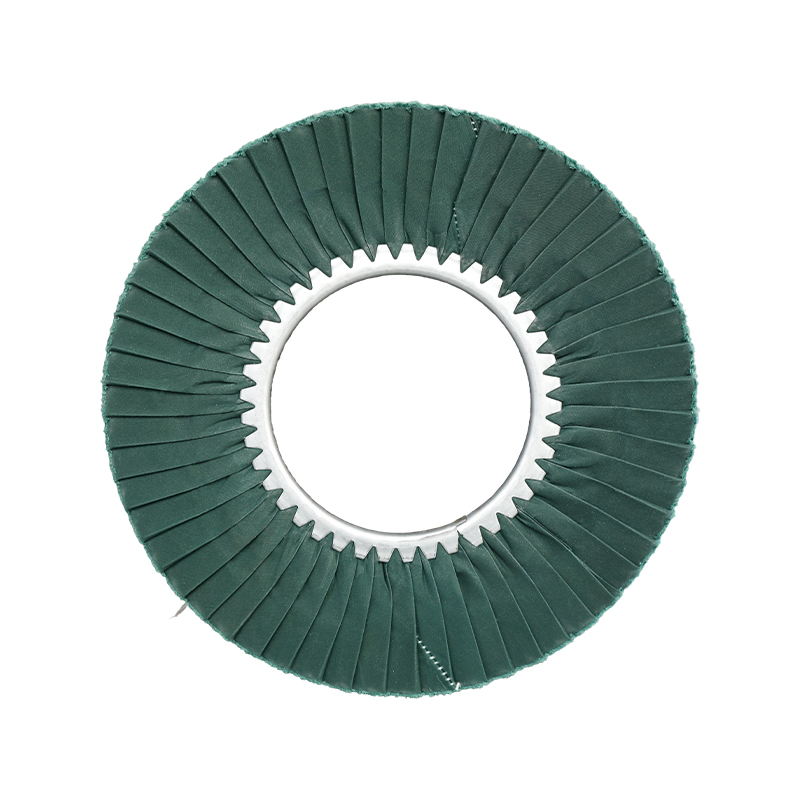
The spiral sewn cotton wheel is constructed from multiple layers of cotton muslin or cloth held together by concentric rows of stitching that run in a spiral pattern from the center of the wheel outward toward the edge. The stitching compresses the cotton layers together, creating a denser, firmer wheel face than unsewn alternatives. The closer the stitching rows are to each other, the stiffer the wheel becomes.
Spiral sewn wheels are the most versatile type for jewelry work and serve well in both intermediate cutting stages and light finishing. Their moderate firmness allows them to exert consistent pressure on flatter metal surfaces, making them useful for removing fine polishing lines and preparing a surface for final color buffing. In production environments, spiral sewn wheels are commonly used for the second stage of a multi-step polishing sequence — after sisal or harder wheels have handled initial material removal — to blend out residual marks and develop a pre-mirror satin surface.
Loose Cotton (Loose Sewn) Wheel
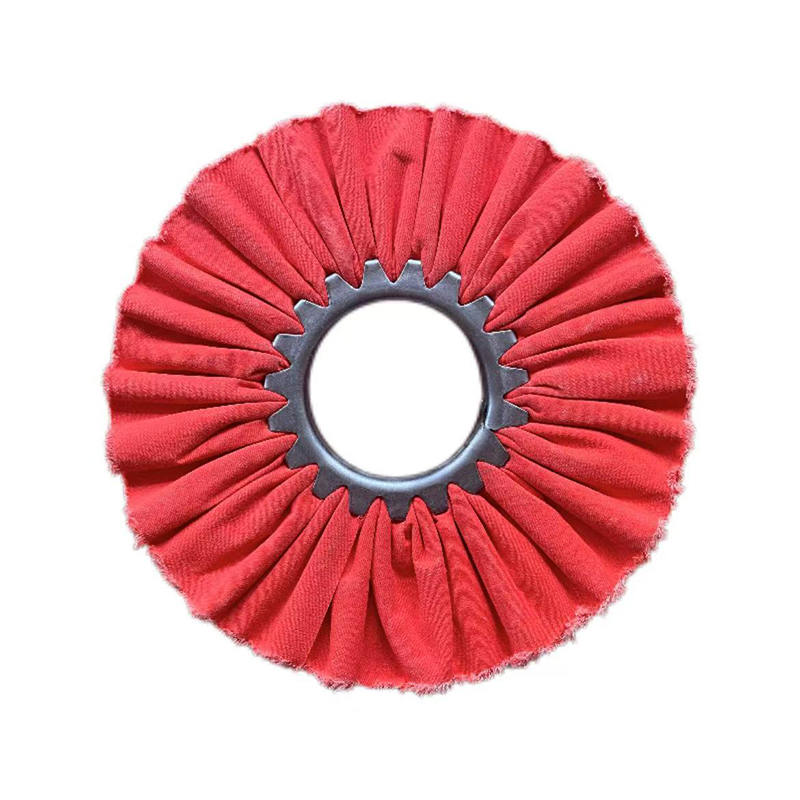
Loose cotton wheels — also called loose sewn, canton flannel, or cushion sewn wheels depending on the specific construction — are made from layers of soft cotton or muslin that are not tightly stitched, or are stitched only near the center hub to hold the wheel together structurally while leaving the outer layers free to flex and fan outward during rotation.
The softness and flexibility of loose cotton wheels makes them the premier choice for final color buffing on precious metals. Their feather-light contact pressure means they impart no new scratches to a surface that has already been brought to a near-mirror state, while the compound carried in the cotton fibers continues to refine the surface to a high-gloss finish. Loose cotton wheels are the standard tool for the final pass on gold, silver, and platinum jewelry before a piece is cleaned and presented.
Canton Flannel Wheel
Canton flannel wheels are a premium variant of the soft cotton wheel category, made from flannel-finish cotton that has a slightly napped, plush surface texture. The nap of the flannel increases the wheel's compound-holding surface area, resulting in a more even and sustained compound delivery during the final polishing pass. Canton flannel is widely regarded as one of the finest materials available for achieving an ultra-high-luster finish on gold, silver, and platinum, and is the professional standard in high-end jewelry finishing workshops.
Mounted Cotton Wheel (Small / Miniature)
Mounted cotton wheels are small-diameter cotton buff tools attached to a metal shank (typically 2.35 mm or 3.17 mm in diameter) for use with flex shaft machines, dental handpieces, rotary tools, and other precision polishing equipment. Diameters typically range from 10 mm to 30 mm. These miniature wheels are essential for polishing the interior of rings, hard-to-reach surfaces on complex settings, chain links, and areas that cannot be reached with a standard bench polisher wheel. They are also invaluable for polishing around gemstones without risk of catching on prongs or abrading stone girdles.
Jewelry Cotton Wheel Types at a Glance
| Wheel Type | Construction | Stiffness | Polishing Stage | Best Metals |
|---|---|---|---|---|
| Spiral Sewn Cotton | Tightly stitched muslin layers | Medium | Intermediate cut & color | Gold, silver, brass, copper, aluminum |
| Loose / Cushion Sewn | Lightly stitched, free-flex outer layers | Soft | Final color buffing | Gold, silver, platinum, copper |
| Canton Flannel | Plush napped flannel, soft stitching | Very Soft | Ultra-fine mirror finish | All precious metals, platinum |
| Mounted Cotton (Miniature) | Small cotton buff on metal shank | Varies | Precision detail polishing | All jewelry metals, gemstone settings |
Choosing the Right Polishing Compound for Each Metal
The jewelry cotton wheel is only as effective as the compound it carries. Compound selection is metal-specific: the wrong compound on a precious metal surface can scratch, discolor, or leave residue that is difficult to clean out of intricate settings. The following section provides clear guidance for the most commonly polished jewelry metals.
Gold (Yellow, Rose, and White Gold)
For yellow gold, red jeweler's rouge is the traditional and most widely used final polish compound. Red rouge contains fine iron oxide particles suspended in a wax binder and produces the warm, deep, highly reflective luster that is characteristic of well-finished gold jewelry. It is used with a loose cotton or canton flannel wheel at low to moderate speed. For white gold and rose gold, a white or pink polishing compound (such as white diamond or a jeweler's white bar) is preferred, as red rouge's iron oxide can leave a reddish tint on white metal surfaces. Pre-polishing on gold is typically done with a spiral sewn cotton wheel and a tripoli or grey compound to remove fine scratches before the rouge stage.
Silver and Sterling Silver
Silver polishes quickly and responds well to red or white rouge used with a soft loose cotton or flannel wheel. For pre-polishing to remove tarnish or light scratches before the final rouge pass, a tripoli compound with a spiral sewn cotton wheel is effective. Note that silver tarnishes rapidly after polishing if left exposed to air and humidity; polished silver pieces should be stored in anti-tarnish pouches or treated with a thin protective coating if display life is a priority.
Platinum
Platinum is significantly harder than gold or silver and requires a firmer polishing approach in the early stages. A spiral sewn cotton wheel with a grey or white polishing compound is used for the cut-down stage to blend surface marks. The final mirror polish on platinum is achieved with a canton flannel or loose cotton wheel loaded with white diamond compound or a purpose-formulated platinum polishing bar. Because platinum holds a polish for longer than other precious metals and is less prone to tarnish, the investment in achieving a flawless final finish is particularly worthwhile.
Brass and Copper
Brass and copper respond very well to cotton wheel polishing. For initial surface preparation and scratch removal, a spiral sewn cotton wheel loaded with brown tripoli compound is the standard first step. Tripoli is moderately abrasive and cleans brass surfaces efficiently, removing oxidation, die marks, and fine scratches. The final color pass uses a red rouge compound on a loose cotton or flannel wheel to develop the rich, warm, high-luster finish characteristic of well-polished brass and copper. Brass components destined for lacquering or electroplating should be thoroughly cleaned with solvent after polishing to remove all compound residue before coating.
Zinc Alloy and Costume Jewelry Metals
Zinc alloy (commonly used in fashion jewelry, belt hardware, and decorative fittings) is soft and polishes rapidly. A loose cotton wheel with white compound or yellow deluxe bar is typically sufficient for achieving a bright mirror finish in a single step, provided the base surface has been adequately pre-finished. Avoid highly abrasive compounds on zinc alloy as they can remove material too quickly and create an uneven surface texture.
Compound Quick Reference
| Metal | Stage 1 Compound | Stage 1 Wheel | Final Compound | Final Wheel |
|---|---|---|---|---|
| Yellow Gold | Tripoli (brown) | Spiral sewn cotton | Red rouge | Loose cotton / flannel |
| White / Rose Gold | Grey / white compound | Spiral sewn cotton | White diamond / pink bar | Canton flannel |
| Silver | Tripoli (brown) | Spiral sewn cotton | Red or white rouge | Loose cotton / flannel |
| Platinum | Grey / white compound | Spiral sewn cotton | White diamond | Canton flannel |
| Brass / Copper | Brown tripoli | Spiral sewn cotton | Red rouge | Loose cotton |
| Zinc Alloy | — | — | White / yellow compound | Loose cotton |
Industries and Products That Use Jewelry Cotton Wheels
While the name suggests an exclusive application to jewelry, cotton buffing wheels of the type designed for precious metals are used across a broader set of industries than most people realize. Any production environment where soft metals require a controlled, high-luster final finish without risk of surface damage is a natural application for jewelry cotton wheels.
Fine Jewelry Manufacturing
This is the primary application context for jewelry cotton wheels. Rings, necklaces, bracelets, earrings, pendants, and brooches in gold, silver, and platinum are polished using a combination of bench polisher machines, flex shaft tools, and small-diameter mounted cotton wheels. The polishing sequence for a typical gold ring involves pre-polishing to remove casting marks and tool marks with a tripoli compound, followed by final rouge polishing with a loose cotton or flannel wheel to develop the showroom-ready finish. The quality and consistency of this final polishing stage directly affects the perceived value and salability of the finished piece.
Fashion Jewelry and Costume Accessories
Fashion jewelry produced in brass, zinc alloy, copper, or white metal uses cotton wheels in automated or semi-automated polishing systems to achieve the bright metallic finish required before lacquering, electroplating, or vacuum PVD coating. The quality of the pre-plate polish determines the adhesion quality and visual uniformity of the applied surface coating — a poorly polished base will show surface irregularities through even a well-applied plating layer.
Watch and Clock Manufacturing
Watch cases, clasps, buckles, and decorative dials in gold, stainless steel, and brass are polished with cotton wheels to achieve the alternating matte and mirror finishes that characterize luxury timepiece design. Precision mounted cotton wheels are used for polishing the interior bevels of watch cases and the inner surfaces of lugs — areas that are inaccessible to standard bench polisher wheels and require the flexibility and precision of small-diameter mounted tools.
Lapidary and Gemstone Finishing
Gemstone cutters use cotton wheels — sometimes called laps — in combination with specific polishing oxides (cerium oxide for most stones, chrome oxide for some harder gems) to achieve the final surface polish on cabochon and faceted stones. The softness and flexibility of cotton allows the wheel to conform slightly to the curved surface of a cabochon, ensuring even polish distribution across the dome. For this application, hard cotton wheels are used for harder gemstones and soft flannel wheels for softer materials.
Musical Instrument Manufacturing
Brass musical instruments — trumpets, trombones, French horns, saxophones — are polished using cotton buffing wheels to develop the bright, even lacquer-ready surface required before coating. The internal and external curved surfaces of instrument bells, valve casings, and tubing require the flexibility of cotton buffing wheels to achieve a consistent finish across complex, compound-curved geometry.
Decorative Hardware and Luxury Goods
Luxury bag hardware, pen components, eyeglass frames, belt buckles, and decorative furniture fittings in gold-plated or solid brass finish are polished with cotton wheels before plating or final delivery. In this context, jewelry-grade cotton wheel polishing provides the controlled, gentle surface preparation that protects fine detail, decorative engraving, and embossed patterns from being worn down or blurred by overly aggressive buffing tools.
Jewelry Cotton Wheel vs. Other Polishing Wheel Materials
Cotton is not the only material used for jewelry polishing wheels, and understanding where it fits relative to other options helps make better purchasing and workflow decisions.
| Material | Hardness | Primary Use | Scratch Risk on Soft Metals | Mirror Finish Capable |
|---|---|---|---|---|
| Sisal | High | Heavy cut-down on hard metals | High — not suitable for precious metals | No |
| Felt | Medium-High | Precision polishing of harder gems and metals | Moderate with correct compound | Yes (for harder metals) |
| Cotton (spiral sewn) | Medium | Intermediate cut and pre-finish | Low with correct compound | Partial (pre-mirror) |
| Cotton (loose / flannel) | Soft | Final color and mirror finish | Very Low | Yes |
| Leather | Soft-Medium | Ultra-fine final polish on delicate pieces | Very Low | Yes |
| Wool / Synthetic Fiber | Varies | General polishing and gemstone work | Low-Moderate | Yes (with fine compound) |
The consistent takeaway is that cotton wheels occupy the final polishing position in virtually every precious metal workflow. Harder wheel materials prepare the surface; cotton finishes it. Attempting to use felt or sisal wheels on gold or silver without the transition through cotton results in a surface that is bright but visibly marked — lacking the depth and clarity of a true mirror finish achieved with rouge on soft cotton.
Step-by-Step: Professional Jewelry Polishing Workflow with Cotton Wheels
The following workflow describes a standard professional polishing sequence for a gold ring with a cast or stamped surface, progressing from surface preparation through to final mirror finish. The same logic applies to other precious metal jewelry pieces with appropriate compound substitutions.
- Pre-polishing assessment: Inspect the piece under good lighting. Identify all visible defects — casting porosity, file marks, abrasive scratches, solder seams, and tool marks. Determine whether a rubber abrasive wheel or a file is needed to address any deep marks before introducing cotton buffing wheels. Cotton wheels cannot remove deep mechanical damage; attempting to do so simply burnishes over the defects without eliminating them.
- Initial surface refinement (if required): For pieces with visible scratches or casting marks, use a rubber abrasive wheel or fine-grit abrasive in a flex shaft machine to mechanically reduce the surface defect depth before switching to cotton. Sand or file progressively to at least 600 grit equivalent before introducing the first cotton wheel.
- First cotton stage — tripoli cut: Mount a spiral sewn cotton wheel on the bench polisher. Apply brown tripoli compound to the spinning wheel. Polish all accessible surfaces of the piece with steady, consistent pressure. Work in overlapping passes and rotate the piece frequently to maintain even contact. Re-apply compound every 45–60 seconds. The goal is to eliminate all abrasive scratch marks and produce a uniform pre-mirror satin surface.
- Clean between stages: Before moving to the rouge stage, thoroughly clean the piece in an ultrasonic cleaner or by hand with a brush and warm soapy water to remove all tripoli residue. Compound contamination between stages is one of the most common causes of inconsistent finish results — tripoli residue on the rouge wheel degrades the quality of the final polish.
- Final stage — rouge color: Switch to a loose cotton or canton flannel wheel dedicated exclusively to rouge compound. Apply a small amount of rouge to the spinning wheel. Polish the piece with light, consistent pressure at moderate speed (typically 1,500–2,500 RPM depending on piece size). The rouge stage removes any remaining fine marks from the tripoli stage and develops the high-luster, reflective finish. Do not apply heavy pressure at this stage — rouge is a finishing compound, not a cutting compound; excessive pressure will polish unevenly and can burnish fine detail into a flat, featureless appearance.
- Detail polishing with mounted wheels: For interior ring shanks, inside prong settings, and other recessed areas inaccessible to the bench polisher, use mounted cotton wheels in a flex shaft machine or rotary tool. Apply rouge or a fine polishing compound to the mounted wheel and work carefully around gemstone settings, taking care not to catch prong tips or contact stone girdles with the spinning tool.
- Final cleaning and inspection: Clean the finished piece in an ultrasonic cleaner to remove all compound residue, then rinse thoroughly and dry with a clean soft cloth or air dryer. Inspect under magnification and oblique lighting for any remaining marks, missed areas, or surface irregularities. Any defects identified at this stage should be addressed by returning to the appropriate step rather than attempting to spot-polish with a new application of rouge.
Selecting the Right Cotton Wheel: Specification Factors for Buyers
For procurement professionals sourcing jewelry cotton wheels in bulk for production environments, the following specification parameters determine fitness for purpose and should be evaluated before placing orders.
- Diameter and arbor hole size: Standard jewelry bench polishers use wheel diameters of 4 to 8 inches (100–200 mm) with arbor holes of 1/2 inch (12.7 mm) as the most common size. Verify compatibility with your polishing machine spindle before ordering. For larger industrial buffing machines, 10-inch and 12-inch cotton wheels are available.
- Ply count: Ply count refers to the number of cotton fabric layers stacked to form the wheel. Typical jewelry cotton wheels range from 30 to 80 plies. Higher ply counts produce a thicker wheel with greater compound retention and longer service life; they are preferred for high-throughput production environments. Lower ply counts produce a thinner, more flexible wheel suited to precise detail work.
- Cotton quality and thread count: Higher thread count cotton cloth produces a smoother, finer wheel face that delivers a cleaner final finish and holds fine compound particles more effectively. In production polishing of high-value jewelry, the difference between standard and premium cotton quality is visible in the consistency and depth of the resulting surface finish.
- Center bore material: Most jewelry cotton wheels have a leather-lined center bore to protect the arbor hole from wear and provide a secure clamping surface. This detail affects both wheel longevity and the consistency of wheel alignment on the spindle — misaligned wheels create vibration and uneven polishing pressure.
- Construction type: Specify spiral sewn for intermediate stages and loose/flannel for final color stages. Ordering the wrong type for a given stage in your polishing workflow is the single most common specification error in bulk purchasing — it results in poor finish quality that requires rework and wastes both material and labor time.
- Batch consistency: For production environments, verify that the supplier can provide consistent ply density, uniform stitching, and stable cotton quality across batches. Variation between production lots leads to inconsistent polishing results that require operators to adjust technique between wheel replacements — reducing throughput and finish quality predictability.
Maintenance and Best Practices for Jewelry Cotton Wheels
Proper care of jewelry cotton wheels extends their service life, protects finish quality, and prevents common operational problems such as compound contamination and uneven polishing.
- One compound per wheel, always: This is the single most important rule in jewelry cotton wheel maintenance. Each wheel must be dedicated to one compound type and used only with that compound. Cross-contamination between compound grades — particularly between tripoli (cut) and rouge (finish) — will produce visible streaks and an inconsistent surface finish that cannot be corrected without returning to an earlier polishing stage. Label every wheel clearly with its assigned compound and enforce this practice consistently in shared workshop environments.
- Rake the wheel periodically: As compound accumulates, it hardens and glazes the wheel face, reducing compound pick-up and polishing efficiency. Use a stiff wheel rake or brass brush against the spinning wheel face every few minutes of operation to remove built-up compound and restore the fiber texture. This practice is especially important for spiral sewn wheels used in the tripoli stage.
- Store away from compound contamination: Store clean wheels in sealed bags or dedicated compartments, separated by compound type. A wheel that accidentally picks up rouge from a nearby shelf will contaminate the next tripoli polishing session, introducing fine finish compound particles into a cut-down stage and producing an inconsistent surface.
- Operate at appropriate speed: Jewelry cotton wheels are typically used at 1,500–3,000 RPM depending on wheel diameter, piece size, and polishing stage. Higher speeds generate more heat and more aggressive compound action; lower speeds provide more control and less heat risk on delicate or heat-sensitive pieces. Always reduce speed for the final rouge pass on thin-gauge gold or silver to prevent heat discoloration.
- Replace wheels when worn: As the cotton layers wear down over time, the wheel diameter decreases and the face begins to lose its compound-retention capacity. Replace wheels before they wear to a point where the arbor flanges begin to contact the workpiece — a worn wheel used at this stage can cause abrasion marks from the exposed metal hardware.
Frequently Asked Questions About Jewelry Cotton Wheels
Can a jewelry cotton wheel be washed and reused?
It is not generally recommended to wash cotton polishing wheels with water, as wetting the cotton fibers can cause them to mat, shrink unevenly, or lose their structural integrity when used at speed after drying. In production environments, wheels are typically replaced when worn or heavily glazed rather than cleaned. Small amounts of surface compound buildup are managed with a rake, not washing.
What speed should I run a jewelry cotton wheel at?
For standard bench polishers running 6-inch or 8-inch cotton wheels, a speed of 1,750–3,450 RPM is typical. For the tripoli stage, higher speeds within the wheel's rated range improve compound action and surface coverage speed. For the final rouge stage, lower speeds — particularly on delicate or thin pieces — provide more control and reduce heat risk. Always check the wheel manufacturer's maximum rated speed and operate below it.
Is it safe to use a cotton wheel near gemstones in a setting?
With care, yes. Soft loose cotton wheels pose minimal risk to most gemstones when used with fine polishing compounds at moderate speed. However, care should be taken around prong tips, which can catch on the wheel face and deform; around softer stones such as opal, turquoise, and pearl, which can be scratched or abraded by even mild compound contact; and around porous stones that can absorb compound residue. For settings with vulnerable stones, use mounted miniature cotton wheels with precise control rather than full bench polisher wheels.
How many ply layers do I need for jewelry polishing?
For standard jewelry bench polishing, 40–60 ply cotton wheels provide a good balance of compound retention, surface contact area, and service life. For lighter, more precise work on small pieces or delicate components, 30-ply wheels offer a softer, more flexible face. For high-throughput production polishing where extended wheel life is a priority, 80-ply or higher wheels are appropriate and more economical on a per-piece basis.
Conclusion: The Jewelry Cotton Wheel as the Foundation of Fine Metal Finishing
The jewelry cotton wheel occupies a deceptively simple but critically important role in precious metal finishing. Every step that precedes it — casting, filing, grinding, pre-polishing — exists to prepare a surface for this final stage. The quality of the cotton wheel, the appropriateness of the compound, and the discipline of the operator at this stage determine whether a piece of jewelry looks handcrafted and brilliant or merely finished and ordinary.
For production buyers and jewelry manufacturers sourcing cotton wheels at scale, the practical guidance is clear: invest in consistent quality over the lowest unit cost. A cotton wheel that produces inconsistent results — due to variable ply density, poor stitching quality, or inadequate cotton grade — creates rework costs and labor inefficiency that far exceed any material savings. Verify batch consistency, dedicate wheels to single compounds, maintain them with regular raking, and match wheel type precisely to each stage of your polishing workflow.
Whether you are equipping a high-volume jewelry production line, a bench workshop for fine metalsmithing, or a lapidary studio for gemstone finishing, the right selection of jewelry cotton wheels — properly specified, correctly paired with compounds, and diligently maintained — is the foundation of a polishing process that delivers consistent, professional-grade results on every piece that passes through it.