Español
 Deutsch
 عربى
عربىContent
- 1 Zirconia Alumina and Ceramic Sanding Belts Are Generally Best for Metal, But a Flap Wheel Often Outperforms Belts on Curved or Uneven Surfaces
- 2 Why Abrasive Grain Type Matters More Than Belt Brand
- 3 Matching Grit to the Metalworking Stage
- 4 Comparing Common Abrasive Options for Metal Work
- 5 When a Flap Wheel Is a Better Choice Than a Sanding Belt
- 6 Flap Wheel Construction and Grit Options
- 7 Practical Tips for Longer Abrasive Life on Metal
- 8 Choosing Between a Sanding Belt and a Flap Wheel for Your Project
Zirconia Alumina and Ceramic Sanding Belts Are Generally Best for Metal, But a Flap Wheel Often Outperforms Belts on Curved or Uneven Surfaces
For most metalworking tasks, a zirconia alumina or ceramic sanding belt delivers the fastest stock removal and the longest service life on steel, stainless steel, and aluminum. However, sanding belts are not always the right tool for every job. When a workpiece has welds, curves, edges, or contoured surfaces, a flap wheel frequently outperforms a flat belt because its overlapping abrasive flaps conform to irregular shapes while still delivering consistent material removal. The rest of this guide breaks down abrasive grain types, grit selection, and the specific situations where switching from a belt to a flap wheel produces a better finish in less time.
Why Abrasive Grain Type Matters More Than Belt Brand
The single biggest factor determining how well a sanding belt performs on metal is the abrasive mineral bonded to its surface, not the backing material or the belt's overall build quality. Different grain types fracture and self-sharpen at different rates, which directly affects cutting speed and belt life when working steel, stainless steel, or non-ferrous metals.
Zirconia Alumina
Zirconia alumina grain continuously fractures to expose fresh cutting edges, which makes it well suited to heavy stock removal on carbon steel and stainless steel. It typically lasts significantly longer than standard aluminum oxide under heavy pressure, making it a common first choice for weld grinding and heavy deburring.
Ceramic Alumina
Ceramic grain is engineered at a microcrystalline level to self-sharpen continuously, giving it the longest working life of the common grain types and the best performance under high heat generated during aggressive metal grinding. It costs more per belt but often reduces total abrasive spend over a production run because fewer belts are consumed.
Aluminum Oxide
Standard aluminum oxide is the most economical option and performs adequately on light-duty metal sanding, finishing passes, and softer metals such as aluminum or brass where aggressive stock removal is not the priority.
Matching Grit to the Metalworking Stage
Choosing the correct grit sequence prevents wasted time and reduces the risk of leaving visible scratch patterns that require extra finishing passes to remove. Most metal fabrication shops move through a coarse-to-fine progression rather than jumping straight to a fine grit.
- Coarse grit, roughly 36 to 60, removes welds, mill scale, and heavy surface defects quickly.
- Medium grit, roughly 80 to 120, blends grinding marks and prepares the surface for finishing.
- Fine grit, roughly 150 to 240, produces a smooth pre-polish surface ready for coating or final polishing.
Skipping more than one grit step in this progression usually leaves deep scratches from the coarser pass still visible under the finer one, forcing rework that costs more time than following the full sequence.
Comparing Common Abrasive Options for Metal Work
The table below compares typical performance characteristics across the abrasive types most commonly used on metal, including where a sanding belt is ideal and where switching to a flap wheel produces a better outcome.
When a Flap Wheel Is a Better Choice Than a Sanding Belt
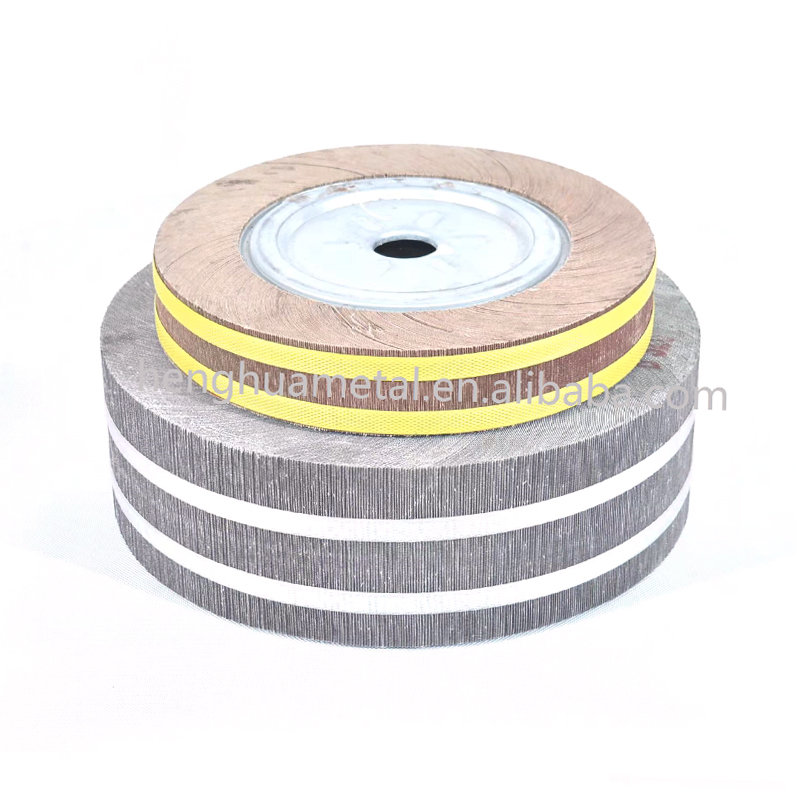
A sanding belt works best on flat or gently curved stock held against a consistent contact wheel or platen. Once the workpiece geometry becomes irregular, a flap wheel usually delivers a more even finish because its individually mounted abrasive flaps flex independently to follow contours, pipe curves, and welded joints that a rigid belt cannot reach evenly.
Weld Blending on Round or Irregular Stock
On round tube, pipe fittings, and cast components, the flexible flaps of a flap wheel wrap around the curvature and blend weld beads smoothly without the flat spots that a belt can leave behind on rounded surfaces.
Edge and Corner Deburring
Sharp edges and corners are difficult to sand evenly with a belt without rounding them unevenly or gouging the surrounding surface. A flap wheel's individual flaps deliver a more controlled, consistent edge break.
Reduced Heat Buildup on Thin Sheet Metal
Because only a small portion of a flap wheel contacts the surface at any moment, it generates less concentrated heat than a belt running under constant full-surface contact, lowering the risk of warping or discoloring thin sheet metal during finishing passes.
Flap Wheel Construction and Grit Options
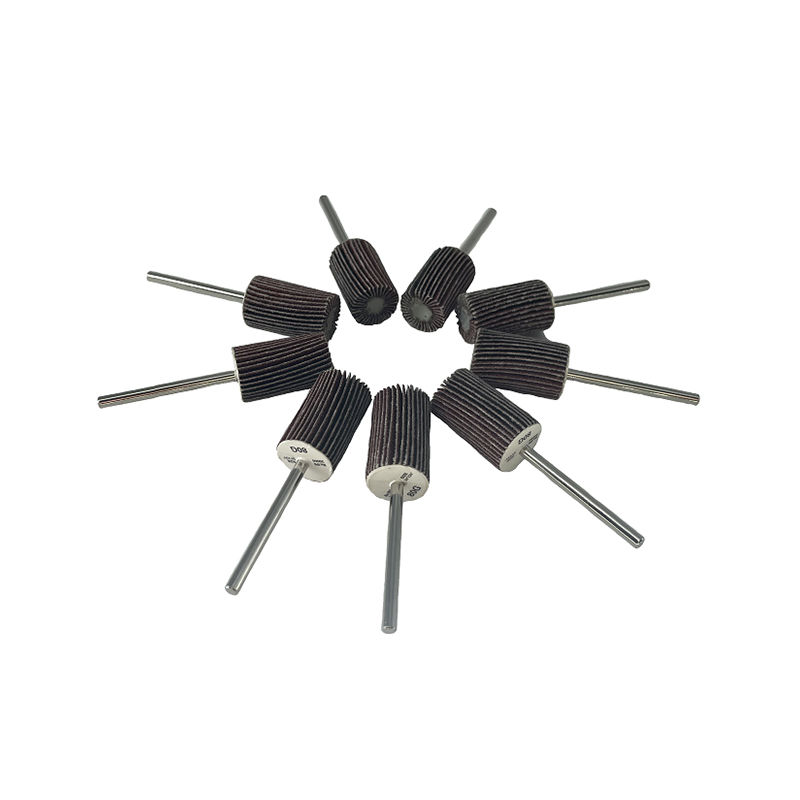
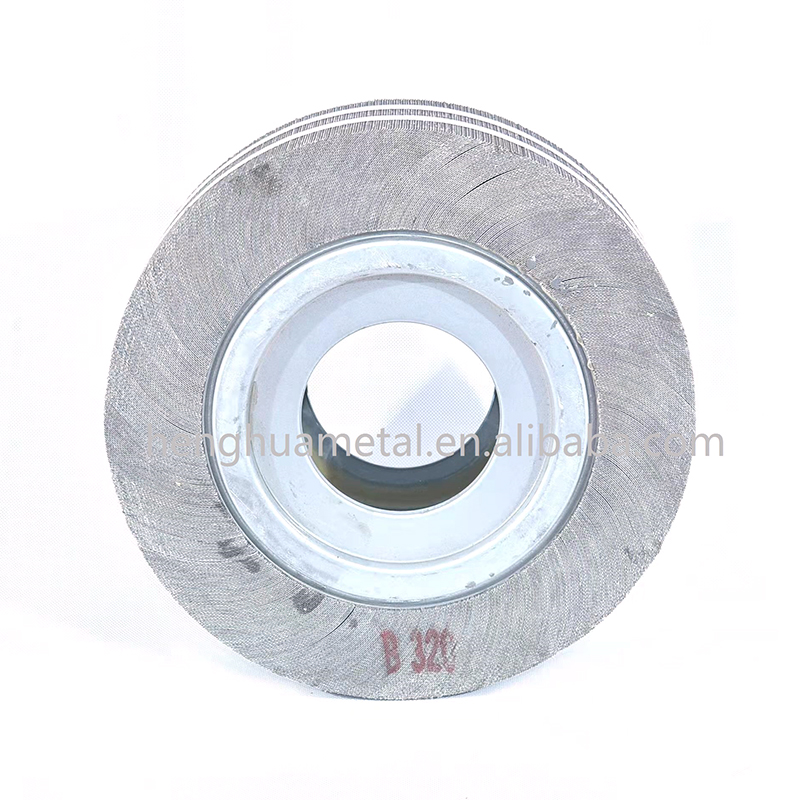
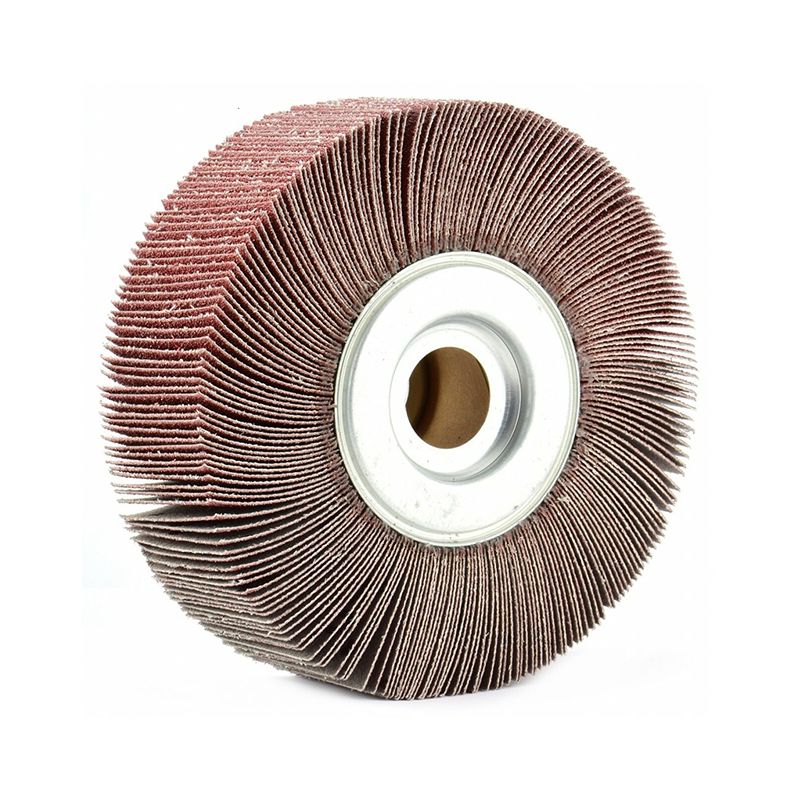
A flap wheel consists of overlapping abrasive cloth flaps mounted radially around a central hub or shank. As the outer flaps wear down during use, fresh abrasive material is continuously exposed underneath, which keeps cutting performance consistent throughout most of the wheel's working life rather than dropping off sharply as the surface wears, the way a worn sanding belt often does.
- Coarse flap wheels, around 40 to 60 grit, handle initial weld grinding and heavy scale removal.
- Medium flap wheels, around 80 to 120 grit, blend and smooth surfaces after coarse grinding.
- Fine flap wheels, around 180 to 320 grit, prepare metal for polishing or coating application.
- Flap wheels are available in flat, spindle-mounted, and unmounted disc-style formats to fit angle grinders, bench grinders, and drill-mounted setups.
Practical Tips for Longer Abrasive Life on Metal
Regardless of whether a shop is running belts or flap wheels, a few operating habits consistently extend abrasive life and improve finish quality on metal.
Control Contact Pressure
Applying excessive pressure does not speed up material removal proportionally, it mainly generates heat and accelerates abrasive wear. Letting the abrasive grain do the cutting at moderate, consistent pressure produces a more even finish and longer product life.
Match Speed to Material
Running an abrasive too fast on softer metals such as aluminum can cause loading, where metal particles clog the abrasive surface and reduce cutting efficiency. Reducing speed slightly on softer alloys typically improves both finish and abrasive longevity.
Keep Work Cool
Pausing periodically to let the workpiece cool prevents heat-related discoloration on stainless steel and reduces the chance of warping thin-gauge sheet metal during extended finishing sessions.
Choosing Between a Sanding Belt and a Flap Wheel for Your Project
In summary, a zirconia alumina or ceramic sanding belt remains the strongest choice for flat-surface, high-volume metal stock removal, while a flap wheel is generally the better tool whenever the workpiece involves curves, edges, welds, or thin material sensitive to heat. Many metal fabrication shops keep both abrasive formats on hand and select between them based on the specific geometry of each job rather than relying on a single abrasive type for every task.
When comparing suppliers of sanding belts and flap wheels, it is worth checking whether abrasive grain type, flap density, and backing material are clearly specified, since these details determine actual cutting performance far more reliably than price alone. A manufacturer offering both product lines side by side makes it easier to match the right abrasive format to each stage of a metalworking project without switching suppliers.