Español
 Deutsch
 عربى
عربىContent
- 1 The Direct Answer
- 2 How Buffing Differs From Grinding and Polishing
- 3 Why Sisal Wheels Are Used for the First Cutting Stage
- 4 Comparing Common Buffing Wheel Types
- 5 Matching Buffing Compounds to Each Stage
- 6 Typical Applications for Sisal Wheel Buffing
- 7 Basic Safety Practices for Buffing Operations
- 8 Choosing the Right Sisal Wheel for Your Process
The Direct Answer
Buffing is a mechanical surface-finishing process that uses a rotating fabric wheel, coated with an abrasive compound, to cut, smooth, or polish a metal surface. Unlike sanding, buffing does not use bonded abrasive grit fixed to a rigid backing — instead, loose or semi-loose abrasive compound is applied to a soft or stiff fabric wheel, which then transfers cutting and polishing action to the workpiece through friction and pressure. A sisal wheel is one of the most widely used buffing tools for the first, most aggressive stage of this process, because its coarse natural fiber construction removes scratches, oxidation, and mill scale faster than softer cloth wheels.
In short: buffing is a multi-stage process, typically moving from a coarse cutting stage using a sisal or hard-treated wheel, through intermediate stages, to a final coloring stage on a soft cloth wheel — each stage using a progressively finer compound to build toward a mirror finish.
How Buffing Differs From Grinding and Polishing
These three terms are often used loosely, but each plays a distinct role in a metal finishing workflow.
Grinding Removes Material Aggressively
Grinding uses bonded abrasive wheels or belts to remove significant amounts of material quickly — flattening welds, removing heavy scale, or shaping a surface. It leaves visible scratch patterns that need further finishing.
Buffing Bridges Cutting and Finishing
Buffing sits between grinding and final polishing. A coarse buffing stage, often performed with a sisal wheel and a cutting compound, removes the deeper scratches left by grinding while beginning to smooth the surface texture.
Polishing Produces the Final Shine
Polishing is the final stage, usually performed on soft cotton or flannel wheels with a fine coloring compound, producing the reflective, mirror-like finish associated with high-end metal parts and fixtures.
Why Sisal Wheels Are Used for the First Cutting Stage
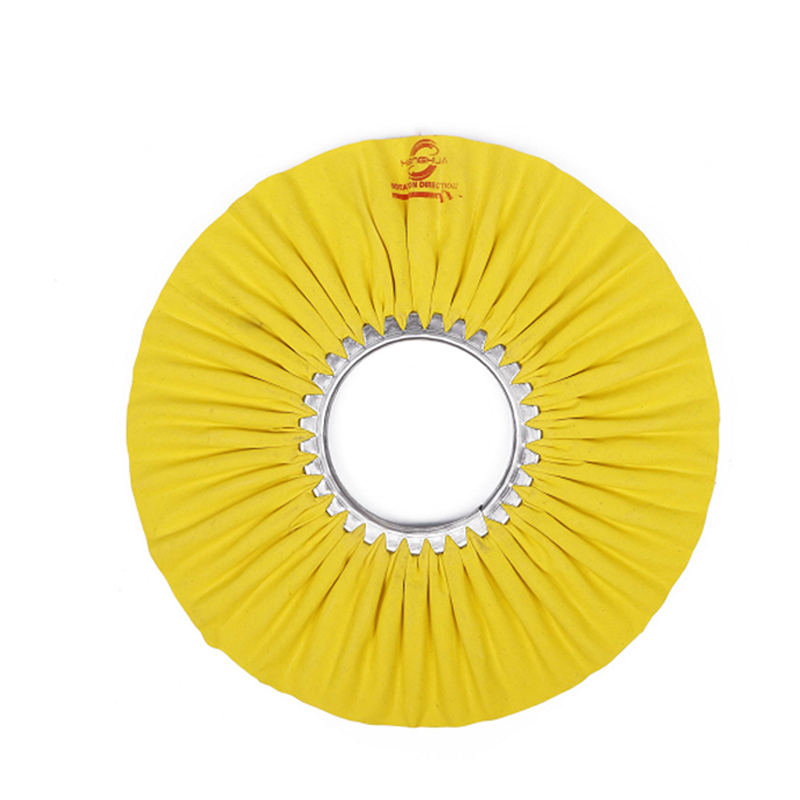
A sisal wheel is made from natural agave fiber, stitched in tight rows to create a stiff, coarse-textured wheel. This construction gives it two properties that make it ideal for the earliest, most aggressive buffing stage.
- High rigidity — sisal fiber holds its shape under pressure far better than cotton or cloth, allowing it to cut through oxidation, weld discoloration, and deep scratches without collapsing against the workpiece.
- Natural grease-absorbing texture — sisal fiber holds cutting compound on its surface effectively, keeping abrasive material in continuous contact with the metal during each pass.
- Treated hardness options — sisal wheels are often dip-treated to increase rigidity further, with color-coded hardness levels (commonly blue, orange, and pink) allowing operators to match wheel stiffness to the toughness of the metal being buffed.
Because of this aggressive cutting action, sisal wheels are best suited to stainless steel, carbon steel, iron, and other hard ferrous metals, and are not typically recommended for soft or thin-gauge materials where excessive cutting could distort the surface.
Comparing Common Buffing Wheel Types
Choosing the right wheel for each stage of the buffing process has a direct effect on both finish quality and how much time is spent correcting mistakes from the wrong wheel.
| Wheel Type | Stiffness | Typical Stage |
|---|---|---|
| Sisal wheel | Stiff, coarse | First cutting stage on hard metals |
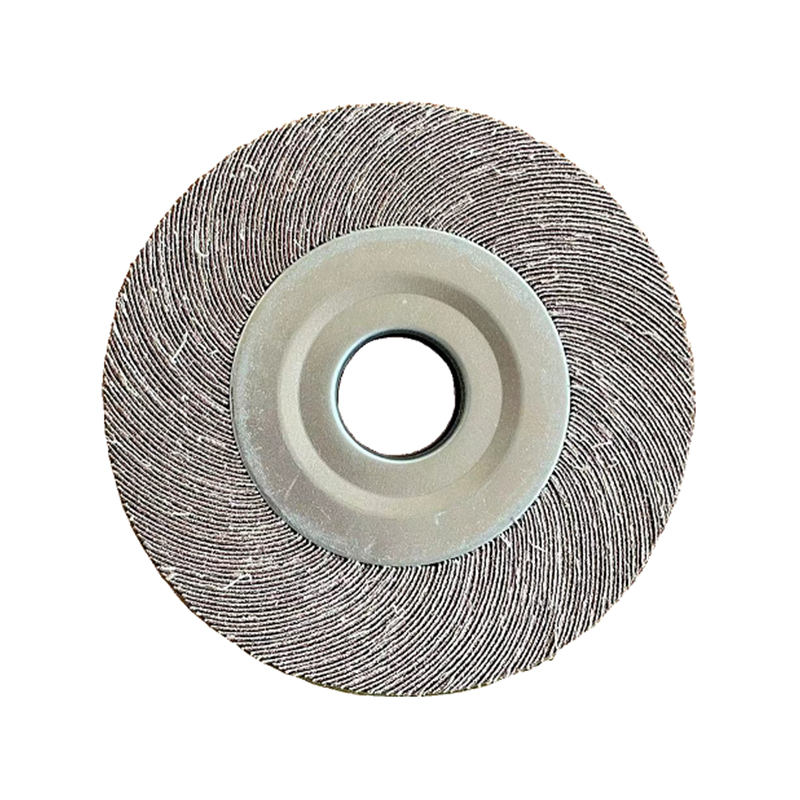
| Sisal-cloth laminated wheel | Stiff with slightly more flex | Heavy cutting with reduced surface marking |
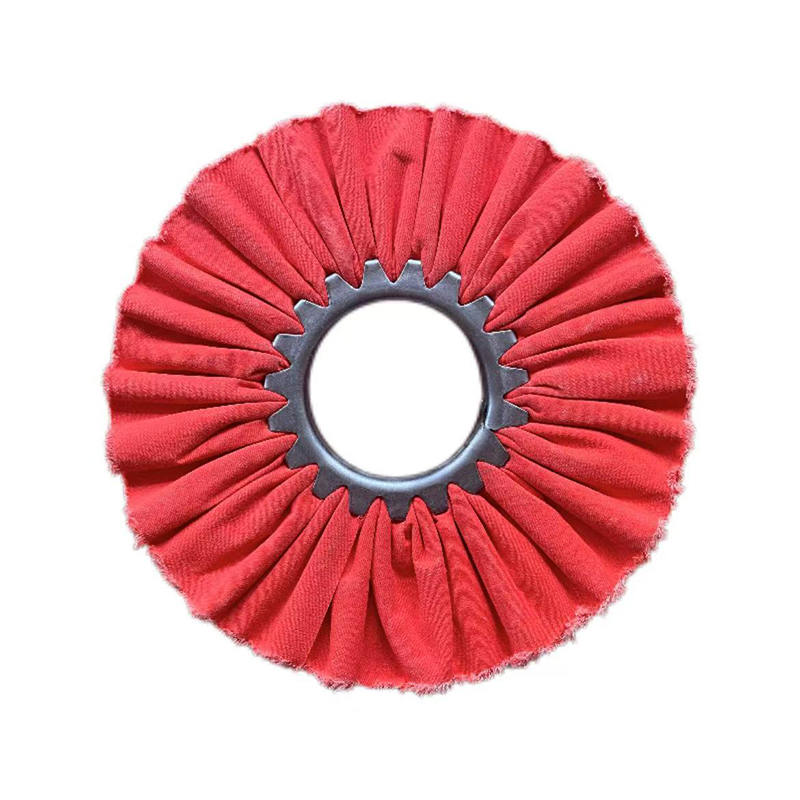
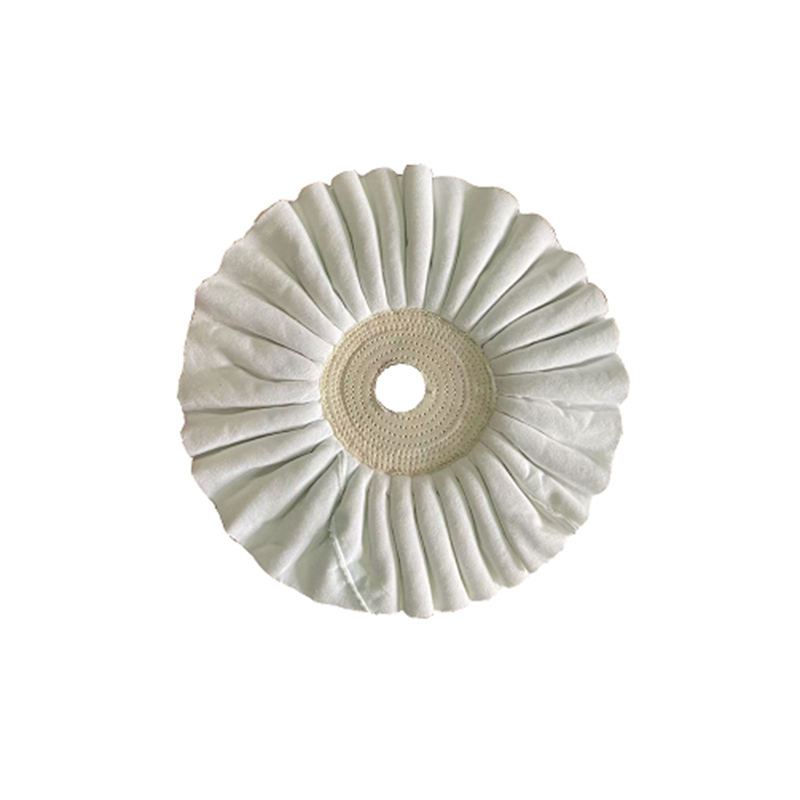
| Spiral-sewn cotton wheel | Medium | Intermediate smoothing after cutting |
| Loose-leaf flannel wheel | Soft | Final coloring and mirror finishing |
Matching Buffing Compounds to Each Stage
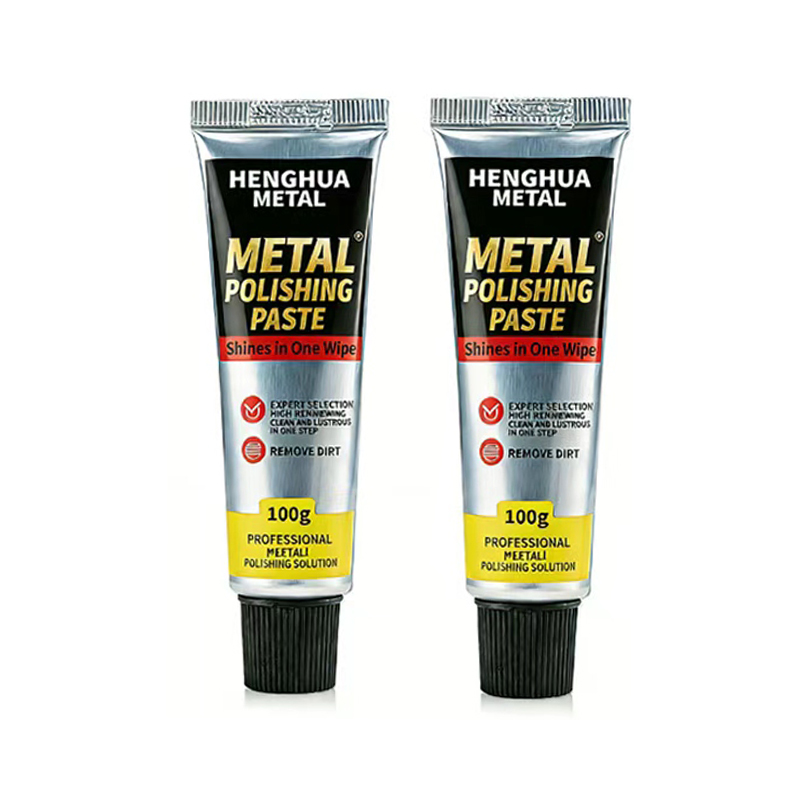
The abrasive compound applied to a buffing wheel determines how aggressively it cuts and what kind of finish it leaves behind. Using the wrong compound with a given wheel is one of the most common causes of uneven or streaked finishes.
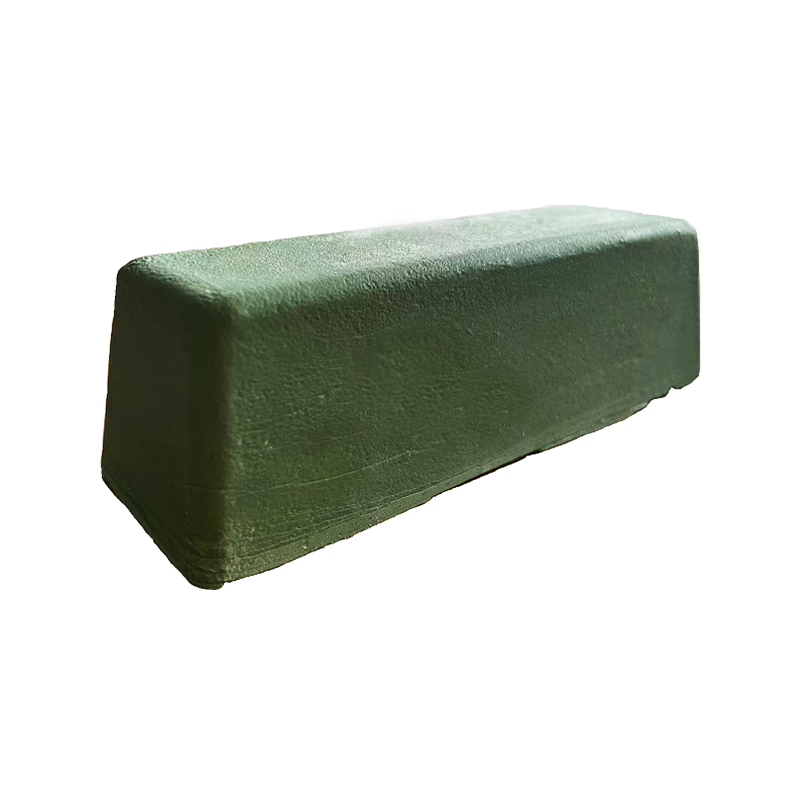
- Black emery compound — a coarse, fast-cutting compound paired with sisal wheels for removing scale and deep surface defects on hard metals.
- Grey or brown tripoli compound — a medium-cut compound used in the intermediate stage, smoothing out scratches left by the sisal cutting stage.
- White or red rouge compound — a fine, low-cut compound used at the final stage to bring out color and shine without adding new scratch marks.
Skipping a compound stage — for example, going straight from a coarse sisal cut to a final polish — usually leaves faint scratch marks visible under bright light, since the intermediate compound step is what actually removes the marks left by the sisal wheel.
Typical Applications for Sisal Wheel Buffing
Because of their aggressive cutting action, sisal wheels show up across a wide range of industrial and fabrication settings.
- Removing weld discoloration and scale on stainless steel fabrication before final polishing.
- Deburring and smoothing cast iron or aluminum components after machining.
- Preparing metal hardware, fittings, and fixtures for chrome or nickel plating, where a uniform base surface improves plating adhesion.
- Restoration work on automotive trim, tools, and vintage metal parts before final color buffing.
Basic Safety Practices for Buffing Operations
Because buffing wheels spin at high speed and generate significant friction, following a few core safety practices protects both the operator and the finish quality of the workpiece.
- Always match the wheel's maximum rated RPM to the buffing machine's operating speed — running a wheel beyond its rating increases the risk of wheel failure.
- Secure the wheel with the correct safety flanges and lock nut so it does not wobble or shift during use.
- Wear a face shield and appropriate gloves, since buffing throws off fine compound particles and can generate localized heat on the workpiece.
- Hold small parts with a secure fixture or clamp rather than by hand alone, since a sisal wheel's aggressive grip can pull a loosely held part out of the operator's hand.
Choosing the Right Sisal Wheel for Your Process
Selecting the correct sisal wheel comes down to matching diameter, hardness treatment, and construction to both the metal being buffed and the machine being used. A stiffer, hard-treated wheel suits heavy-duty cutting on stainless steel or iron, while an untreated or lightly stitched wheel offers a gentler first cut for softer ferrous metals. Ningbo Henghua Metal Surface Treatment Technology Co., Ltd manufactures sisal wheels alongside a broader range of buffing and polishing wheels, giving fabrication shops and metal finishing operations the option to source matched wheel sets for every stage of the buffing process from a single supplier. When selecting a wheel, confirm the arbor size fits your equipment, check the maximum rated RPM, and pair it with the correct compound for the specific metal and finish you are targeting.